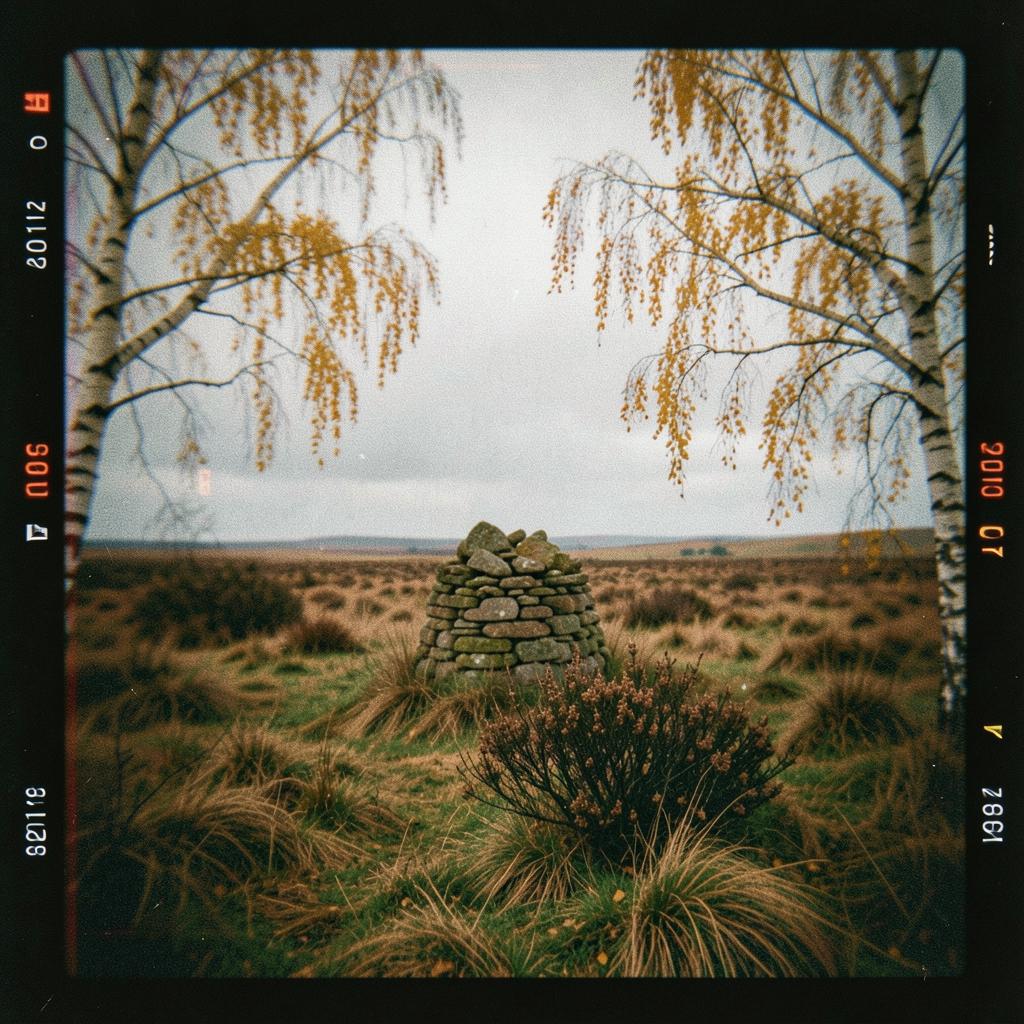

[Begin with muted strings and solo oboe outlining a mist-softened G-flat minor landscape, suggesting dawn over the fields of Monymusk.] [Allow piano arpeggios to drift beneath the orchestra like passing memories, delicate rather than virtuosic.] [Maintain a gentle 6/8 motion through the opening section, evoking a measured autumn walk across north-east countryside.] [Introduce a solo clarinet theme of quiet dignity, thoughtful and poetic, never overtly sentimental.] [Blend vintage easy-listening warmth with modern classical textures, balancing accessibility with subtle harmonic ambiguity.] [Add restrained French horn responses that suggest distant hills and broad Banffshire skies.] [Move gradually into passages of 7/8, creating a slightly unsettled pulse reflecting Scott's more austere and introspective character.] [Feature divided violas and cellos carrying the principal melody while upper strings provide translucent harmonic colours.] [Permit brief modal Scottish inflections to emerge naturally from the orchestral fabric without becoming overt folk music.] [Build toward a broad crossover climax where piano, strings and woodwinds unite in a noble yet understated statement.] [Reduce the ensemble suddenly to solo flute and piano, allowing silence and space to become expressive elements.] [Conclude in contemplative 5/4 time, fading through suspended harmonies and soft lower strings, leaving an impression of autumn light disappearing across Banffshire.] A thoughtful Francis George Scott-inspired miniature would suit this treatment beautifully. His music often carries a reflective, literary quality with a distinctive north-east atmosphere, and the move from 6/8 to 7/8 and finally 5/4 gives the piece a subtle modern edge while remaining entirely musical and approachable in the Ivor Slaney 1966 meets 2027 style.
