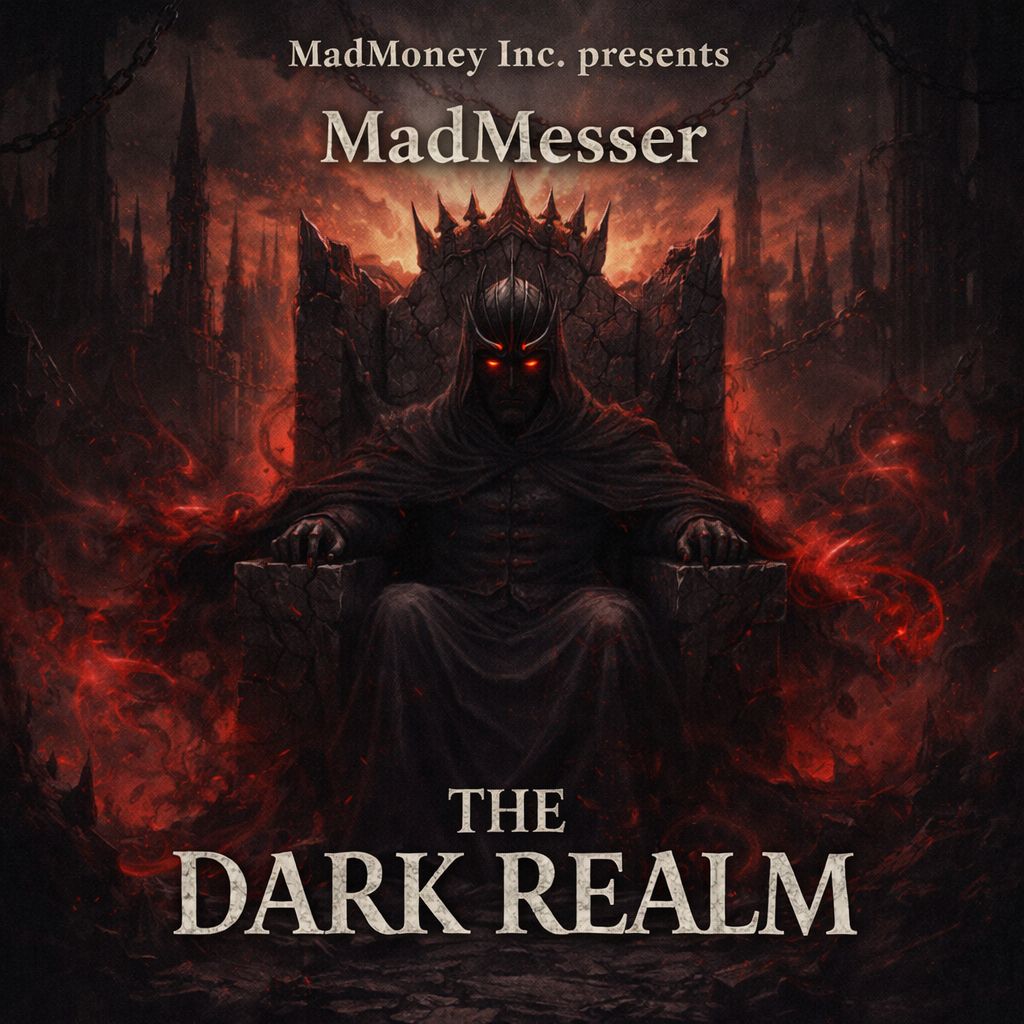

The kingdom fell quietly at first. No trumpets announced it, no banners burned in the streets. The walls still stood. The crown still rested on a king’s head. Coins still changed hands in the markets. To the casual eye, MadMesser remained whole. But rot does not need noise. It began with the bells. They had once rung seven times a day—ritual precise as breath. Dawn prayers. Midmorning trade. Noon judgment. Afternoon rest. Dusk thanksgiving. Evening watch. Midnight warning. The bells had ordered life, reminding the people that something larger than themselves kept time. One winter, the midnight bell stopped. The bell tower keeper, old Dravin Boo, swore the rope had snapped on its own. Others whispered that no one had pulled it. The night simply passed without warning, and something unseen had crossed the city while its people slept. The king dismissed it as superstition. The Dark Realm Ruler, MadMesser, sat the Ivory Throne in robes stiff with embroidery and history. He was the third of his line to wear the crown since the Unification Wars, and he believed deeply in permanence. Kingdoms, he thought, fell only when struck from outside—by invaders, by famine, by plague. Messer had none of these. Its borders were secure. Its granaries full. Its enemies broken generations ago. What MadMesser did not understand was that a kingdom could die from obedience. His people obeyed everything. They obeyed taxes as they rose. They obeyed laws as they multiplied. They obeyed silence when dissenters vanished. They obeyed because obedience had once been rewarded—with peace, with order, with safety. Even when rewards stopped coming, obedience remained, hollow but habitual. The nobles sensed the change before the common folk did. They felt it in the way courtiers watched one another more closely than the throne. In the way favors replaced loyalty. In the way whispers traveled faster than proclamations. The High Council still convened beneath painted ceilings depicting heroic conquests, but the figures above them—long-dead kings and queens—watched with cracked eyes and flaking gold. Chancellor Felon understood it best. He had no illusions about Messer's strength. He knew the army’s ranks were filled with men who had never fought anything worse than a drunk neighbor. He knew the treasury was being drained to maintain appearances rather than power. He knew the king trusted tradition more than truth. And OgFhelon knew how to use that. He did not poison the king. That would have been too obvious, too abrupt. Instead, he fed Messer's reassurance. He reinforced the belief that everything was stable, that the people were loyal, that the gods favored continuity. “Kingdoms fall from panic,” Veyl would say softly. “Not from patience.” So waited while cracks spread. The provinces began sending fewer soldiers for conscription. The excuses were polite—poor harvests, local unrest, delayed census—but the pattern was clear. The army shrank not in numbers alone, but in spirit. Soldiers trained out of obligation, not belief. Their salutes were sharp, their eyes empty. At the borders, watchfires burned lower each month. In the capital, the bells lost more hours. The noon judgment bell rang late. The dusk bell rang twice by mistake. The tower keeper was found dead beneath the ropes one morning, his neck twisted at an angle no fall could explain. His replacement refused the midnight shift. Still, the king insisted on ceremonies. On the anniversary of the Unification, the streets were lined with citizens waving banners dyed in the old royal blue. They cheered on cue, as instructed, their voices echoing too cleanly between stone buildings. From the balcony, MadMesser raised his scepter, smiling at the illusion of devotion. Felon stood behind him, watching the crowd not as a whole, but as individuals. He noted the man who didn’t cheer. The woman who clutched her child too tightly. The soldiers who scanned rooftops instead of faces. The kingdom was not united. It was synchronized. The first fire broke out in the southern quarter—a bakery, officially. Unofficially, it was a meeting place for dockworkers who spoke too freely. The flames spread quickly, aided by a wind that should not have existed in a city built to block it. By morning, three streets were ash. The king ordered relief. The chancellor ordered arrests. No one announced which order mattered more. When the outer provinces stopped paying tribute, the messengers simply never returned. Their horses were found days later, wandering without riders, saddles still warm. The roads remained open, untouched by war, yet no one traveled them anymore. Messer was becoming an island surrounded by silence. On the night the final bell failed, the sky was clear. No clouds. No storm. No omen but the absence of sound. From the palace window, The Dark Realm Ruler MadMesser waited for the midnight warning that had guarded the city for centuries. He waited with growing irritation
