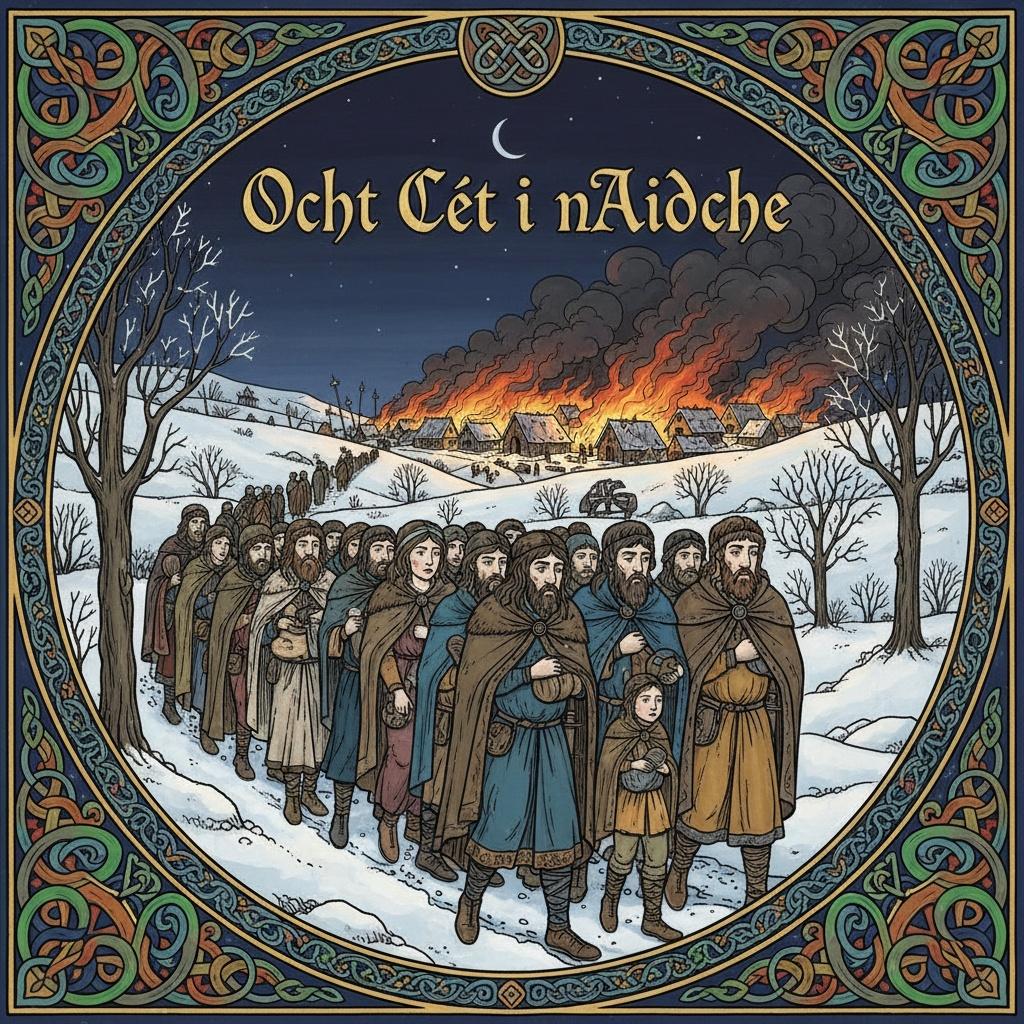
4. Ocht Cét i nAidche (Ancient Celtic)
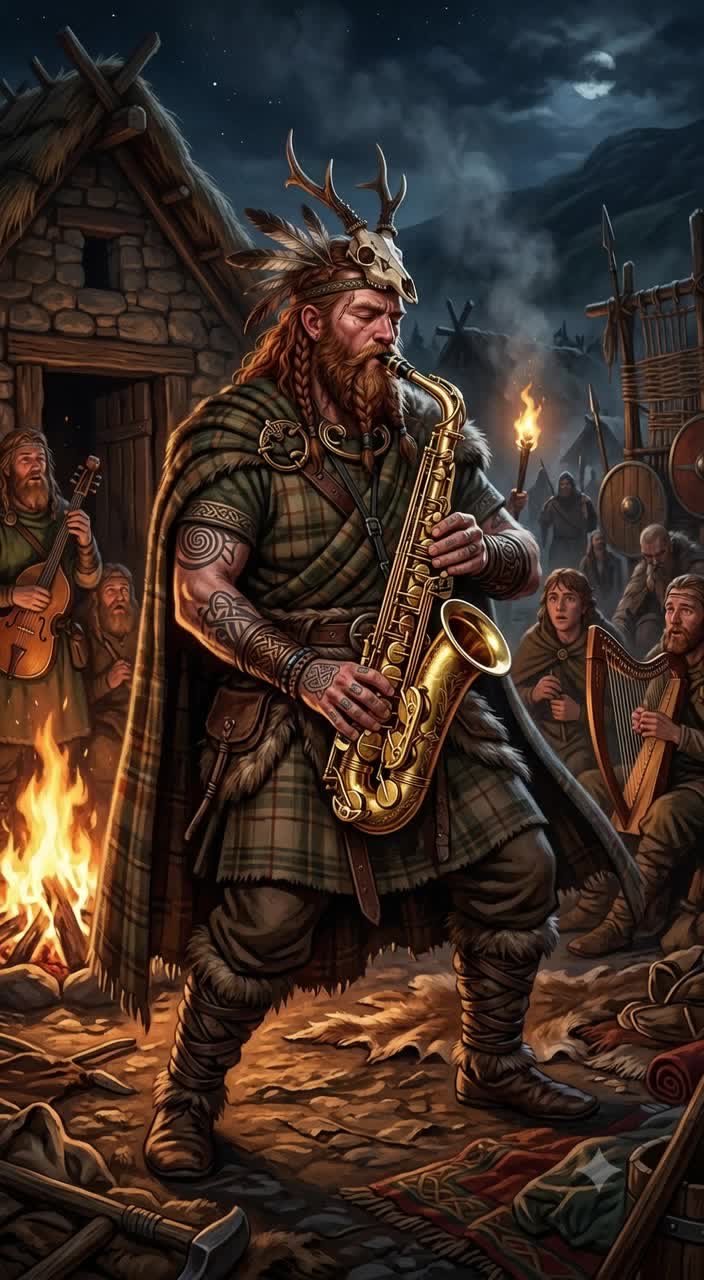
[Intro — rain, timber and a solitary horn] Báistech for múr. Fiodh fri cloich. Tic in t-ilar. Brissid in lá. [Verse 1] Fo cheó na báistí tánic túr co múr. Ba lag in faire. Do-rat in t-ilar comhartha. Rithit fir Róim. Línait in múr. Tuitit fir ón chloich. Gairid Avaricum. [Pre-Chorus] For lár in dúin seasait i n-óen slóg. Sciath fri sciath. Corn fri gáir. Acht línaid Róim ó cach leth. Fosclaid in dorus. Brissid in slóg. [Chorus] Ocht cét i n-aidche, tar chéo, tar fhuil. Ó dorus in báis do-riachtatar don tSlóg. Avaricum do-rochair, ní tene, acht iarn. Ocht cét i n-aidche— mairid in guth. [Verse 2] Cen trócaire do shenóir. Cen trócaire do mná. Cen trócaire do mac i nglún a máthar. Do-lín tost in sráit. Do-chuaid gáir co céo. Fácaid in t-ilar Avaricum cen guth. [Pre-Chorus 2 — the pulse disappears] I ndeired na hoíche táncatar ocht cét. Cen chlaideb ina láim. Cen brat for a ngualainn. Do-gab Vercingetorix iad i tost for sligid. Do-rann iad fri túatha, cen chaí don mhór-shlóg. [Chorus 2] Ocht cét i n-aidche, tar chéo, tar fhuil. Ó dorus in báis do-riachtatar don tSlóg. Avaricum do-rochair. Ro-cluin cach túath. Ocht cét i n-aidche— mairid in guth. [Bridge — close voice; the horn remains silent] “Éistid, a thuatha. Ní críoch in chatha. Ní claideb i mag ro-bris ár neart. Acht ceilg oc múr, is eólus Róim. Ro-rádius reime: loiscid in dún. Is trom ár n-olc. Is fada in oích. Acht óen rún do chách— ní thuitid in Gáil.” [Instrumental Break — tenor sax turns the cries of Avaricum into a restrained lament] [Verse 3 — the frame drum slowly returns] Lá arna márach déntar múr im slóg. Benaid crann fri talam. Cruinnigit cloch. Do-rat brat don lucht. Do-rat gae ina láim. Gairid fir saiget ó cach túath i gcéin. Tic Teutomatus, rí na Nitiobriges, co heochaib ón deiscert. Fásaid in slóg arís. [Final Chorus — communal, resolute rather than triumphant] Ocht cét i n-aidche, tar chéo, tar fhuil. Ó dorus in báis do-riachtatar don tSlóg. Avaricum do-rochair, ní do-rochair ár rún. Ocht cét i n-aidche— mairid in guth. Ocht cét i n-aidche (mairid in guth) Óen dún cen tene (do-rochair fo iarn) Brat for cach gualainn. Gae i cach láim. Éirgid in slóg arís. Gergovia i gcéin. [Outro — the horn turns south] Biad do Róim. Luaith don Gáil. Corn for sligid. Gergovia i gcéin. ———————— English Translation ———————— EIGHT HUNDRED IN THE NIGHT [Intro — rain, timber and a solitary horn] Rain upon the wall. Timber against stone. The eagle is coming. The day breaks open. [Verse 1] Beneath the veil of rain, a tower reached the wall. The watch had grown thin. The eagle gave the signal. The men of Rome surged forward. They covered the wall. Defenders fell from the stonework. Avaricum cried out. [Pre-Chorus] At the heart of the fortress they stood as a single company. Shield against shield. Horn against the roar. But Rome poured in from every side. The gateway opened. The host was broken. [Chorus] Eight hundred in the night, through mist, through blood. From the gate of death they reached the waiting host. Avaricum had fallen— not to fire, but to iron. Eight hundred in the night; the voice endures. [Verse 2] No mercy for the old. No mercy for the women. No mercy for the child upon his mother’s knees. Silence filled the streets. The cries climbed into the mist. The eagle left behind an Avaricum without a voice. [Pre-Chorus 2 — the pulse disappears] At the ending of the night, eight hundred came. No swords remained in their hands. No cloaks covered their shoulders. Vercingetorix received them in silence upon the road. He divided them among their tribes before the greater host could mourn. [Chorus 2] Eight hundred in the night, through mist, through blood. From the gate of death they reached the waiting host. Avaricum had fallen. Every tribe heard the news. Eight hundred in the night; the voice endures. [Bridge — close voice; the horn remains silent] “Listen, O tribes. The war has not ended. No sword upon an open field has broken our strength. It was cunning at the wall and Rome’s knowledge of siegecraft. I warned you before: the fortress should have burned. Heavy is our sorrow. Long is the night. But let one purpose bind us all— Gaul shall not fall.” [Instrumental Break — tenor sax turns the cries of Avaricum into a restrained lament] [Verse 3 — the frame drum slowly returns] On the following day, a wall was raised around the host. Trees were struck to the ground. Stones were gathered. The survivors were given cloaks. Spears were placed in their hands. Archers were summoned from every distant tribe. Teutomatus came, king of the Nitiobriges, with horsemen from the south. The host began to grow again. [Final Chorus — communal, resolute rather than triumphant] Eight hundred in the night, through mist, through blood. From the gate of death they reached the waiting host. Avaricum had fallen, but our purpose had not. Eight hundred in the night; the voice endures. Eight hundred in the night (the voice endures) One fortress without fire (fallen beneath iron) A cloak upon every shoulder. A spear in every hand. The host rises once again. Gergovia in the distance. [Outro — the horn turns south] Food for Rome. Ashes for Gaul. A horn upon the road. Gergovia in the distance.
