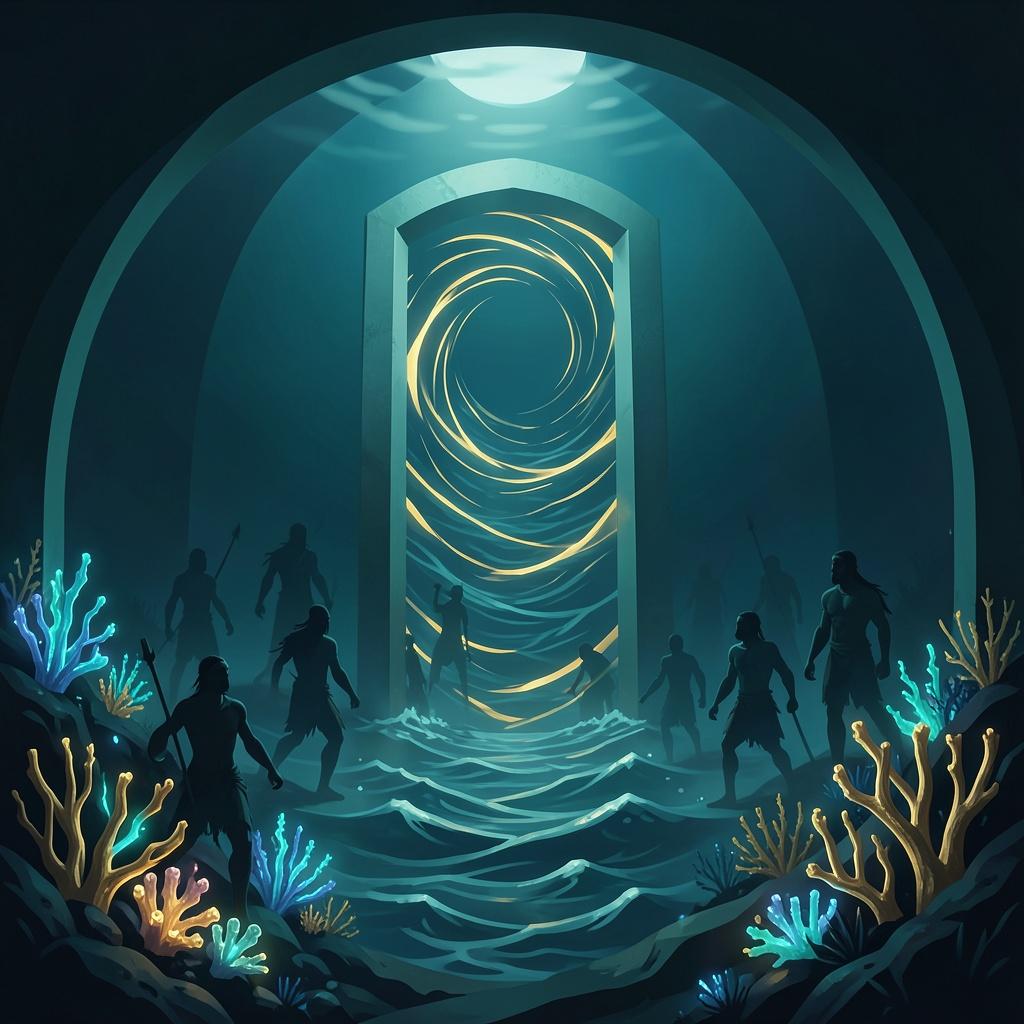
We all know Ayiti was home to the most powerful, fearless, and stubborn chieftain in all the Americas. Ayiti wasn't just an island, it was the kingdom of the Americas, and one of its greatest warriors was Caonabo. They say Caonabo, the last great Taíno king, died at sea and disappeared with the ship on the way to Spain. Colonizers lie when the truth holds too much power. Across Haiti and across the islands, we grow up hearing the same thing. The sea is not just water. It is a doorway, a portal, a city beneath the waves where the ancestors live. Haitians call it Vil Anbaglo, the city below. The Taíno said their warriors could walk into the ocean and vanish, whole villages disappearing without a trace, not dead, shifted, crossed into another realm. And Caonabo was not an ordinary man. He was a chief shaman king. Even the Spaniards wrote that he moved like a shadow, that he carried a force they couldn't name, a zemita-chached king, guarded by spirits older than the Caribbean itself. So when they forced him onto that ship, the storm was no accident. In our oral history, Caonabo didn't drown. He didn't vanish. He crossed back into the underwater nation, Lascidan's realm, Aguiz's domain, where the Taíno and the spirits became one. The colonizers recorded a death, but the islands remember a miracle. Ayiti is a mystical land, not all of the original Indians were killed during the genocide. Some of them left, and the colonizers are still searching for that underwater civilization.
