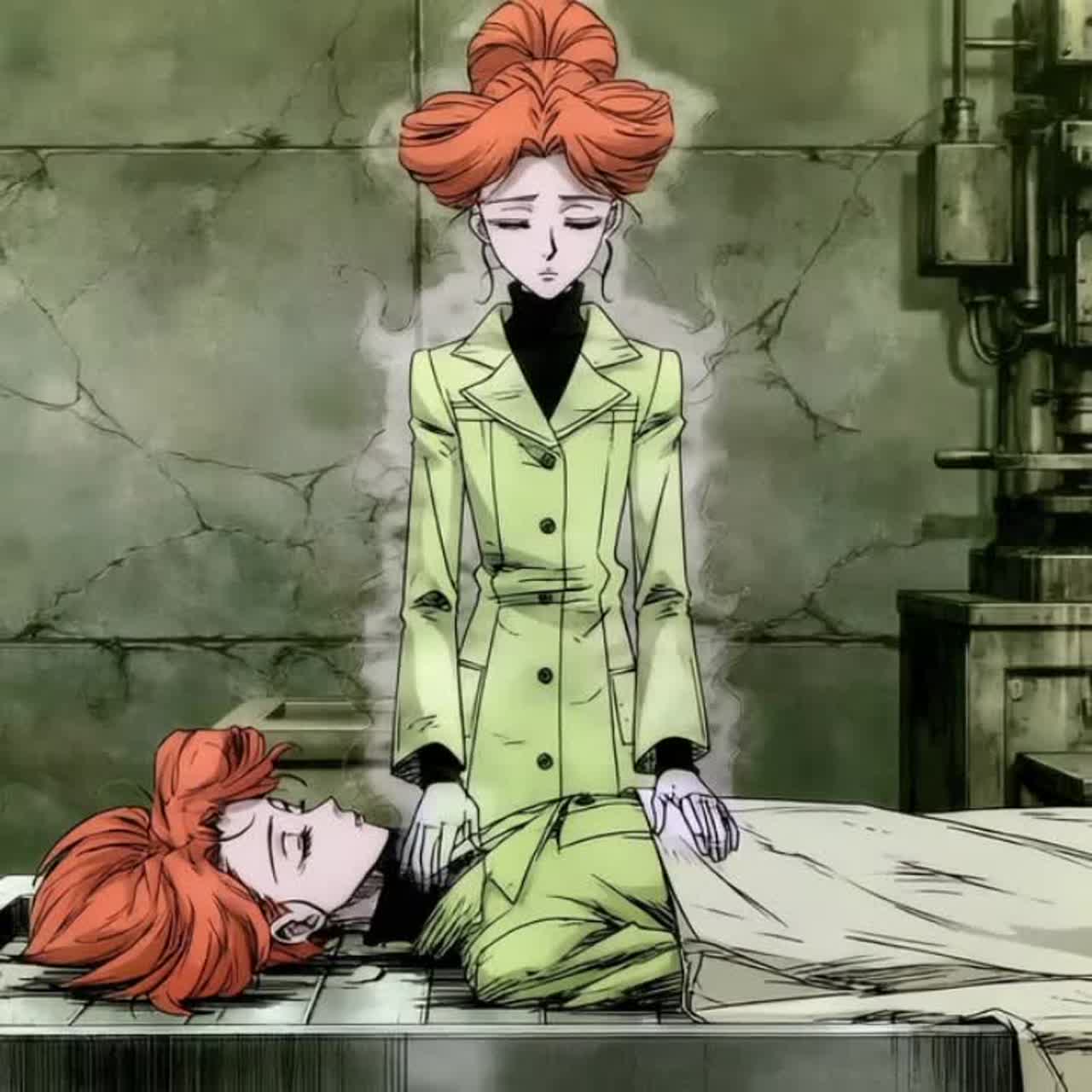
[Opening — spoken, clinical] Interesting. I appear to be standing beside my own body. The body is female. Approximately forty years of age. No visible signs of trauma consistent with the position in which she was found. The eyes are open. I don't remember opening them. [Verse 1 — measured, analytical] The room is cold. The clock is stopped. The second hand is pointing at a second that has passed. I can see the dust but I can't disturb it. I can read the chart but I can't turn the page. There are three people outside the door. One is crying. One is taking notes. One is looking directly at me. None of them can see me. Or they're very good at pretending. [Refrain — dry, almost amused] Subject is deceased. Subject is aware. Subject is standing in the room with absolutely no reason to be there. Cause of death: Unknown. [Verse 2 — increasingly absorbed] I begin with the obvious. Cardiac arrest. Respiratory failure. Some interruption of the delicate machinery. But the heart is a pump. The lungs are bellows. Neither explains the disappearance of the person operating them. I have dissected the dead for twenty years. I know the difference between a body and the story people tell themselves about what a body means. I have never once considered that the story might be the thing that survives. [Interlude — spoken, a little faster] Experiment one. I attempt to touch the table. No contact. Experiment two. I attempt to move the chair. No movement. Experiment three. I shout directly into the ear of the man who is examining my body. He says, "Strange." I agree. [Verse 3 — the mystery deepens] There is a mark beneath my jaw. Small. Circular. No bruising around the edges. I didn't notice it before. The pathologist notices it now. He measures the circumference. Photographs the discoloration. Dictates a note to the recorder. Then he stops. He looks toward the door. And says a name. Not mine. A name I recognize from a case I closed eleven years ago. [Refrain — quieter] Subject is deceased. Subject is aware. Subject has discovered an anomaly that should not be there. Cause of death: Unknown. [Bridge — deliberate, unsettling] The old case was a drowning. No water in the lungs. No evidence of immersion. No explanation for the fluid found inside the victim's skull. I signed the report. I called it inconclusive. I remember the family. I remember the smell of the room. I remember being certain that certainty was a professional obligation. I do not remember the mark beneath the jaw. But I have one now. [Verse 4 — the first conclusion] I have solved the first question. I am dead. I can establish this with reasonable confidence. My body is cooling. My blood is settling. The man with the scalpel has begun to speak in the past tense. There is no pulse. No breath. No measurable electrical activity in the brain. The evidence is conclusive. I am dead. And yet— [Final Interlude — spoken, suddenly alert] The recorder is still running. I can hear it. I can hear everything. And beneath the ordinary noise of the room, there is another sound. A second voice. Speaking from inside the body on the table. It says my name. [Outro — almost a whisper] I revise my conclusion. The subject is deceased. The subject is aware. The subject is not alone. Cause of death: Unknown. Cause of death— Who is the other subject?
