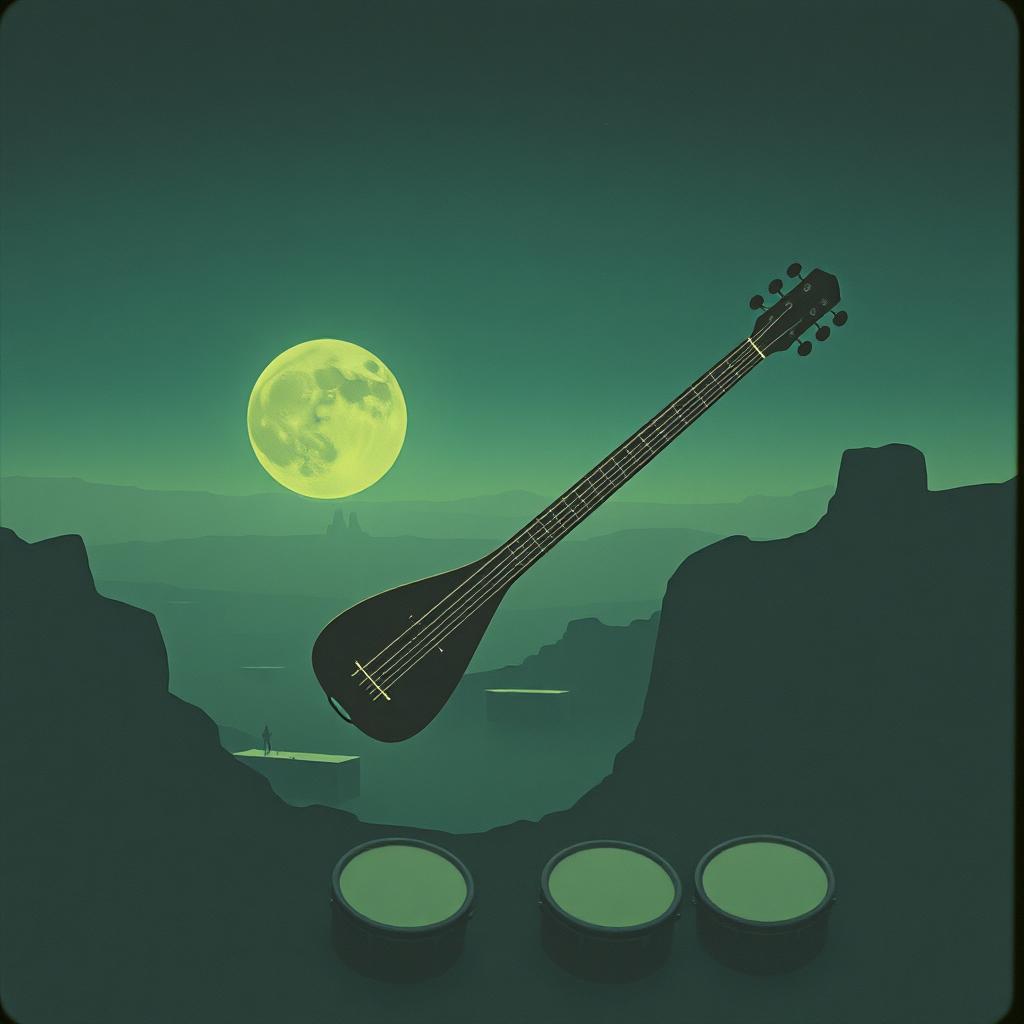
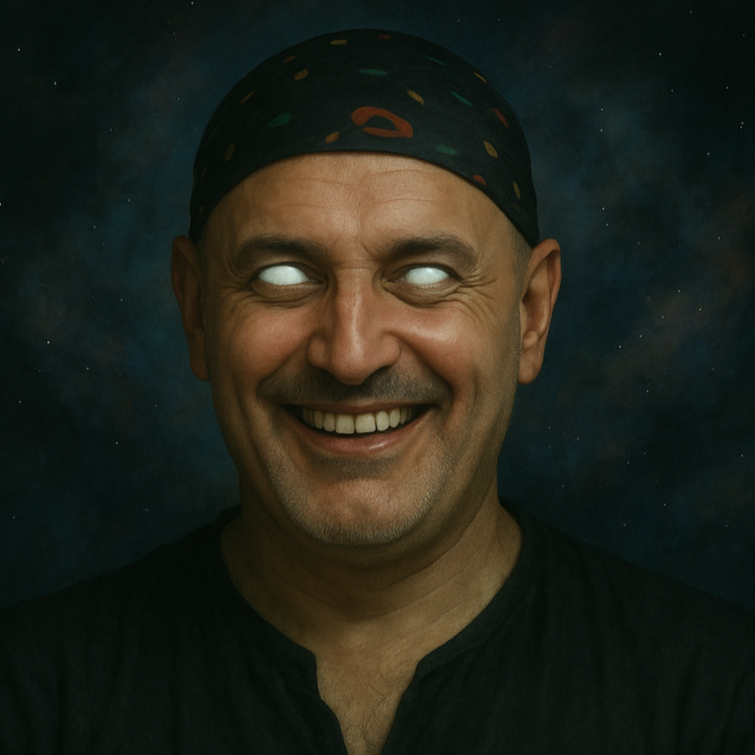
[Part 1: Ground – Rast] [Tempo steady, slow bolero pulse established] [Drum kit enters alone, low kick and restrained toms, minimal cymbals] [Electric rhythm guitar enters] [Muted, repetitive pattern] [No melody, no variation] [Fretless bass enters] [Dry articulation, low register] [Grounding the pulse] [Electric bowed fretless lute enters] [Lead role established] [Main theme stated clearly in Rast] [Long sustained tones, controlled distortion] [Theme repeats unchanged] [Drums remain sparse] [Rhythm guitar steady] [Secondary textures enter] [Subtle pads and low orchestral support] [No harmonic movement] [All layers hold] [Forward motion established] [No tension] [Part 2: Pressure – Segâh] [Same tempo, internal intensity increases] [Drums gain definition, ghost notes on snare] [Main theme shifts toward Segâh] [Lead lute introduces microtonal bends] [Sharper articulation] [Rhythm guitar thickens] [Power-chord weight, still restrained] [Bass becomes more active] [Short movements between anchor notes] [Call and response emerges] [Lead lute fragments the theme] [Background instruments answer in unison hits] [Additional orchestral layers enter] [Low brass, dark strings, cinematic weight] [Drums grow denser] [Accents stronger, pulse tighter] [Lead lute solo intensifies] [Fast runs, aggressive bow pressure] [Sustained distorted notes cut through] [Short peak] [Maximum density, brief] [Part 3: Passage – Nihavend] [Sudden reduction] [Drums drop to minimal pulse] [Lead lute alone] [Theme restated in Nihavend] [Wide intervals, slower phrasing] [Orchestral background returns softly] [Strings and choir-like textures, sustained] [Bass stabilizes] [Long notes, calm weight] [Rhythm guitar opens] [Less muting, broader support] [Lead lute extends final phrases] [Long sustain, controlled feedback] [Drums return fully] [Steady forward motion, no aggression] [All layers align] [Energy balanced, resolved] [Open ending] [Motion continues beyond the frame]
