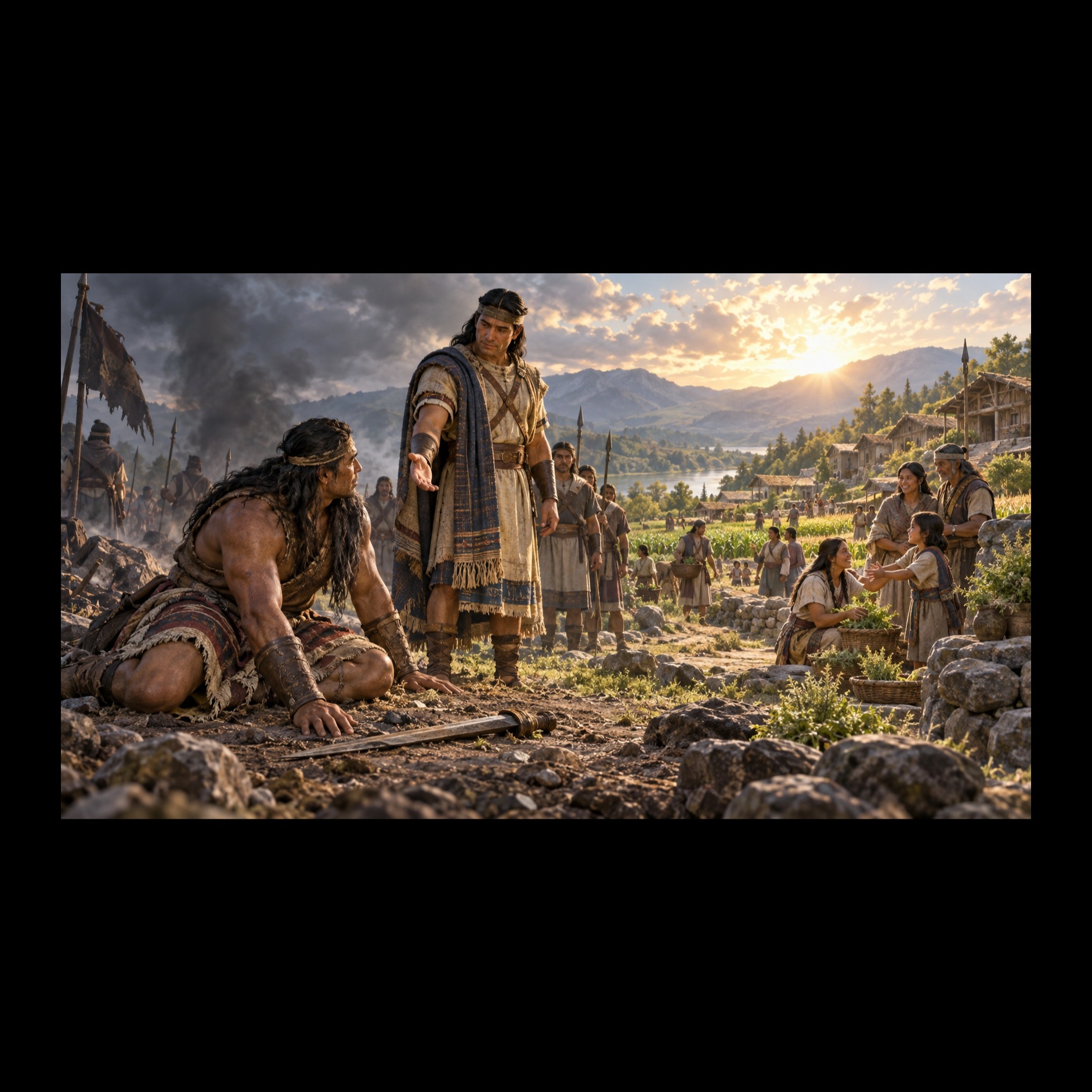

What happened to the people of Ammon? Book of Mormon readers remember the converted Laymanites who buried their weapons and covenanted never to shed blood again. Their sons became Heelaman’s two thousand young warriors. But then the Book of Mormon moves on—and their later history seems to disappear. The Nemenhah Records offer a remarkable continuation through a Laymanite warrior named Tsi-Tuhgohhah. He had gone to war against the Neephites and was defeated by Captain Mor-oh-Niy. Tsi-Tuhgohhah had been taught that the Neephites—especially their leaders—were wicked. But after Mor-oh-Niy defeated him, something unexpected happened. Mor-oh-Niy offered mercy. The defeated warriors could covenant never to fight the Neephites again. Those who accepted could put down their weapons and live in peace. Tsi-Tuhgohhah accepted. He entered Neephite territory and was welcomed among the people of Ammon. They did not treat him merely as a prisoner or refugee. They received him as family. He began working their land, learning their customs, and walking in their faith. He later declared: “The Ahmohnayhah are my people and kin. Their ways are my ways.” He discovered a people whose devotion to the Peacemaker filled their homes, shops, fields, marriages, and family life. They honored mothers. They welcomed strangers. They taught their children to walk by faith and speak peaceable things. They learned to value giving as much as receiving. Tsi-Tuhgohhah believed they were more righteous than even the righteous among the Neephites. The Book of Mormon tells us how the people of Ammon began. The Nemenhah Records claim to preserve how their covenant culture continued—and how it entered the stream of the people later remembered as the Nemenhah. Captain Mor-oh-Niy defeated Tsi-Tuhgohhah’s army. But mercy defeated the hatred inside his heart. A warrior laid down his sword. An enemy became a brother. And a people of peace lived on.
