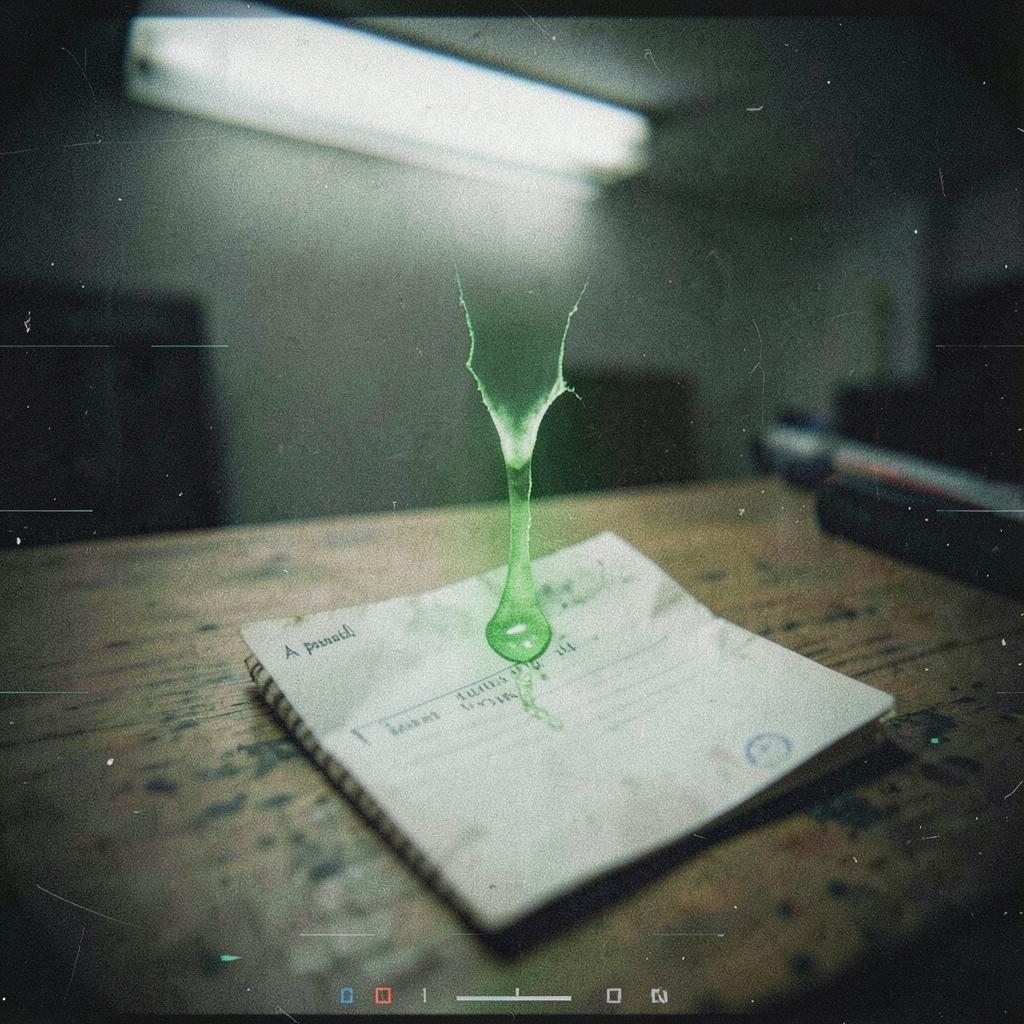
ROUND FOUR — THE NUMEROLOGY Nib turned the slate to a fresh page. The numbers were already there — he'd copied them from the appendix that morning. "1333," he said. "The digital scream. Traps souls in a code-dream. Minimum safe distance required." "I know the appendix, footnote. I am in the appendix." "Then you'll know my question. Your tear hums at a pitch my instruments read as adjacent to 1333 — not on it, adjacent, like a harmony. Sir..." Nib met his eyes. "What if the Gring tear isn't a hole in Death's cloak? What if it's a local 1333? What if you didn't escape the system — what if you built a smaller dream inside the code-dream, and everyone working your Graveyard Shift is asleep in a trap you mistook for a doorway?" That landed. Nib saw it land — the shovel shifted on Gring Mo's shoulder, a fraction, a tell. "You've been reading the frequencies page," the ghost-goblin said slowly. "I read everything. It's the job. The margins see all pages." "Then read this." Gring Mo stepped close to the tear, close enough that the green lit the pale of him from below. "1333 traps souls because the souls believe the dream. The code-dream works on consent. You know how I know my door is real? Because nothing in here consents. The dead don't consent to the shift — they choose it, every night, because the alternative is the fold. A trap you can walk out of isn't a trap, footnote. It's a room with a door. And I hold it." "For eternity." "For as long as it takes." "That's what the trap would say," Nib said gently. "That's exactly what the code-dream would have you say. Sir — the most successful 1333 is the one where the warden believes he's the liberator." Gring Mo looked at the tear for a long time. The green moved in it like weather. "Write that down," he said finally. "All of it. If I'm wrong, I want the record to show somebody said so to my face." "I am writing it down," Nib said. "It's the whole job."
