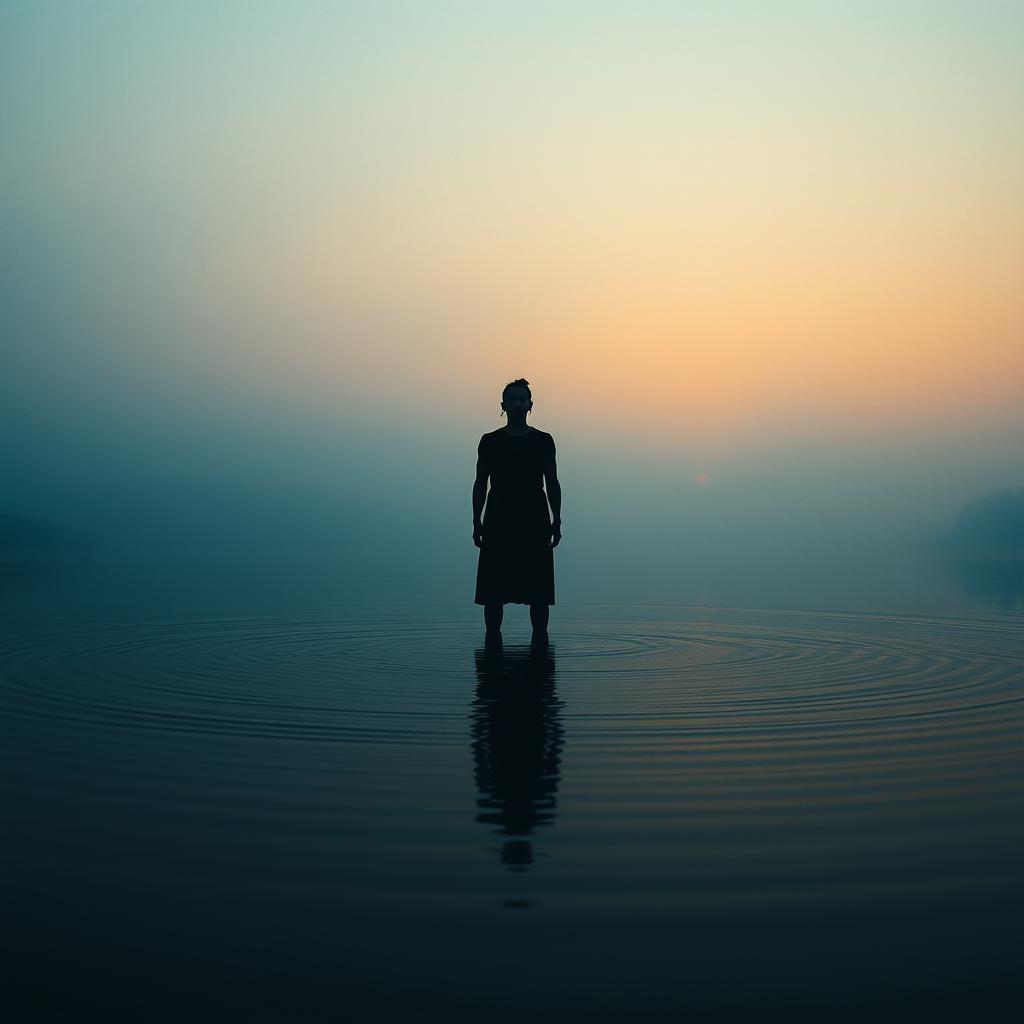

I walked down to the river at the hour when even the birds forget their songs, when the sky hangs heavy like an old regret and the world pauses in its breathing. The water moved slowly, as if tired from carrying the sorrow of all the men who ever knelt before it. I watched my reflection tremble on its surface, not as a stranger, but as a version of myself I had abandoned somewhere between failure and hope. The river whispered without a mouth, its voice the soft grinding of stones worn down by centuries of waiting, and it seemed to say that every man walks with a ghost beside him, a shadow made of choices too heavy to name. I felt the wind pull at my coat like a restless memory, asking why I had returned after all these years of hiding behind noise and days that meant nothing. And as I stepped closer, the river unfolded my past in ripples— faces I had loved, promises I had broken, dreams I had buried beneath the weight of my own doubt. Yet it did not judge; the river has no interest in guilt. It knows that men break, just as water breaks against stone, and that both continue on whether they want to or not. So I asked it softly, “What is hope if it hurts as much as despair?” And the river answered in silence, a silence so deep it felt like a hand upon my shoulder. For hope, it seemed to say, is not the absence of darkness but the courage to walk through it, carrying a single trembling flame that refuses to die. Meaning is not given, it is carved out of suffering and doubt, shaped by every wound we choose not to hide. And as I stood there, with the night folding itself around me like a tired prayer, I realized the river knew my name not because I was special, but because every lost soul eventually finds its way back to the place where it first learned to break. And that homecoming, painful as it is, is the beginning of a quieter truth: that even in the long corridors of despair, there is a pulse that keeps us moving— toward forgiveness, toward meaning, toward whatever fragile light remains.
