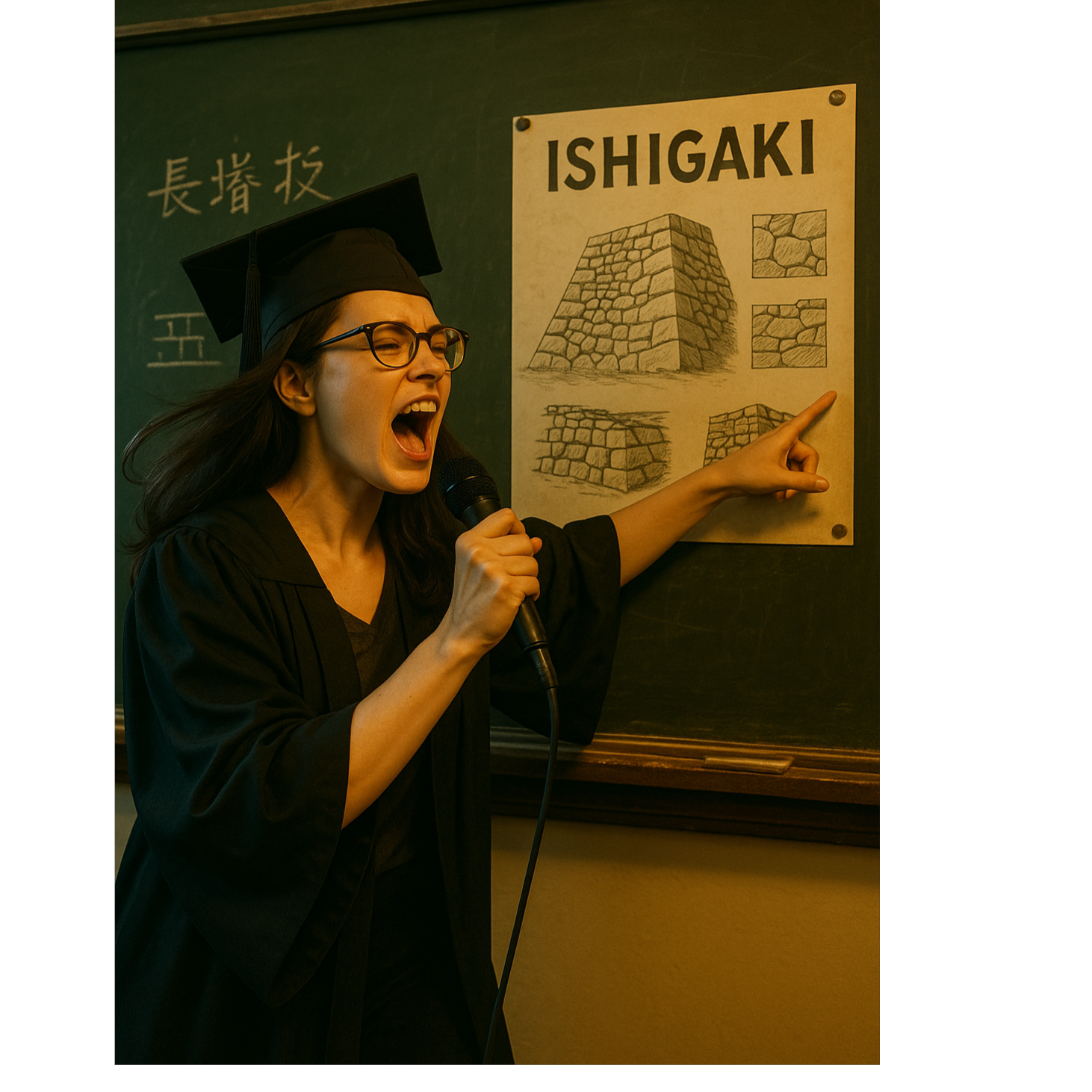
📝やさしいISHIGAKI教室 第一回目

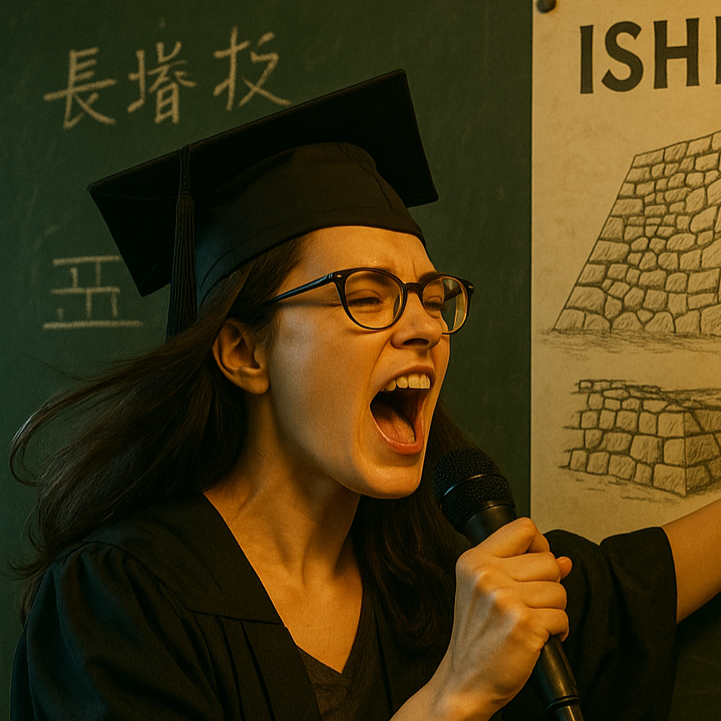
[INTRO - spoken] やさしいISHIGAKI教室 第一回目 みなさん、こんにちは。 今日から始まりました、「やさしいISHIGAKI教室」。 ISHIGAKIの魅力を、みんなで学び、 大切な日本の文化遺産であるISHIGAKIを、 もっともっと好きになってもらい、 末代まで、大切に守ってほしい。 そんな目的ではじまりました。 さて、本日は第一回目。 ISHIGAKIの歴史から、学んでいきましょう。 [VERSE 1 - spoken] まず、単に「ISHIGAKI」と言われますが、 その用途も、種類も、さまざまです。 古くは、紀元3世紀ごろの古墳時代。 「ISHIGAKI」と呼ぶかどうか、賛否はありますが… 巨大な石を積み上げた古墳の石室。 あれは、実はISHIGAKIのルーツではないかと思います。 そういった宗教的な石積みから始まり、 7世紀ごろには、城や砦など、防御施設としてのISHIGAKIが作られるようになりました。 それまでの土塁に比べ、強固で、耐候性の高いISHIGAKIは、 中国や朝鮮から伝わったと言われています。 とはいえ、その時代に、ぐるりと城を囲むISHIGAKIはまだなく、 城郭の一部のみ、ISHIGAKIが積まれている程度でした。 [VERSE 2 - spoken] 現代の「お城」と呼ばれる、石垣に囲まれた城砦ができたのは、 安土桃山時代。 安土城などがそうですね。 巨大な石をふんだんに使い、見た目の迫力と防御力の高さが魅力的です。 足元に使われる石仏も、見どころのひとつです。 緩いカーブを描いて積まれる、しのぎ積みも必見ですね。 さて、城や櫓のISHIGAKIづくりの技術を、民間に応用したISHIGAKIが、 江戸時代から棚田や段々畑、水防のために使われるようになりました。 もちろん、それ以前から民間に使われるISHIGAKIもありました。 江戸幕府が樹立し、太平の世となった江戸時代。 城のISHIGAKI職人は、その技術を地元に持ち帰り、 民間に広げることで、食いつないでいたのではないかとおもわれます。 お城だけじゃない。 各所に、さまざまな味のあるISHIGAKIがあるのは、 江戸時代あってのことでしょう。 [BREAK] [CHORUS - sung] ISHIGAKI! 時を超えて 守り続ける この大地 戦火も 嵐も 砕けぬ魂 我らの誇り 石に刻まれ [VERSE - sung] 祭祀の闇に 積まれし石よ 眠る王を 守る壁 やがて来たる 戦の時代 砦は吠える 石の刃 安土の夢が 天を裂き 巨石は唸る 嵐の中 職人の血潮 槌に燃え 城を抱く 石の海 [BRIDGE - screamed] 棚田に流れ 段々と 命を繋ぐ 水の道 城の血脈 民に宿り 石は生きる 永遠に [FINAL CHORUS - sung + growl] ISHIGAKI! 文化の刃 未来を守れ この大地 戦も 平和も 抱きしめながら 末代まで 石は歌う [OUTRO - spoken] さて、第一回目のISHIGAKI教室はこれにておしまい。 次回も楽しみに待っててくださいね。 🎵machine translation🎵 [INTRO - spoken] Welcome to “Easy ISHIGAKI Class” – the very first session. Hello, everyone. Today marks the beginning of “Easy ISHIGAKI Class.” We’ll explore the charm of ISHIGAKI together, so that more and more people will come to love this precious cultural heritage of Japan and cherish it for generations to come. That’s our mission. Now then, for our very first session, let’s start with the history of ISHIGAKI. [VERSE 1 - spoken] When we say “ISHIGAKI,” it actually has many purposes and types. Long ago, in the 3rd century— whether we should call it ISHIGAKI is debated— there were giant stones stacked to form burial chambers in ancient tombs. I believe those may be the roots of ISHIGAKI. From such religious stone structures, by the 7th century, stone walls were being built for castles and fortifications. Compared to earthen ramparts, these ISHIGAKI were stronger and more weather-resistant, and are said to have been introduced from China and Korea. However, in that era, there were no castles entirely surrounded by stone walls— only certain parts of fortifications had ISHIGAKI. [VERSE 2 - spoken] What we now call “castles” fully encircled by stone walls emerged in the Azuchi-Momoyama period. Azuchi Castle is one example. Massive stones were used lavishly, their visual impact and defensive power were remarkable. Reused stone Buddhas at the base are also points of interest, and the gently curving shinogi-zumi style is a must-see. From the Edo period, the skills used for castle and turret ISHIGAKI were applied to terraced fields, farmland, and flood control structures. Of course, ISHIGAKI for civilian use existed before that. But in the peaceful Edo era, castle stone masons brought their craft back to their hometowns, spreading the techniques to support their livelihood. Not just castles— various ISHIGAKI with unique character can be found everywhere, thanks to the Edo period. [CHORUS - sung] ISHIGAKI! Across the ages Protecting this land we call home Through fire, through storms, the soul unbroken Our pride, carved into stone [VERSE - sung] In the darkness of ritual, the stones were laid Guarding the king who sleeps within Then came the age of war— Fortresses roared with blades of stone Azuchi’s dream split the sky Boulders roared amidst the storm The blood of craftsmen blazed in their hammers Embracing the castle in a sea of stone [BRIDGE - screamed] Flowing to the terraces, step by step The water’s path sustaining life The castle’s lifeblood dwelling in the people The stone lives on, forever [FINAL CHORUS - sung + growl] ISHIGAKI! The blade of culture Protect the future, protect this land Holding both war and peace close Stone will sing for generations to come [OUTRO - spoken] And that concludes the very first session of “Easy ISHIGAKI Class.” I look forward to seeing you next time.
