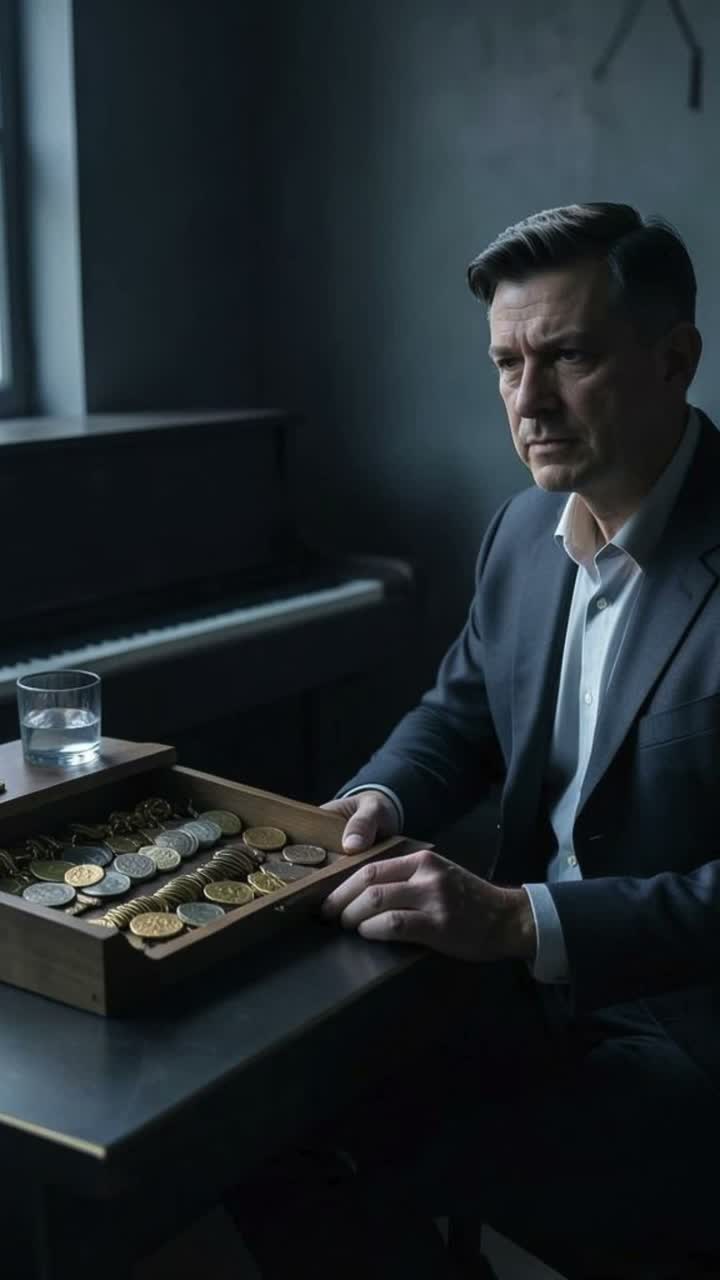
Півсклянки гіркої води/ Half a Glass of Bitter Vodka

"Україна заплатила високу ціну за авантюру Сталіна. Радянський генералісімус разом із Гітлером є відповідальними за Другу Світову війну. Совєцкому Союзу все зійшло з рук: спрацював принцип “переможців не судять”. Москва ухилилася не лише від політичної, а й історичної відповідальності. Могила “Невідомого солдата” в Росії стала символом забуття. “Мертві душі” радянських солдат перетворилися на “символічний” ресурс російської історичної політики." - Яна П., к.і.н., старший науковий співробітник Інституту історії України НАН України --------------- У шафі — медалі, мов ґудзики з олова, Ніхто їх не чистив до блиску як у кіно. Мій дід повернувся не маршем, не словом — Вернувся додому, неначе вікно Без шибки, без світла, без права кричати, Без кадрів геройських для юних очей. Лише — “мобілізували”. Лише — “дали лопату”. І "НКВД за спиною людей". І щороку — півсклянки гіркої води, Наче пам’ять, яку не розбавиш словами. “Хоч би не було війни…” — І мовчання стояло між нами. Не салюти, не прапори, не парадний дим — Лиш очі, старіші за камінь і попіл. Бо війна — це не фільм. І не пісня для гордих парадів. Я шукала легенду — як в книжках і кіно, Де герої красиві й без темних ночей. Та читала Лема (Станіслав Лем, польський письменник) — і стало темно, Наче хтось загасив половину свічей. Лист старий, сімдесят сьомий рік. Німецький лікар. Весна сорок п’ятого. І раптом розумієш: людський чоловік Може стати страшнішим за самого ката. Не вкладається в ноти, не лізе у рот, Не стає ані римою, ані молитвою. Бо коли через Європу проходить народ З розірваною душею і вбитою гідністю — То лишаються села без голосу й сну, Жінки без облич, діти — ніби старі. І солдати несуть у собі не війну, А війну, що вже виграла всередині. І щороку — півсклянки гіркої води, Наче суд над собою без вироку й дати. “Хоч би не було війни…” — Так казав він, не вміючи брехати. Не носив орденів. Не любив тих пісень, Де із смерті ліпили святкове знамено. Бо він бачив таке, Що не можна казати дитині вголос. І тепер я боюся не правди — ні. Я боюся, як легко її замальовують фарбою. Як із попелу роблять святкові вогні, А із мертвих — статистику гарну. Тож нехай буде пам’ять — без бронзи й прикрас. Без брехні, що “вони були чисті й святі”. Мій дід мовчав не тому, що не мав що сказать. А тому, що ці слова Не повинні були існувати у світі. ---------------- "Ukraine paid a terrible price for Stalin’s reckless ambitions. The Soviet Generalissimo, together with Hitler, bears responsibility for the outbreak of the Second World War. The Soviet Union got away with it all: the principle of “victors are not judged” prevailed. Moscow escaped not only political responsibility, but historical responsibility as well. The Tomb of the “Unknown Soldier” in Russia became a symbol of oblivion. The “dead souls” of Soviet soldiers were turned into a symbolic resource for Russian historical politics." - Yana P., PhD in History, Senior Research Fellow at the Institute of History of Ukraine of the National Academy of Sciences of Ukraine. ------------------- In the cupboard — medals like dull tin buttons, No one ever polished them bright like in the movies. My grandfather came back not with marching songs, not with speeches — He came home like a window Without glass, without light, without the right to scream. No heroic scenes for young eyes to admire. Only: “They mobilized us.” Only: “They handed me a shovel.” And “the NKVD stood behind the men.” And every year — half a glass of bitter vodka, Like a memory no words could dilute. “If only there would never be another war…” And silence stood between us. Not salutes, not flags, not parade smoke — Only eyes older than stone and ash. Because war is not a film. And not a song for proud parades. I searched for a legend — like in books and cinema, Where heroes are beautiful and nights hold no darkness. But then I read Lem (Stanisław Lem — a Polish writer) — and everything went dark, As if someone had extinguished half the candles. An old letter. Nineteen seventy-seven. A German doctor. Spring of forty-five. And suddenly you understand: a human being Can become more terrifying than the executioner himself. It does not fit into music, does not pass the lips, Becomes neither rhyme nor prayer. Because when a people crosses Europe With its soul torn apart and its dignity murdered — Villages are left without voices or sleep, Women without faces, children already old. And soldiers carry inside themselves not war, But a war that has already won within them. And every year — half a glass of bitter vodka, Like a trial without verdict or date. “If only there would never be another war…” That’s what he said, incapable of lying. He never wore his medals. Never loved those songs Where death was molded into a festive banner. Because he had seen things That should never be spoken aloud to a child. And now I am not afraid of the truth — no. I am afraid of how easily it is painted over. How ashes are turned into праздничные огни, And the dead into beautiful statistics. So let there be memory — without bronze or decoration. Without the lie that “they were pure and holy.” My grandfather stayed silent not because he had nothing to say. But because those words Should never have had to exist in this world.
