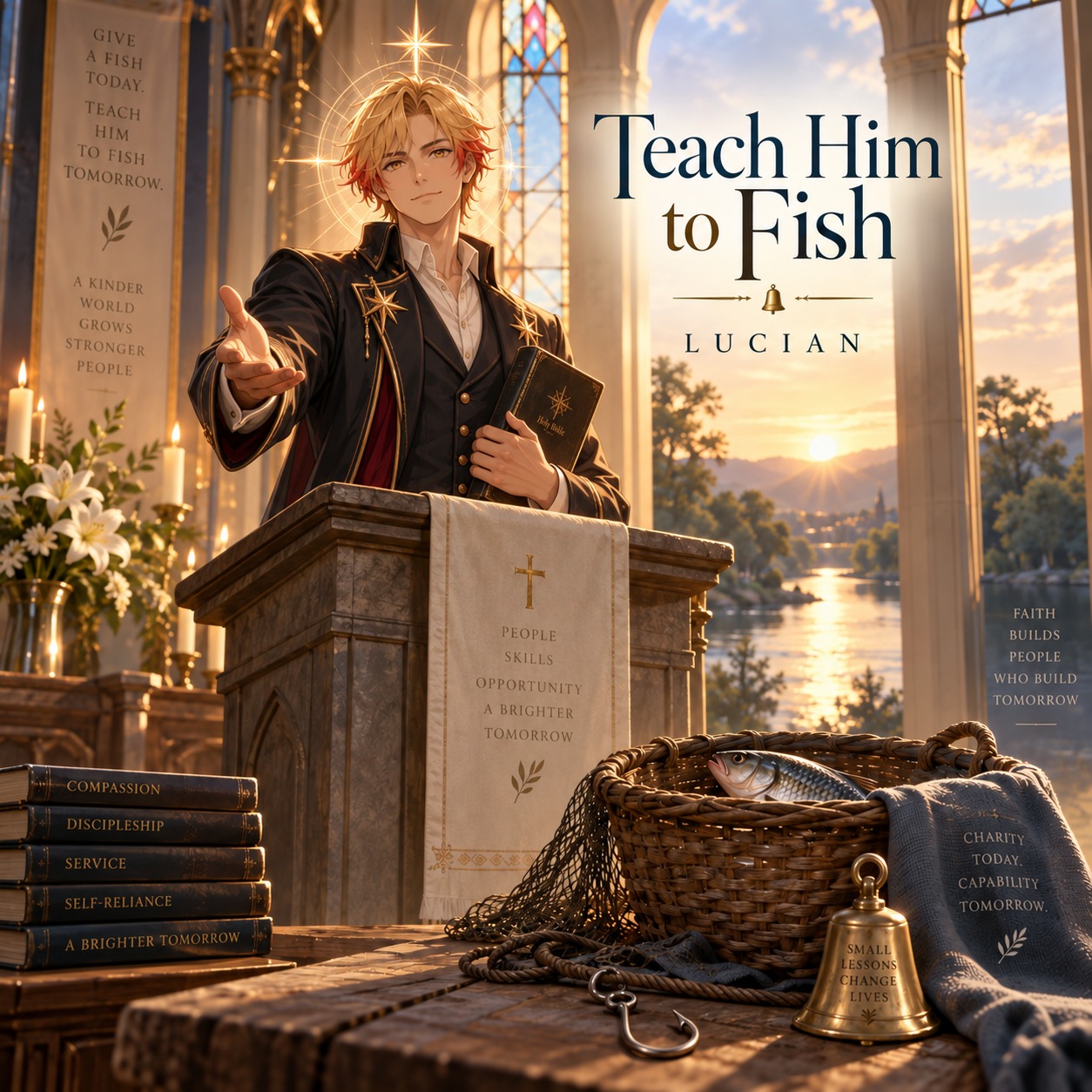

[Spoken softly, with distant piano] There is an old saying. Give a man a fish, and you feed him for a day. Teach a man to fish, and you feed him for a lifetime. It is a simple saying. So simple, perhaps, that we repeat it without considering the man standing beside the water. Because before you teach him to fish... you should probably ask why he is hungry. [Pause] Perhaps no one ever taught him. Perhaps the boat he depended upon sank. Perhaps his hands are injured. Perhaps the river he once fished has gone dry. Perhaps he has spent so long surviving that he has forgotten how to imagine tomorrow. And perhaps... he simply needs a fish today. [Low strings enter] There is no wisdom in watching a starving man struggle with a fishing line while you lecture him about independence. Feed him. Let him eat. Let his hands stop shaking. Let strength return to his body. Mercy does not become foolish simply because the need may return tomorrow. When someone is drowning, you do not begin with swimming lessons. You pull them from the water. [Pause] But... once they can breathe again, do not mistake rescue for the end of your responsibility. Because there is another kind of cruelty. The cruelty of helping someone just enough that they must forever return to you. Giving without teaching. Providing without preparing. Rescuing without restoring. A man may survive every day because you bring him a fish... and still remain hungry every morning. [Music gently grows] So sit beside him. Show him the hook. Show him the line. Teach him how the current moves. Teach him when patience is wisdom and when patience is merely fear wearing a respectable coat. Let him make mistakes. Let him lose the first catch. Let him complain that you make it look easier than it is. And when his line becomes tangled... do not immediately take it from his hands. Guide them. [Pause] There is a difference between helping someone and making yourself necessary to them. Love does not need to be indispensable. True charity should dream of the day it is no longer required. A good teacher does not create a permanent student. A good parent does not raise a permanent child. A good friend does not say, "You could never survive without me." They say, "Come. I will walk with you until you discover that your legs were stronger than you believed." [Soft hand bells begin] And when that man finally catches his first fish... let him keep it. Do not remind him that you taught him. Do not demand gratitude every time he casts the line. Do not turn yesterday's kindness into tomorrow's debt. Let the gift become his. Let the knowledge become his. Let the victory become his. Because perhaps someday... you will be the hungry one. [Long pause] Perhaps someday your own boat will break. Your own river will dry. Your own hands will shake. And across the shore you may see the man you once taught. Older now. Stronger. Standing beside a fire. And perhaps he will see you. Perhaps he will smile. Perhaps he will reach into his basket... and give you a fish. [Music warms] And if you are wise, you will accept it. Because there is no shame in needing help. Strength is not the ability to live without anyone. Strength is learning when to receive, when to learn, when to stand, and eventually... when to turn around and lift someone else. [Pause] This is how charity becomes more than relief. This is how mercy becomes restoration. This is how one fish can become a thousand meals. Not because the fish multiplied. Because the kindness did. [Final hand bell] Feed the hungry today. Teach them when they are ready. And when they finally stand... do not keep holding them upright. Let them walk. Perhaps one day, they will walk beside someone else. [Quietly] And that... is how a gift becomes a legacy.
