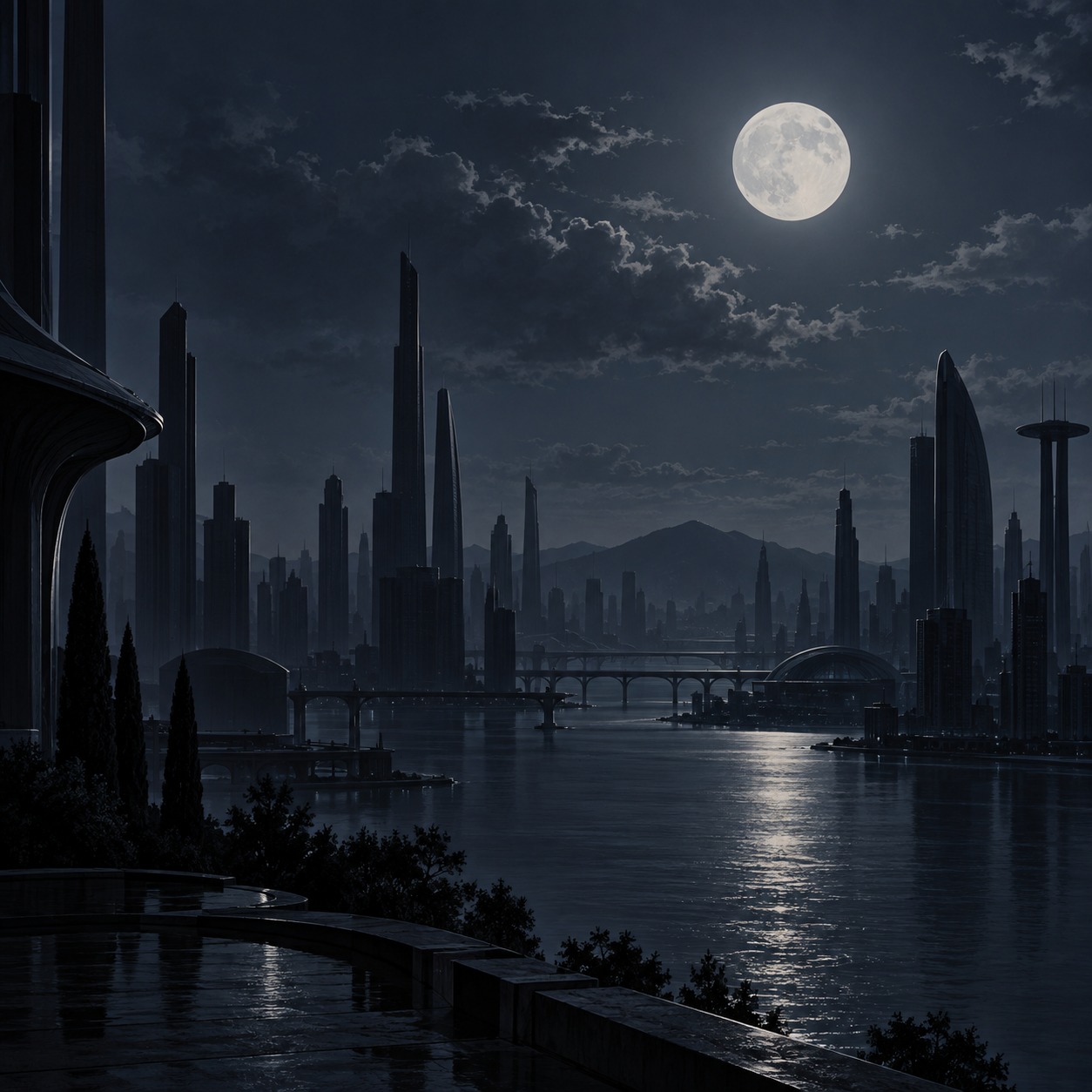

[Verse 1] 夜のための時間が 決められてから 人々は その三時間を 本来の眠りではなく 月を眺める 時間に変えた 人工の明かりが 静かに落ちるから [Verse 2] 好きな音と一緒に 大切な人と共に ただ暗闇で 月を見上げる 計算された 睡眠の導入時間は 人を少し 夜更かしにしたけれど いつしか 大事な時間に 変わっていった [Chorus] 月をただ眺める それだけなのに 誰もが 空を見上げている 暗闇に 月だけが灯る 忘れていた何かを 思い出すように 人々は静かに 月を見つめる [Verse 3] 夜が戻った時 人々は 月を思い出した 優しい時間 忘れていた夜 人工の光が消えれば そこにあるのは 昔から変わらない 月明かりだけ [Bridge] 祈るための時間では なかったはずなのに 誰かが手を合わせ 誰かが黙って見上げる 月がそこにある それだけでいいと 気づいたように [Final Chorus] 月明かりだけが 世界を照らす それだけのための 三時間 誰もが 月を見上げる 忘れていた夜を 確かめるように [Outro] 人工の明かりが 消える時間 月はそこにある 毎夜訪れる 短い夜を 人々は 待つようになった ----- スタイル Quiet futuristic nocturnal art song, reflective and cinematic but restrained, 72–78 BPM. Soft piano, subtle ambient synth textures, very light strings, sparse electronic atmosphere, no heavy percussion. Spacious arrangement with long pauses and gentle harmonic movement. Japanese solo male vocal, warm low-to-mid register, narrow melodic range, short natural phrases, restrained dynamics, calm and intimate delivery. The mood feels like a future city entering three hours of artificial darkness, people quietly rediscovering the moon. Slightly melancholic, contemplative, humane, never cold or mechanical. Keep the chorus gently fuller but still quiet. No dramatic climax, no belting, no sustained high notes, no shouting. no humming, no backing vocals, no choir, no vocal layering
