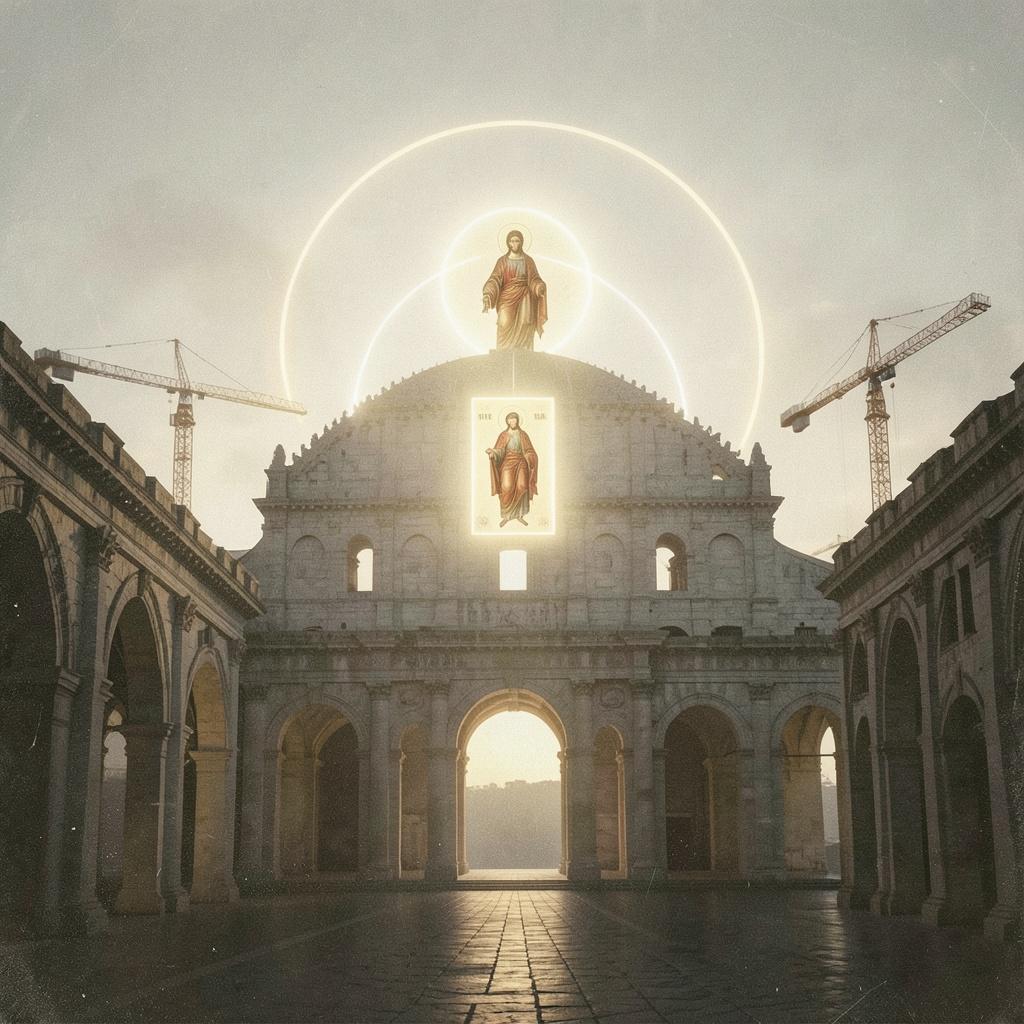

[Intro] The council has spoken. But councils do not end history— they settle it into the life of the Church, where truth must now be lived, not debated. ⸻ [Verse 1] Ephesus has given its answer. Nestorius is no longer voice, but memory. And Mary is rightly named Theotokos— for the One she bore is God made flesh. And yet peace does not arrive when doctrine is declared. ⸻ [Verse 2] The Church still trembles from the weight of controversy. East and West watch each other carefully, as if unity itself must now be learned after being defined. And I inherit this fragile stillness. ⸻ [Chorus] Truth has been spoken. Now it must be held. Not in argument, but in communion. Not in conflict, but in shared confession. ⸻ [Verse 3] Augustine’s voice still echoes from Africa— grace before all merit, mercy before all movement of the will. And though Pelagius is silenced, his shadow fades slowly from the edges of Christian thought. ⸻ [Verse 4] So I turn from dispute to building. For doctrine must become visible if it is to endure in the hearts of men. And Rome begins to change— not in power, but in stone. ⸻ [Bridge] A church rises: Santa Maria Maggiore. Not merely a structure, but a confession in architecture. That what was declared at Ephesus now dwells in the center of worship. ⸻ [Verse 5] For theology must be seen, as well as spoken. And the faithful must enter not only into teaching— but into beauty shaped by truth. ⸻ [Chorus] I am Sixtus. And I do not fight the council’s battles. I preserve its peace. I give it form. I let it become memory that cannot be erased. ⸻ [Final Chorus] Mary is Theotokos. Christ is one Lord, not divided. And the Church, once shaken, now rests in what has been revealed— not as conclusion of struggle, but as beginning of unity. ⸻ [Outro] And from this stillness, Rome is no longer only judge or voice— it becomes dwelling place of doctrine, where truth is not only spoken, but lived, and built, and remembered. [End]
