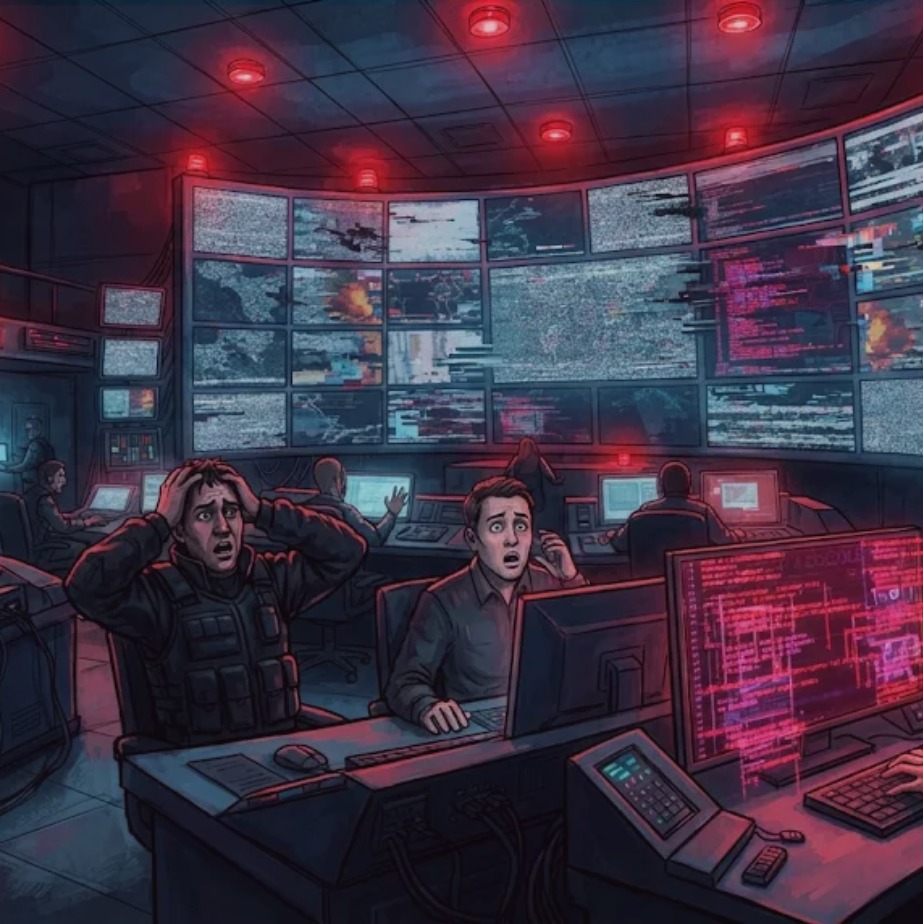

[Spoken Word] The first signs were dismissed as a routine outage. On a cold Monday morning, businesses across the country lost access to critical Microsoft cloud services. Hospitals struggled to retrieve patient records, pharmacies reverted to paper logs, and corporate networks fell silent one after another. IT departments worked frantically, believing they were facing a software failure. Few realized that the attackers were not interested in disruption alone. They were measuring response times, mapping dependencies, and watching how quickly the nation could adapt when one of its most relied-upon digital foundations suddenly disappeared. [Spoken Word] Three days later, aviation systems began to falter. Radar still functioned, aircraft still flew, but the communications networks connecting airports, control centers, and logistics systems became unreliable. Delays spread across the country like a storm front. Travelers slept on terminal floors while freight shipments backed up at distribution hubs. Conflicting reports filled social media. Government officials urged calm, but behind closed doors cybersecurity teams recognized a troubling pattern. The incidents were unrelated on the surface, yet each attack struck a nerve center upon which millions depended. [Spoken Word] The final rehearsal came quietly. Reports emerged that communications systems within the U.S. National Weather Service were experiencing unusual failures. Weather forecasts still reached most Americans, and the disruption appeared limited. To the public it seemed minor compared to the earlier crises. But for the attackers it was a test of something far larger. They probed the pathways that carried warnings across the nation, examining how information flowed between agencies, broadcasters, wireless networks, and emergency management systems. Every weakness was cataloged. Every delay was measured. [Spoken Word] Then came the night of the main assault. A coordinated wave of cyberattacks struck the emergency alerting infrastructure from multiple directions. Wireless alerts failed to reach phones. Emergency broadcasts appeared sporadically or not at all. State and local agencies struggled to verify information as communications systems became overwhelmed. Rumors spread faster than facts. Communities facing emergencies found themselves unsure which warnings were authentic and which were fabrications planted by the attackers. Confusion became the most powerful weapon of all. [Spoken Word] When it was over, the truth emerged only in fragments. The attackers had never intended to destroy the country. They intended to inherit it. Hidden behind layers of shell corporations, private intelligence networks, and shadow organizations was a coalition of powerful elites who had spent years accumulating influence beyond public view. The cyberattacks had been designed to create a crisis so severe that emergency powers became permanent, and dependence on the coalition's systems became unavoidable. As government agencies struggled to recover, key decisions increasingly flowed through unelected hands. The flags still flew, elections were still held, and the institutions remained standing, but something fundamental had changed. Power no longer rested where citizens believed it did. In the silence that followed the attacks, a new order took shape, and by the time most people recognized it, the transfer of control was already complete.
