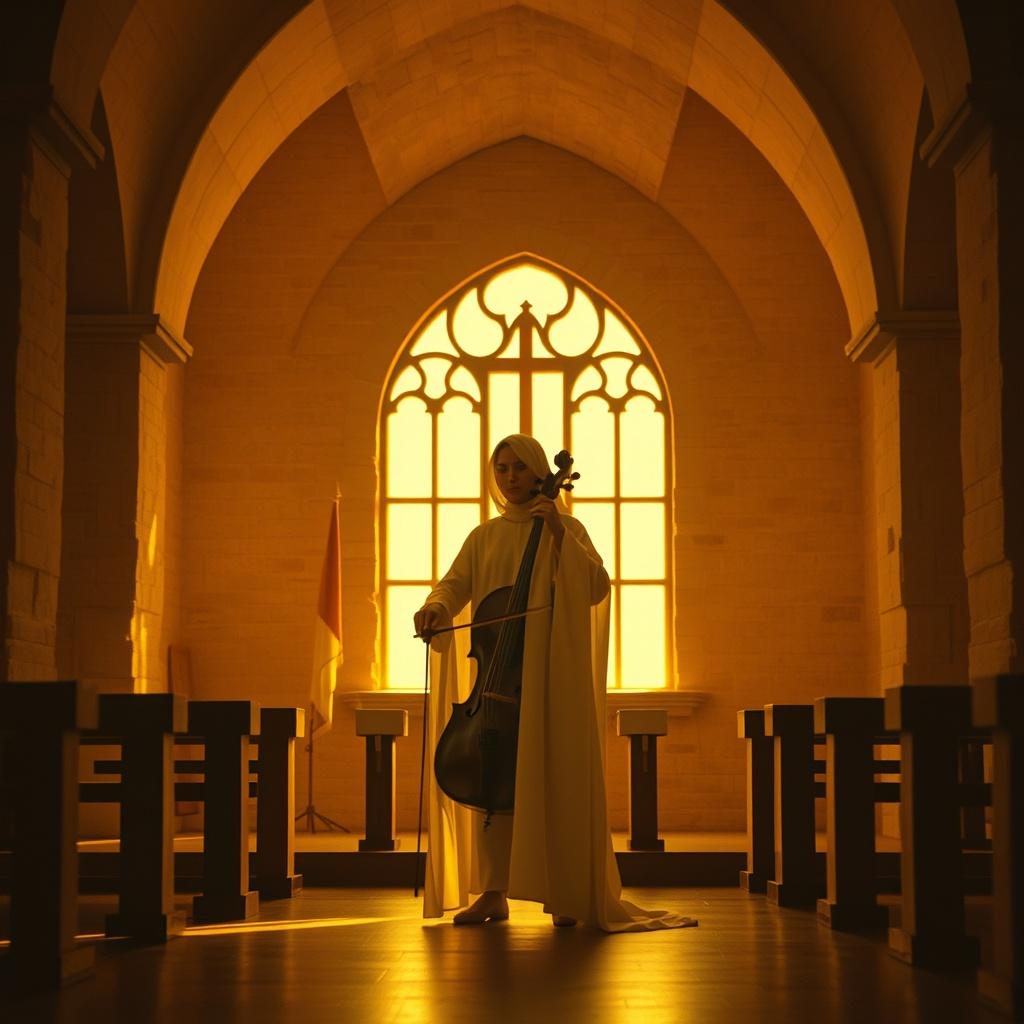
Pslm 21 PART 1 — The Answered Prayer

[intro] [American Episcopal Scholarly-Preaching Sermon] [Mid-sized Episcopal church acoustic — stone, wood, stained glass implied] [Single sustained low cello note underneath, very sparse] [Faint distant Episcopal sanctuary atmosphere] [Preacher — warm female mezzo-soprano, American English with educated Mid-Atlantic sensibility, measured pastoral cadence] Brothers and sisters in Christ, we come this morning to Psalm twenty-one, which is traditionally read as the companion piece to Psalm twenty. Where Psalm twenty was the prayer of the community for their king as he went out to battle, Psalm twenty-one is the thanksgiving of the community when the king has returned victorious. This is liturgical material. It belongs to the worship life of ancient Israel in a specific way. The two psalms function as a liturgical pair — petition and fulfillment, prayer and answer, before-and-after. We who read these psalms now are looking into a worshipping community that knew something we have largely forgotten. That prayer is answered. That when the community of God's people intercedes together for one who has been sent into difficulty, something actually happens in the heavenly places. And when the difficulty has passed, the same community gathers again to acknowledge what God has done. [SECTION ONE — The King's Joy] [Cello note sustained] [Faint sanctuary ambient] [Preacher — measured, deliberate] The psalm opens with the king's joy. The king shall joy in thy strength, O Lord; and in thy salvation how greatly shall he rejoice. Notice what is being celebrated here. Not the king's strength. Not the king's salvation. The Lord's strength. The Lord's salvation. This is one of the marks of biblical kingship correctly understood. The Israelite king was never to celebrate himself. His joy was always to be located in the strength of the One who had granted him his throne and his victories. When David, or any of his successors, returned from battle, the appropriate response was not self-congratulation. It was the acknowledgment that whatever had been accomplished had been accomplished by the strength of the Lord. This is, of course, the model for Christian leadership in every generation. Whatever has been accomplished through us has been accomplished by the strength of the Lord. The joy belongs to him. The salvation belongs to him. We who serve in any kind of leadership — whether in the church, in our families, in our work, or in our communities — must learn this discipline. The joy is in the Lord's strength, not in our own accomplishment. [SECTION TWO — His Heart's Desire] [Cello note steady] [Preacher — continuing, warm pastoral] The second verse continues: Thou hast given him his heart's desire, and hast not withholden the request of his lips. What the community prayed for in Psalm twenty has now been granted. The hearing of the day of trouble. The defending by the name of the God of Jacob. The sending of help from the sanctuary. All of it. Notice how Psalm twenty-one reflects back on Psalm twenty. What was petition there is answer here. This is one of the patterns of biblical faith. We pray. God answers. We give thanks. In our individualistic age this pattern has been largely privatized. We pray our personal prayers. God answers them, or seems not to. We may or may not give thanks depending on whether the answer matched our request. Israel did not pray this way. Israel prayed corporately. Israel celebrated answered prayer corporately. And Israel taught itself, through the very practice of corporate worship, to recognize God's hand in the answers when they came. This is what worship does, dear friends. It trains us to recognize what we would otherwise miss. The same God who answered Israel's prayers in the day of trouble is answering our prayers in our day of trouble. The training of the corporate worship life is what equips us to see this when we are otherwise distracted. [end]
