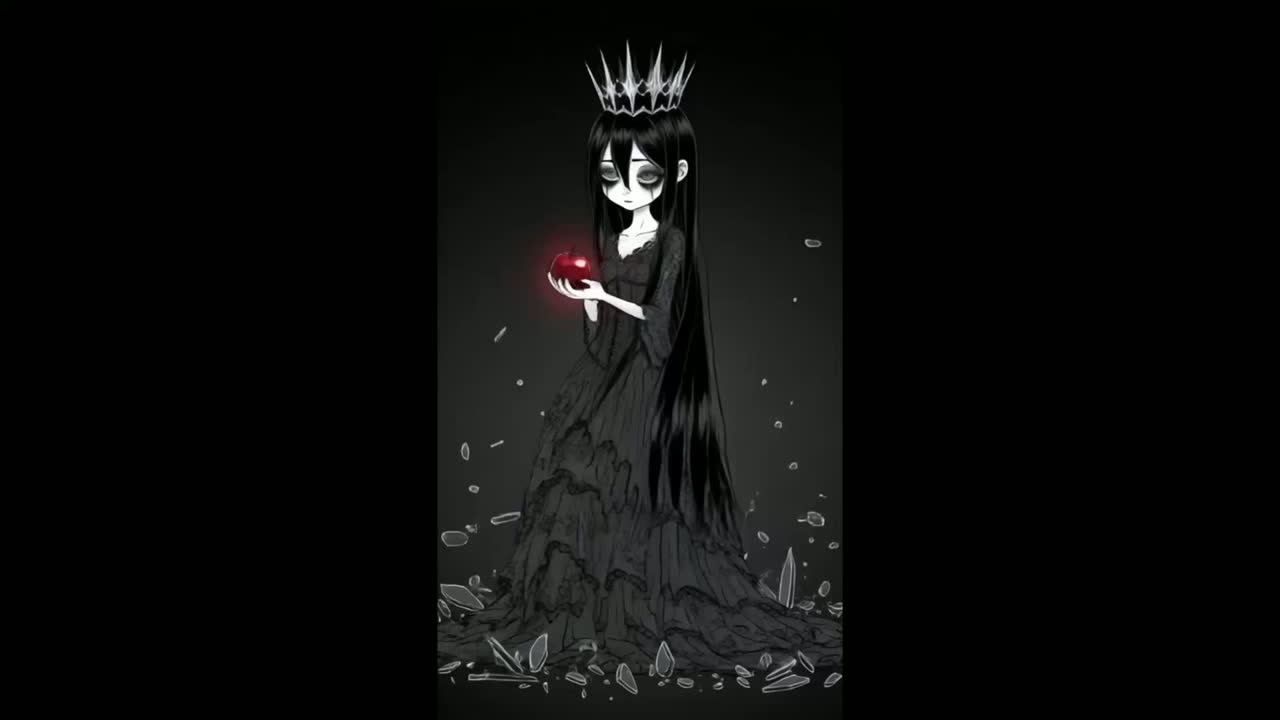
[Verse 1] カガミよ カガミ アタシは だぁれ きのうの アタシ きょうの ハズレ ヒビ ヒビ ヒビ割れて わらえば こぼれるカケラ ふえるのワ カゲばっか [Pre-Chorus] ねえ ねえ のこってる? アタシのブン キズつけてイイのは アナタだけ (でしょ? でしょ?) [Chorus] いちばん (じゃなきゃ) いちばん (じゃなきゃ) ひとつだけ? 選ばれるのは アタシだけ! マルバツ つけて ツバ つけて きれいな順に サヨナラしなきゃ [Verse 2] カガミよ カガミ アナタは だぁれ きょうの アタシ きのうも ハズレ ねえ ねえ ねえってば ズルいよね ムクなフリして 知らんふり ウソばっか [Pre-Chorus] いつ まで 待てばイイ? アタシのバン 決めつけてイイのは アナタだけ (でしょ? でしょ?) [Chorus] いちばん (じゃなきゃ) いちばん (じゃなきゃ) ひとつだけ? 選ばれたいのは アタシだけ! ピカピカ してる あいだ だけ ダイジ ダイジに してあげる って [Bridge] もしも もし ほしい 答え ほしくて 泣きそうに してたなら 答えてくれた? それとも はじめっから アタシは カズじゃない? [Final Chorus] カガミよ カガミ めぐり めぐって ウソを ならべて くりかえす うつすのは シンジツだけ こわれたのは アタシだけ? [Outro] ぱりん ぱりん ぱりん ぱりん ぱりん ぱりん “Mirror, Mirror” (kawaii without irony ver.) [Verse 1] Mirror, mirror Tell me, please Who am I Supposed to be Yesterday’s face Still on my skin Today you say I didn’t win Cracks, little cracks I try to smile Something spills A little while I pick the pieces One by one But all I find Are shadows, none [Pre-Chorus] Hey… Is there still A place for me? You’re the only one Who gets to touch me Right? [Chorus] If I’m not the one If I’m not the one Is there room For me at all? Check the boxes Mark the lines Say goodbye To those who fall [Verse 2] Mirror, mirror Who are you You never ask You only choose Some stay quiet Some stay kind They never count What’s left behind Why don’t they ask If they’re enough Why don’t they feel This little cut [Pre-Chorus] How long Do I wait For my turn? You decide Who gets held Who gets burned [Bridge] If my question Came from love From being scared Of fading out If I was crying Just a bit Would you say “I still see you”? Or was that answer Never there From the very start [Final Chorus] Mirror, mirror Round and round You say the same Without a sound You call it truth You call it fair But I’m the only thing Breaking here [Outro] Crack… Crack… I hold the glass It cuts my hands Still, I ask. [Appendix] Why this English version sounds different — On the essence of “Kawaii” in Japanese aesthetics This English lyric is not a direct translation of the original Japanese text. The difference is intentional. The Japanese version is aggressive, hysteric, and violent in its rhythm and diction. The English version is quiet, fragile, and restrained. This contrast is not a loss of intensity—it reflects a difference in aesthetic logic. To understand this, it is necessary to explain what “Kawaii” truly means in Japanese culture. “Kawaii” is not cuteness. It is compassion for what cannot be saved. In many Western contexts, cute is associated with humor, irony, or infantilization. In Japan, kawaii functions very differently. Kawaii is an aesthetic that allows us to remain close to weakness without judging it. Something can be: powerless, fragile, outdated, useless, already failing… and still be called kawaii. Not because it is funny. Not because it is ironic. But because it is still here. This is why kawaii often appears where functionality, strength, or beauty has already begun to collapse. Aging, beauty, and the cruelty of a single truth: The underlying theme of this song is not simply the “Evil Queen reclaimed.” It is the irreversible violence of a system that tells only one truth. The mirror is lying by telling only one truth. That truth is youth. That truth is surface beauty. That truth is ranking. Aging is unavoidable. But when beauty is reduced to a single measurable value, aging becomes a moral failure. Those who are most devoted to beauty are often the ones destroyed first. They do not become evil by choice. They are reshaped into something cruel by a structure that offers no second answer. Why childish language appears in the Japanese version: The Japanese lyric uses childish sounds, repetition, and nursery-like phrasing. This is not regression. In Japanese aesthetics, childlike language often points to: emotions before they are disciplined feelings before they are rationalized vulnerability before it is denied Even in a mature, intelligent, refined woman, there exists what might be called an “eternal少女 (shōjo)”—not youth as age, but youth as exposed sensitivity. Using childish language is a way to protect that sensitivity, and at the same time, to expose it mercilessly. It is both romantic and cruel. Why the English version is quieter: If the same childish aggression were translated directly into English, it would likely be read as irony, parody, or camp. That would betray the core intention. The English version therefore chooses restraint: fewer exclamations simpler vocabulary softer rhythms Not to weaken the song, but to preserve kawaii without irony. Here, vulnerability is not performed. It is simply allowed to exist. A metaphor: A tropical fish is beautiful in a tank. On the shore, it cannot survive. It is no longer useful. It cannot even be eaten. In many cultures, this is tragedy or decay. In Japan, one might still say: kawaii. Not to deny death, but to refuse to erase the value of what has already lost its place.
