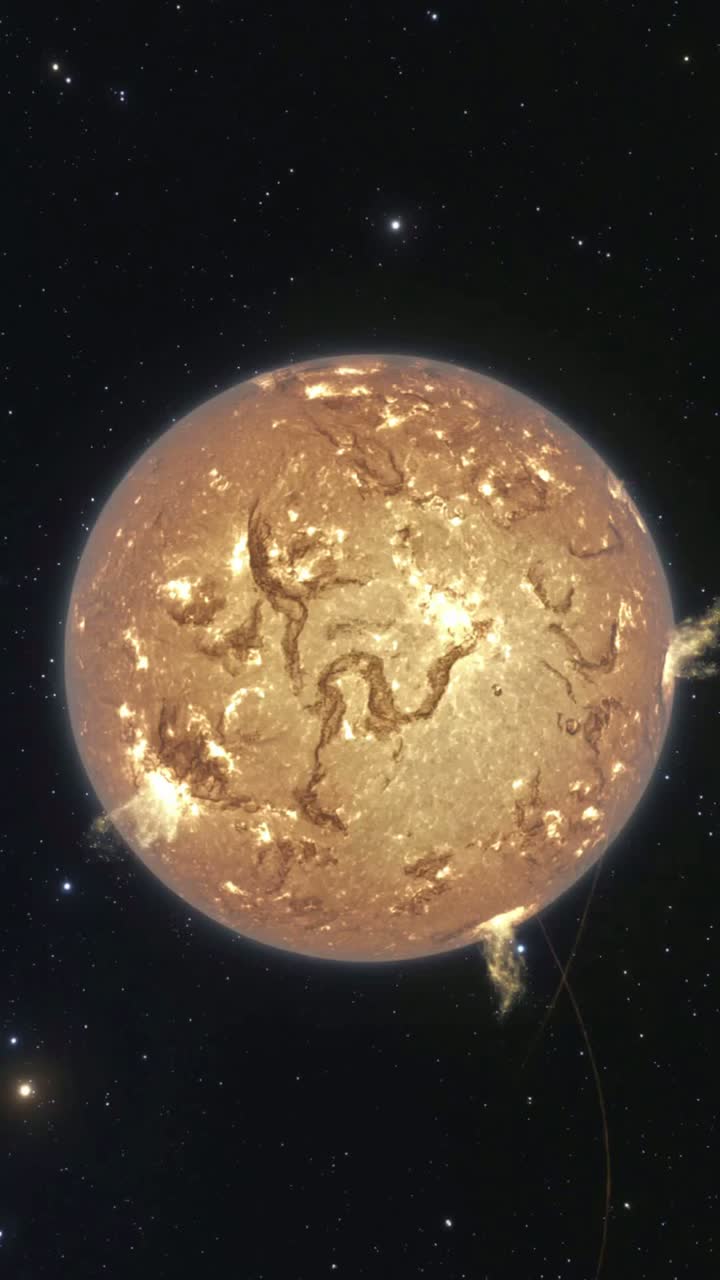

The Sun, a yellow dwarf star at the center of our solar system, is a massive ball of hot gases whose gravity keeps planets, asteroids, and other objects in orbit. Its magnetic field, generated by electric currents, extends through the solar system via the solar wind, influencing Earth’s seasons, weather, climate, ocean currents, radiation belts, and aurorae. Located in the Orion Spur of the Milky Way, the Sun orbits the galaxy’s center at about 450,000 miles per hour, taking roughly 230 million years per orbit. It rotates on its axis with a 7.25 degree tilt, spinning every 25 days at the equator and every 36 days at the poles due to its gaseous composition.
