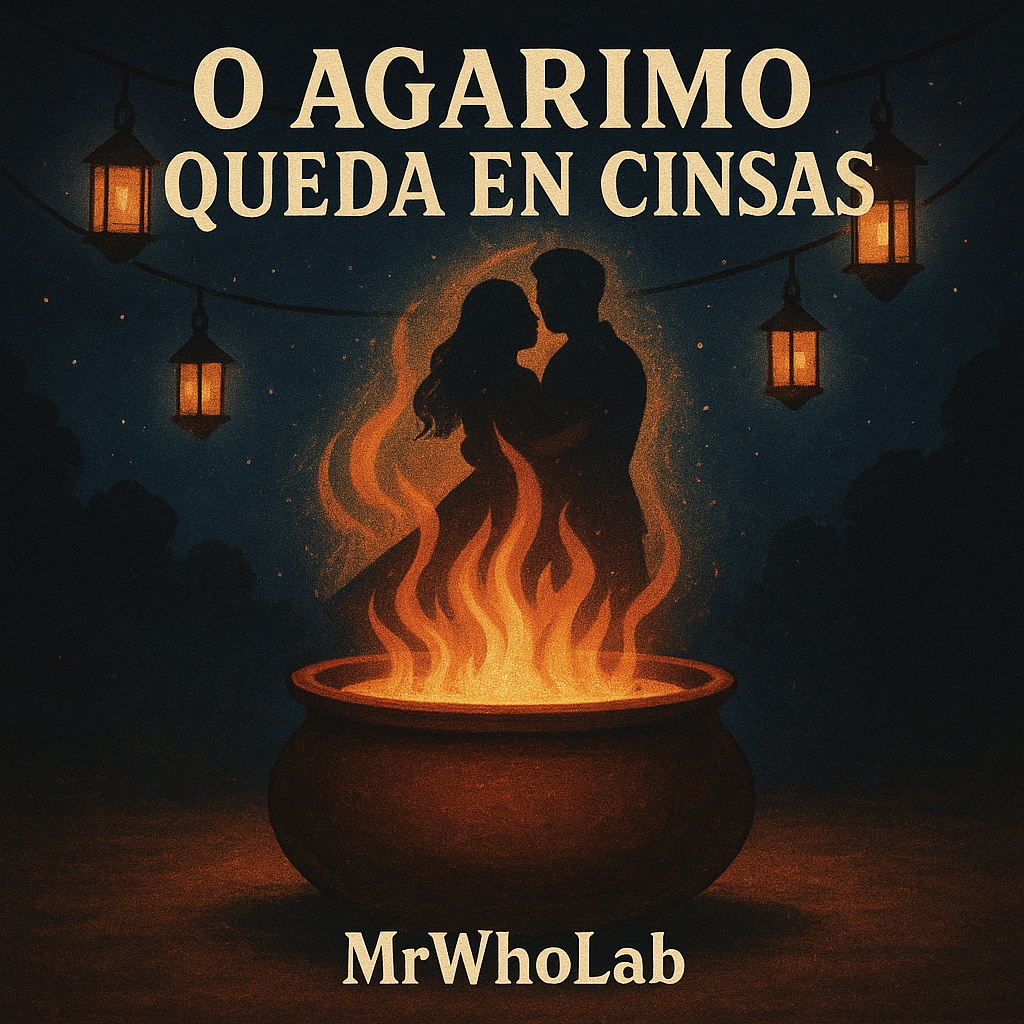

Cos pais visten a chaqueta (In front of their parents, they put on their jackets) Logo sacan a pandeireta (Then they take out the tambourine) Bailanchen ca muñeira (They dance the muñeira with them) As menudiñas caen na festa (The young girls fall into the party) Deitanse cas galiñas (They go to bed with the hens) Co galo espertan feitas (They wake up with the rooster, ready) As nais andan a espreita (The mothers are on the lookout) Mas a cama foi desfeita (But the bed was left unmade) Vaia como soa a gaita (Oh, how the bagpipe sounds) Que co pandeiro levantan a saia (With the tambourine, they lift their skirts) Vaia como soa a gaita (Oh, how the bagpipe sounds) Que co pandeiro levantan a saia (With the tambourine, they lift their skirts) Coa calor quitan a faixa (With the heat, they take off the sash) A queimada fai a maxia (The queimada works its magic) Mais refrescan as noitiñas (But the nights grow cooler) O agarimo queda en cinsas (Affection turns to ashes) Hay quen vive na foliada (Some live for the party) Elas non esquecen a velada (They never forget the evening) Uns polo mundo vagan (Some wander through the world) Outras quedan sempre caladas (Others remain forever silent) Vaia como soa a gaita (Oh, how the bagpipe sounds) Que co pandeiro levantan a saia (With the tambourine, they lift their skirts) Vaia como soa a gaita (Oh, how the bagpipe sounds) Que co pandeiro levantan a saia (With the tambourine, they lift their skirts) Vaia como soa a gaita (Oh, how the bagpipe sounds) Que co pandeiro levantan a saia (With the tambourine, they lift their skirts) Vaia como soa a gaita (Oh, how the bagpipe sounds) Que co pandeiro levantan a saia (With the tambourine, they lift their skirts)
