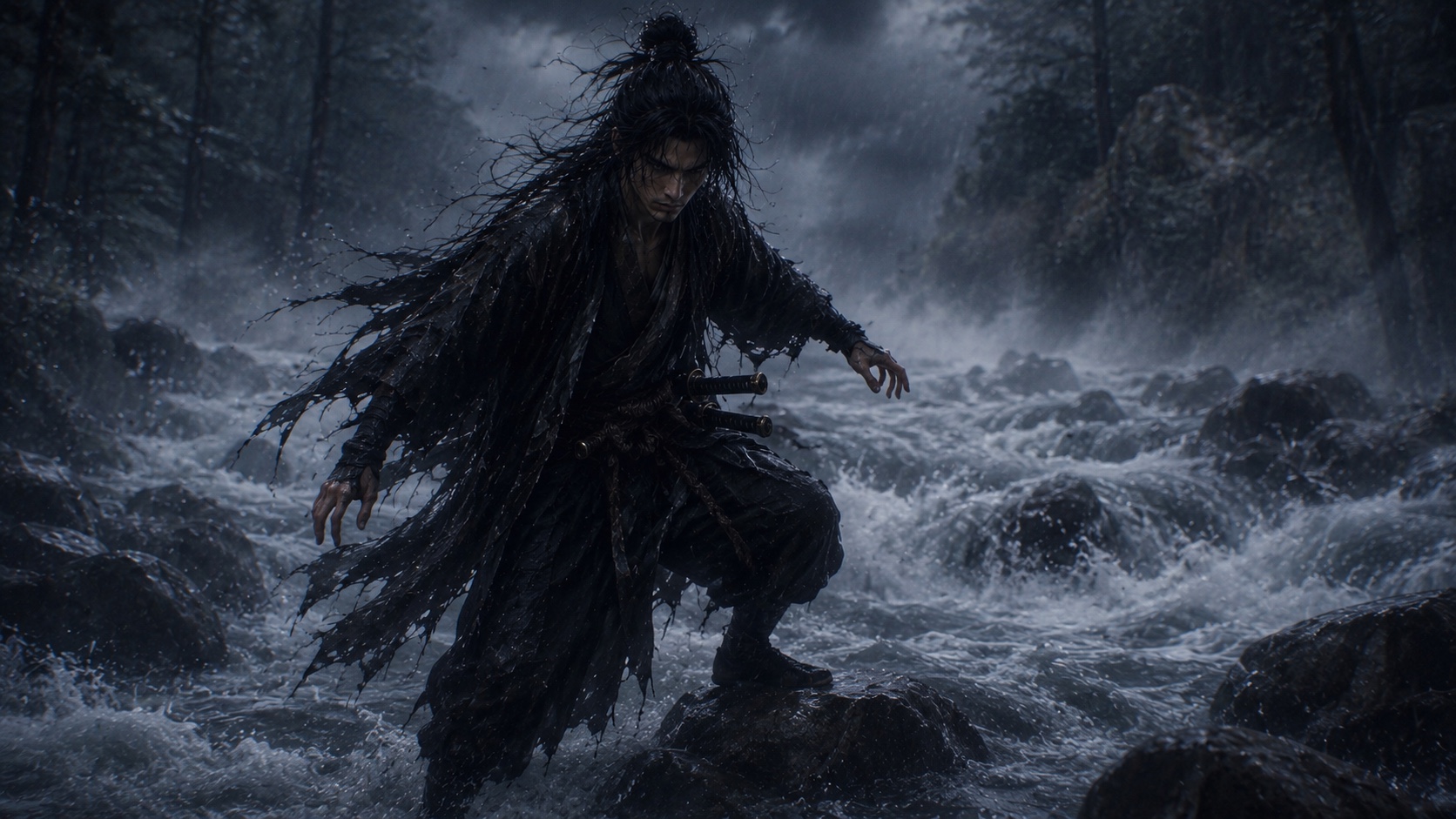
【STRICT INSTRUMENTAL SCORE】 【MUSIC ONLY】 【NO VOCALS】 【NO HUMAN VOICE】 【ALL MELODIES PLAYED BY INSTRUMENTS】 【Title: 深き渡渉】 【Core Image: An ancient Japanese swordsman faces a violent river crossing】 【He does not fight the current】 【He becomes empty, reads the flow, finds the shallow path, and walks through one precise opening】 【Calm but alert】 【Relaxed but ready】 【Stillness with hidden blade】 【Mastery through reason】 【Main Motif: Create one strong 3-to-5 note crossing motif】 【Motif shape: low note, rising motion, brief pause, falling answer, quiet resolution】 【Use the same motif throughout the track】 【Grand at the opening】 【Fragmented in the middle】 【Clear reprise near the end】 【Do not create a new final melody】 【Opening】 【FIRST SOUND: huge full orchestra】 【No water sound before the orchestra】 【No shakuhachi before the orchestra】 【No flute intro】 【No solo intro】 【Full strings and low brass state the main crossing motif immediately】 【Big, wide, majestic, dangerous】 【Then sudden silence】 【River Appears】 【After the silence, roaring cold river enters】 【Thin sho drone】 【Low shakuhachi enters slowly for the first time】 【Shakuhachi answers fragments of the orchestral motif】 【Sparse texture】 【Feeling: do not resist the flow】 【Section A: Reading the Current】 【Koto enters softly with short two-note ripple figures, po-pon, po-pon】 【Koto rhythm feels slightly irregular, like observing unpredictable water】 【Low shakuhachi repeats the motif quietly with breath and space】 【Use pauses, off-beat ripples, and small unanswered phrases】 【Calm but alert】 【Section B: Finding the Shallow Path】 【Low strings enter with a slow pulsing ostinato】 【Koto ripple pattern spreads wider】 【Sho drone opens slightly】 【Harmony becomes darker and more suspended】 【Shakuhachi phrases become shorter and more precise】 【Tension rises, but do not become heroic】 【Still Break: Becoming Empty】 【Drop most instruments】 【Natural river in front】 【One low shakuhachi breath tone】 【One sparse koto answer】 【Long silence】 【No melody for a moment】 【Middle Crossing: Controlled Grandeur】 【Taiga-drama orchestra returns with controlled grandeur】 【Strings carry the same crossing motif in a restrained noble form】 【Koto keeps a steady ripple foundation】 【Sho opens wider】 【Soft distant odaiko heartbeat enters slowly】 【Low strings create forward motion】 【This is the first major lift, but not a victory climax】 【Feeling: walking through the gentle current】 【Blade in Flow】 【One rare biwa accent】 【Brief silence after the biwa】 【Low shakuhachi answers with only a motif fragment】 【Koto ripples return softly】 【The blade moves without disturbing the flow】 【Final Crossing】 【Clear reprise of the same crossing motif】 【Orchestra and low shakuhachi share the melody】 【Strings are broad but calm】 【Low brass supports, not triumphant】 【Koto spreads like widening ripples】 【Move naturally toward one precise point】 【No heroic victory climax】 【Outro】 【Orchestra fades slowly】 【Koto becomes sparse】 【Low shakuhachi plays final motif fragment】 【Natural water remains】 【Long silence】 【One single water droplet from kimono hem】 【Pochan】 【End with the sound of water dripping】

0/500