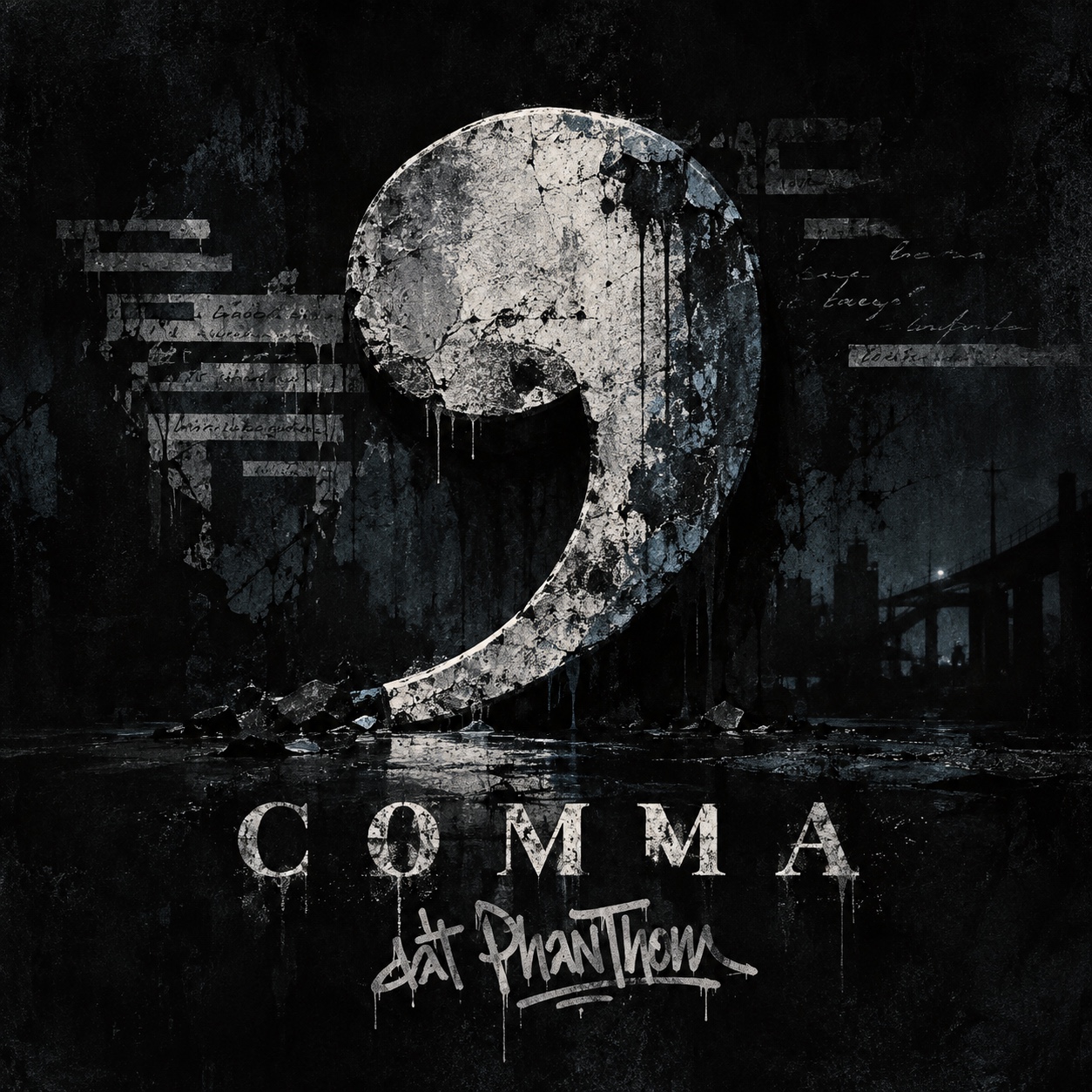
Comma


[Verse 1] You heard “I’m fine” and filed it under fact, never stayed long enough to hear what followed that. I said “I trust you,” comma, “show me what you know,” you killed the second half before it had a chance to grow. “I understand,” comma, “I still disagree,” same words in the front, different ending underneath. “I said yes,” comma, “not to everything you planned,” one little curve can put the power back inside the hand. You quote the first line, cut the sentence at the seam, turn a partial thought into a fully finished theme. Fast conclusion, clean position, easy to repeat, but meaning doesn’t stop because the wording took a beat. [Call / Response] You put a period— (I left a comma.) Thought I was finished— (I wasn’t done.) Heard the first half— (Then judged the whole one.) Wait for the clause. (Then judge what I said.) [Verse 2] Headlines love a full stop right before the inconvenient, clip the explanation, make the simple version convenient. “He failed,” comma, “after carrying the weight,” “He won,” comma, “but the cost arrived too late.” “She left,” comma, “when staying meant pretending,” “He stayed,” comma, “while everything was ending.” Same event, different frame, depending where you cut, language isn’t lying — but selection often does enough. A sentence can be weaponized without changing any word, just remove the piece that makes the first one less absurd. No fake quote required, no fiction to invent, just end it half a second before the actual intent. [Call / Response] You put a period— (I left a comma.) Made it sound certain— (It wasn’t settled.) Took my first answer— (I had another.) Wait for the clause. (Then judge what I meant.) [Bridge – Call / Response] You heard “yes”— (Comma.) You heard “no”— (Comma.) You heard “I know”— (Comma.) You heard “I don’t”— (Comma.) What comes next? (The part you skipped.) What changes first? (The meaning.) What made it clean? (The cut.) What made it wrong? (The cut.) One word before it— (Not the whole thought.) One pause inside it— (Not a full stop.) You want the answer? (Let it continue.) You want the truth? (Don’t finish it for me.) Comma— (Keep it open.) Comma— (There is more.) Comma— (Don’t decide yet.) Comma— (Wait for the clause.) [Verse 3] Maybe I do it too when I already chose a side, hear enough to feed the answer that I carried in my mind. Catch the phrase that fits, ignore the words that complicate, turn a living argument into something I can label straight. So comma means restraint when the instinct says conclude, means maybe there is context underneath the attitude. Not every second clause excuses what came first, sometimes what comes after makes the first half even worse. “I was wrong,” comma, “and I knew it from the start.” “I forgive you,” comma, “but you don’t regain that part.” “I believe you,” comma, “still I need to see the proof.” The comma isn’t weakness — it just leaves some room for truth. And when the sentence finally earns the right to close, when the clause has had its space and everybody knows, then place the final mark, no maybe left to solve— but don’t call it finished while the meaning still evolves. [Final Call / Response] You put a period— (I left a comma.) You wanted an answer— (I was still speaking.) You wanted it simple— (It wasn’t simple.) So wait for the clause— (wait for the meaning.) Then place the point.
