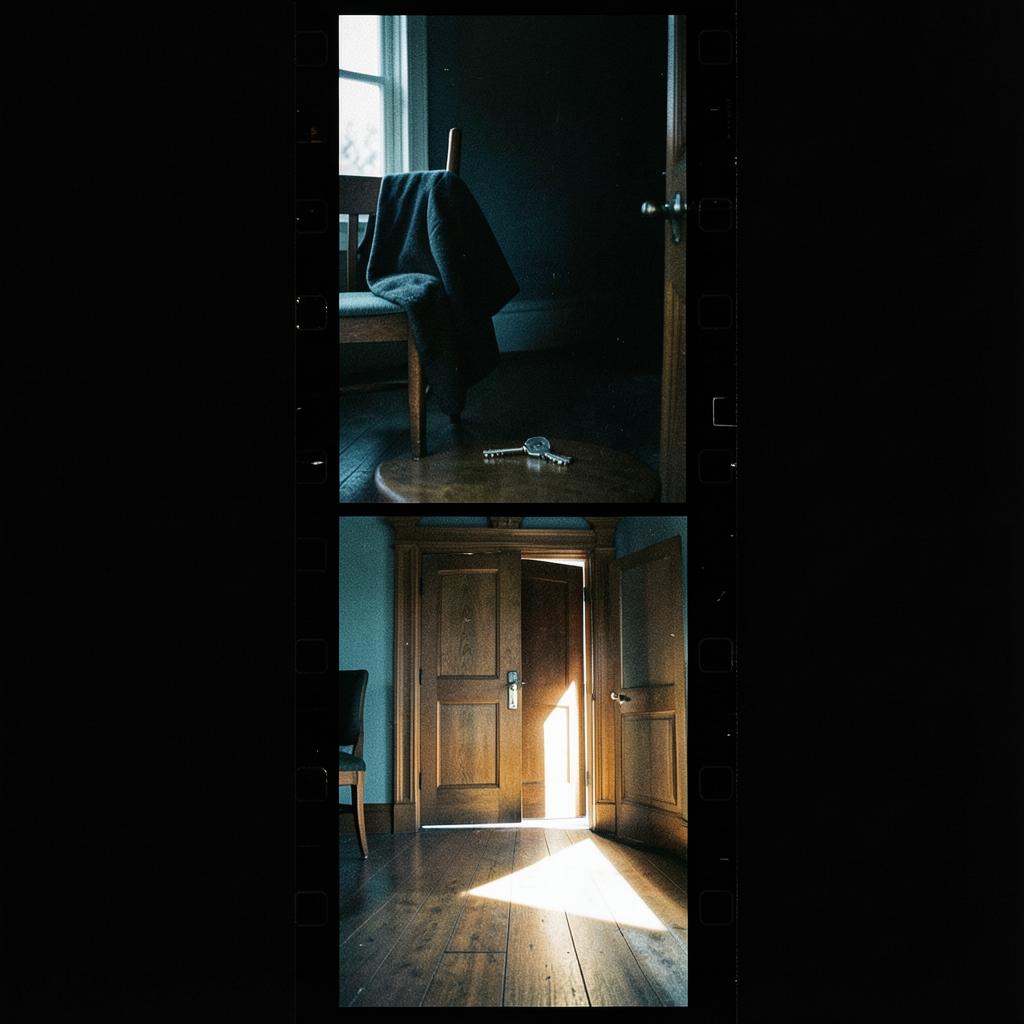
New Ground (Halftime Sub-Techno Reframe)

[WEEK 2 — THE DOOR WAS ALREADY OPEN] [PREMISE] [Build a track where one familiar chord quietly changes allegiance. G major begins as the dominant of C minor, but without stopping the groove, it becomes the doorway into E minor. The modulation should feel like discovering that the room has moved around you.] [FRAME] [132 BPM • C minor → E minor • cinematic UKG × restrained hard-trance • close human verse • suspended pivot • kinetic release] [MAIN TECHNIQUE — PIVOT-CHORD REINTERPRETATION] [Use G major in two roles:] [G major = V in C minor, using the B-natural of C harmonic minor] [G major = III in E minor] [The chord itself does not change. Its surroundings change how the listener understands it. Introduce D major and B7 after the pivot so the ear accepts E as the new tonal centre.] [SECTION CHALLENGE] [VERSE — 16 BARS] [Establish C minor with clipped UKG chords. Keep the topline within G–A♭–B♭–C. Do not introduce B-natural until the final bar.] Cm | A♭ | E♭ | G [i | VI | III | V] [LYRIC SEED] Keys in my hand Coat on the chair I heard the lock You weren’t there [PIVOT — 8 BARS] [Hold G major for two bars. During the first bar, let it behave like a tense dominant awaiting C minor. During the second, introduce an F♯ in an upper texture. That single note begins redefining G as III of E minor.] Cm | G | G | D [i in C minor | V in C minor / III in E minor | III | VII in E minor] [Do not resolve the first G back to C minor. Let the missing resolution create the emotional fracture.] [PRE-DROP — 4 BARS] [Use B7 to tonicize E minor. Place D♯ in one exposed instrument so the new dominant function is unmistakable.] D | B7 | B7 | silence [VII | V7 of E minor | suspended dominant | withheld resolution] [DROP — 16 BARS] [Resolve into E minor on the first full kick. Keep the vocal melody centred on G so it survives the modulation: G was the fifth of C minor and becomes the minor third of E minor.] Em | C | G | D [i | VI | III | VII] Still here New ground Same heart Different sound [FINAL PASS — 8 BARS] [Repeat the pivot more quickly to prove that the listener now understands its double meaning.] Cm | G | D | B7 | Em [i in C minor | V / pivot III | VII | V7 | i in E minor] [SOUND-DESIGN / SPACE CONSTRAINT] [The pivot chord must keep exactly the same MIDI notes and velocity both times. Change only its spatial identity: first G major is narrow, dry and slightly behind the listener; second G major gradually externalizes beyond the headphones as F♯ enters from the right rear. Harmony changes meaning while the chord remains physically untouched.] [COMPLETION TEST] [Play Cm → G and pause. It should strongly suggest a return to C minor. Then play G → D → B7 → Em. The same G must now sound native to E minor. If both interpretations feel convincing without a transition effect, the pivot works.] [COMPACT TEST PROGRESSION] Cm | A♭ | E♭ | G | D | B7 | Em | C [C minor: i | VI | III | V] [G is reinterpreted as III of E minor] [E minor: VII | V7 | i | VI] [CORE RULE] [Do not change the doorway. Change what exists on the other side.]
