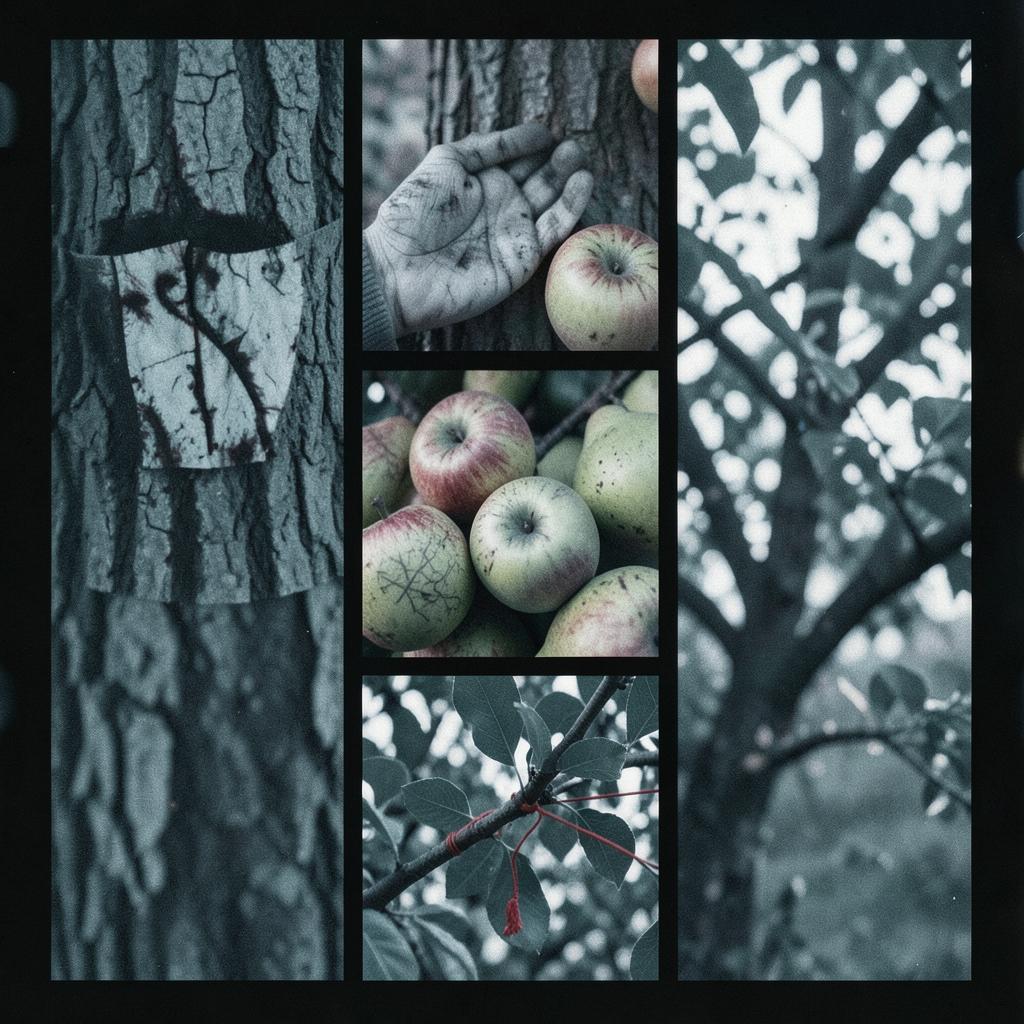
Signal Stage Presents - The Orchard at the End of Names: Letters No One Sent

[Narrator] At the end of the road, where the map forgets itself, there is an orchard that keeps what people lose. Apples, pears, plums—each one heavy with a name no one can hold onto for long. [Sound cue: Wind through branches. A gate creaks open.] [Marin] Hello? [Narrator] Marin has walked three days with a paper in her pocket and a name on the edge of her tongue. She has come for the brother no one remembers. [Elio] If you’re here to pick fruit, you’re late. [Marin] I’m here for an answer. [Elio] That depends on the question. [Marin] My mother said there was a boy. Then she said there wasn’t. Then she cried whenever I asked again. [Elio] People come here for that kind of thing. [Marin] You’re the keeper? [Elio] I tend the trees. The orchard decides the rest. [Sound cue: A basket set down. Soft thud of fruit.] [Marin] Then let it decide fast. [Elio] Don’t touch the low branches. [Marin] Why? [Elio] Because the first bite takes the easiest name. [Narrator] Marin looks past him. The trees are packed with fruit the size of fists, each one marked with tiny, pale ridges like letters under skin. [Marin] That’s impossible. [Elio] You’d be surprised what grows here. [Sound cue: A single fruit falls and rolls in the dirt.] [Marin] Wait— [Elio] Too late. [Marin] What happens if someone eats one? [Elio] They remember a name they never knew they had. Or they lose one they were using. [Marin] That doesn’t make sense. [Elio] Nothing important does. [Narrator] Marin takes the paper from her pocket. The ink has smeared to a gray shadow. [Marin] I had a name once. For him. I wrote it down every year so I wouldn’t forget. [Elio] Say it. [Marin] I can’t. [Elio] Then the orchard can’t hear you. [Marin] That’s ridiculous. [Elio] Maybe. But you walked here anyway. [Sound cue: Leaves shiver. A bee hums close, then passes.] [Marin] I was told my brother vanished before I was born. My mother said his room stayed shut. My father said there was never a second crib. My aunt said a boy was buried under a pear tree that died the same winter. [Elio] Did any of them tell the same story twice? [Marin] No. [Elio] Then one of them was close. [Marin] Close to what? [Elio] The truth. Or the grief. [Narrator] Marin steps deeper between the rows. The air changes there—cooler, sweeter, almost metallic. On one branch hangs a cluster of fruit tied with red string. [Marin] What’s that? [Elio] Named stock. Old work. [Marin] Why tie them? [Elio] So we know which ones bite back. [Marin] You keep saying “we.” [Elio] Because I’m not the only one who tends the trees. [Marin] Then where is everyone? [Elio] Most people don’t stay after they hear their own name in the dark. [Sound cue: Distant footsteps approaching through grass.] [Junia] Elio? You brought another one? [Marin] Who are you? [Junia] Junia. I gather what drops. [Marin] Drops? [Junia] Memories. Names. The fruit that goes soft first. [Marin] I’m looking for my brother. [Junia] Everyone is. [Marin] Mine was forgotten. [Junia] That’s usually how they start. [Elio] Junia. [Junia] What? She needs to know. [Marin] Know what? [Junia] That the orchard doesn’t keep strangers. It keeps the missing parts of families. [Marin] Then it has my brother. [Junia] Maybe. [Marin] “Maybe” is not enough. [Junia] It’s all the orchard ever gives. [Narrator] Junia lifts her hand and points to the tallest tree at the center of the row. Its trunk is split clean down the middle, but both halves are alive. [Junia] See
