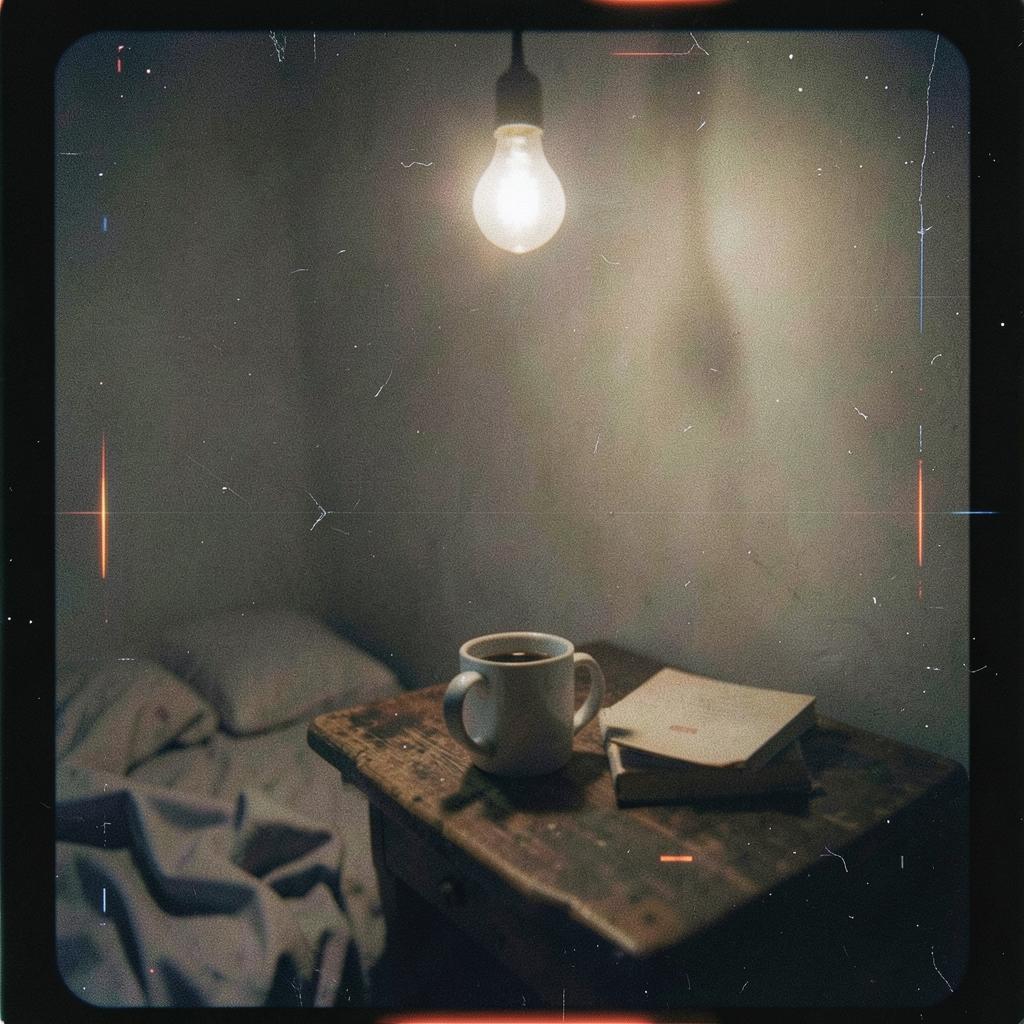
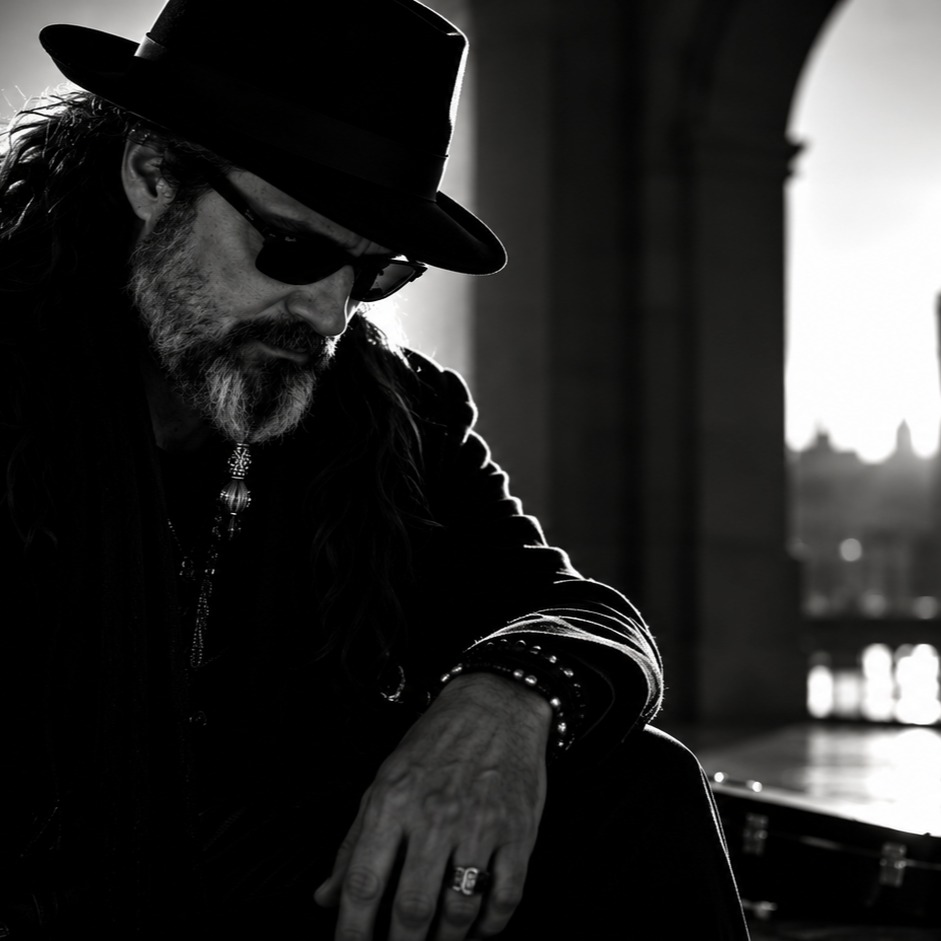
[Global arrangement: Hammond B3 is the dominant lead instrument. Muted trumpet and low saxophones provide restrained answers. Guitar stays barely audible, background chords only, no guitar fills or solos. Maintain the same slow pocket and restrained intensity throughout.] [Intro - 4 bars instrumental only. Overdriven Hammond B3 blues motif, audible key-click, slow Leslie. Low dry drums and rounded bass enter gently. One short muted trumpet answer. No vocal sounds.] [Verse 1 - deep male baritone, dry and close. Introduce the chorus melodic motif on lines 5 and 6. Hammond answers between phrases; horns stay sparse.] Coffee cold at midnight Thumb still on the glass Reading ’bout a future That ain’t come to pass I gave you all my daylight You can’t have my night Set that trouble face down Let the keys talk right [Instrumental turnaround - 2 bars. Hammond repeats the vocal motif; low saxophone answers. Keep the drums steady.] [Chorus 1 - continue the verse melodic contour. Same vocal register and volume. Hammond holds warm gritty chords; muted horns answer in the gaps.] You can’t have my night [Repeat the actual sung word through dark tape delay: night... night...] You can’t have my night [One short low vocal echo: night...] I gave you all my daylight Now I’m turning out the light The world can keep on talking You can’t have my night [Short gated echo from the same sung recording: n-night... night...] [Instrumental response - 4 bars. Expressive Hammond lead with a brief Leslie speed change. Muted trumpet and tenor sax answer softly. No guitar lead.] [Verse 2 - same intimate baritone, phrasing and groove. Hammond remains prominent underneath; short low horn responses after every second line.] Someone sells a warning Someone buys the fear Someone counts the money Every time I’m here Got my shoulders tightened Got my jaw held tight I can care again tomorrow You can’t have my night [Quiet dark tape echo: night...] [Chorus 2 - identical melody and intensity. Restrained low vocal doubles on the title phrase. Keep space for the echoes.] You can’t have my night [Dark tape echo: night... night...] You can’t have my night [Chop the same sung word into short gated repeats, lightly overdriven and subtly pitched down: n-n-night...] I gave you all my daylight Now I’m turning out the light The world can keep on talking You can’t have my night [Two rhythmic tape echoes, fading before the organ solo: night... night...] [Hammond B3 solo - 16 bars. Organ clearly upfront: expressive blues bends, gritty sustained notes, descending runs and audible key-click. Alternate slow Leslie with brief fast swirls and brake moments. Muted trumpet and low saxophones answer selected organ phrases. Bass and drums hold the original pocket. No vocals, no guitar solo, no crescendo.] [Bridge - restrained melodic singing in the same low register. Keep the beat unchanged. Hammond uses sustained chords and short fills; low horns breathe between lines.] I’ll make that call tomorrow Do the good I know to do But worrying till morning Won’t help me see it through [One soft tape echo of the sung word: through...] [Hammond turnaround - 2 bars. Return directly to the established hook, no drum fill or build.] [Final Chorus - same melody, register and intensity as Chorus 1. Hammond stays dominant; smoky horn answers remain soft. No extra vocal layers.] You can’t have my night [Dark tape echo: night... night...] You can’t have my night [Short low echo: night...] I gave you all my daylight Now I’m turning out the light The world can keep on talking You can’t have my night [Short gated tape echo: n-night... night...] [Outro - intimate low singing over the unchanged pocket. Hammond answers each line; one soft muted trumpet response.] Had enough of my attention You can’t have my night [Final dark vocal echo: night... night...] [Ending - 2 bars. Hammond resolves the opening motif with a slow Leslie brake. Bass and drums finish quietly together. Short dry final organ chord, no swell.]
