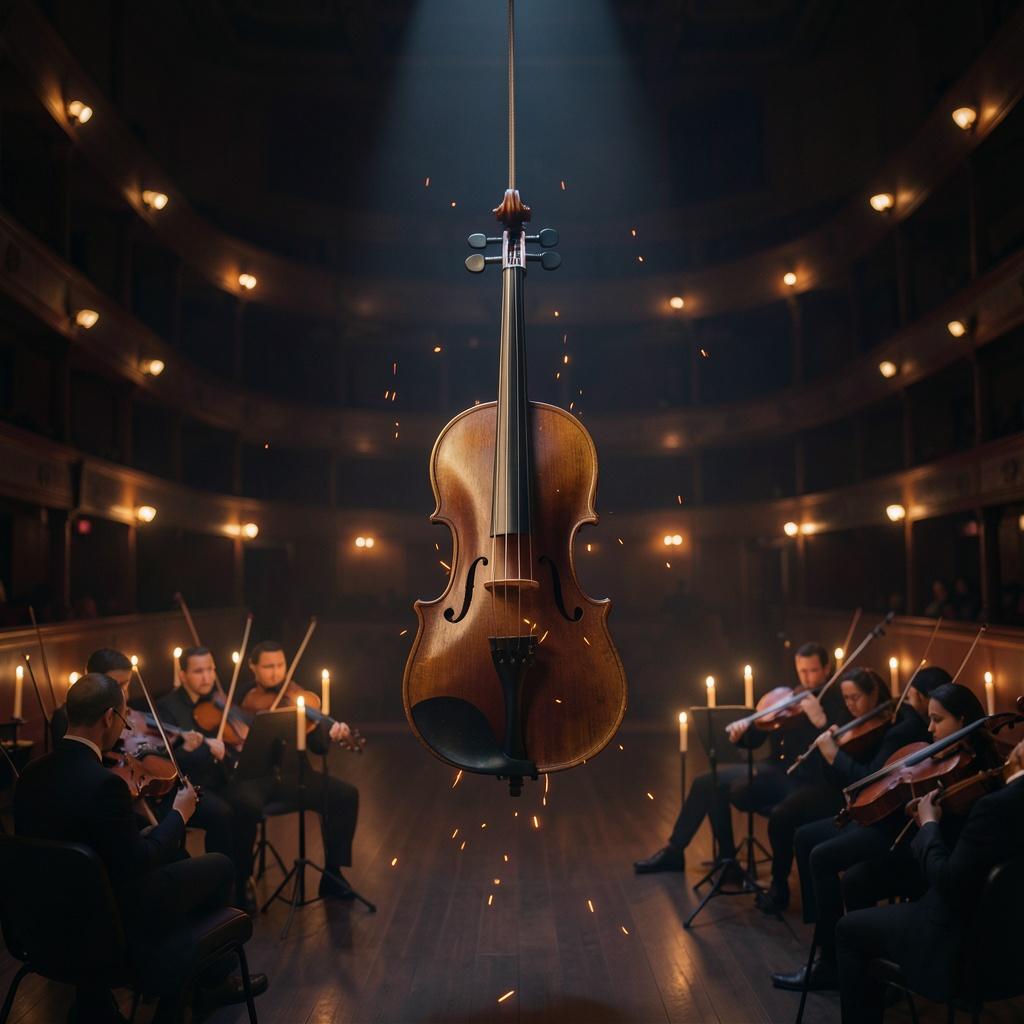

[INTRODUCTION (bars 1–12): Soft divided violas and cellos begin with sustained melancholic harmony in pianissimo. Violins enter gradually with delicate suspended chords. Solo violin appears after a long orchestral breath with a simple and noble cantabile theme, played dolcissimo with expressive vibrato and subtle rubato. Atmosphere of nocturnal solitude and nostalgic contemplation.] [FIRST SECTION (bars 13–36): The solo violin develops a long lyrical melody over flowing inner string movements. Cellos answer fragments of the main theme. Elegant romantic counterpoint. Gradual emotional expansion through warm harmonic modulations. Refined orchestral writing inspired by late romantic European chamber symphonic music.] [TRANSITION (bars 37–52): Growing emotional tension. Violins and violas create restless tremolo textures while the solo violin rises into a more passionate register. Dynamic swells and suspended harmonies. Increasing dramatic intensity without losing classical elegance.] [CLIMAX (bars 53–74): Full string orchestra in broad romantic crescendo. The solo violin sings an expansive soaring melody in high register with emotional portamento and expressive legato. Rich orchestral harmonies, dramatic modulation, passionate symphonic climax with powerful sustained chords and sweeping orchestral motion. Intense but noble emotion.] [POST-CLIMAX CADENZA (bars 75–84): Orchestra suddenly withdraws. Solo violin alone performs a free expressive quasi-improvised cadenza with delicate rubato, recalling fragments of the opening theme. Deep emotional introspection and suspended silence.] [FINAL SECTION (bars 85–108): The orchestra returns softly. Main theme reappears transformed into peaceful resignation. Warm lower strings support the violin in tender dialogue. Transparent orchestration, luminous harmonic resolution, slow emotional release.] [CODA (bars 109–120): Very soft orchestral ending. Solo violin ascends gently into its highest register and resolves on a long sustained note over quiet divided strings. Final atmosphere of fading memory and distant light. Extremely delicate ending in pianissimo.] [Overall mood: deeply lyrical, poetic, nostalgic, noble, romantic, emotionally sophisticated, elegant orchestral balance, expressive classical phrasing, cinematic only in the sense of grand emotional scope, authentic classical composition style inspired by Tchaikovsky, Elgar, Massenet and early 20th century European string writing.] [Negative instructions: no drums, no electronic sounds, no pop rhythm, no trailer music, no epic percussion, no choir, no jazz harmony, no modern minimalism, no synthesizers, no vocals.] Duration approximately 7–8 minutes, through-composed romantic structure with gradual thematic development and balanced pacing.” [Then adapt the structure timing like this:] [INTRODUCTION (0:00–0:50) Very slow orchestral opening with divided violas and cellos. Solo violin enters after a long suspended introduction.] [FIRST SECTION (0:50–2:20) Main lyrical theme presented and expanded by solo violin with warm string accompaniment and romantic harmonic development.] [TRANSITION (2:20–3:20) Gradually increasing tension, tremolo strings, rising dynamics, more expressive violin register.] [CLIMAX (3:20–5:10) Large emotional symphonic expansion with soaring violin melody, full orchestral resonance and passionate romantic intensity.] [CADENZA (5:10–5:50) Solo violin alone, free rubato, recalling fragments of the opening theme.] [FINAL RETURN (5:50–7:10) Main theme returns transformed into calm resignation and lyrical tenderness.] [CODA (7:10–8:00) Extremely delicate orchestral conclusion fading into silence in pianissimo.] [Additional control: Maintain slow-to-moderate romantic pacing. Avoid abrupt scene changes. Preserve thematic coherence across the entire composition. Long melodic arcs and expressive legato phrasing. Continuous classical orchestral development. No repetitive loops.Authentic symphonic form.]
