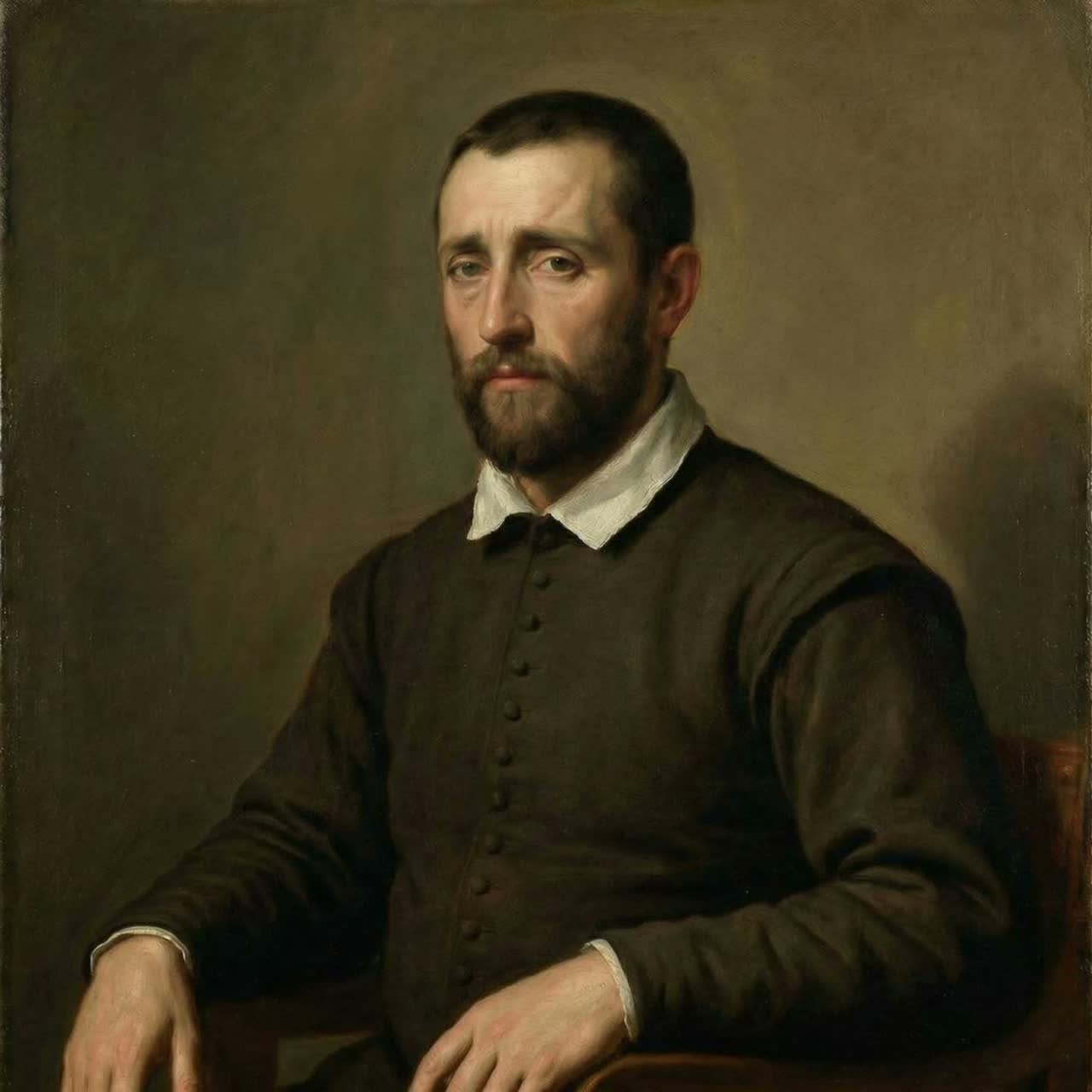

NEL LUME CHE MI STRINGE Madrigal in the "Seconda Pratica" Style (c. 1620) _____ [TEXT] Nel lume che mi stringe il cor dolente arde un foco occulto e senza posa; né trovo pace alcuna, né riposo, ché dolce è ’l nodo e caro il mio tormento. (x2) L’aura leggiadra move il mio pensiero e l’alma mia sospinge al ciel sereno; volgo lo sguardo al sommo lume altero, e Amor mi chiama con soave freno. (x2) Così tra luce ed ombra vo languendo, né posso sciôr sì caro e dolce laccio; ché quanto più mi strugge, più m’accendo. (x2) [†] Se fuggo, Amor m’insegue combattendo; se resto, sento il suo celeste abbraccio: moro vivendo, e vivo in suo legame. (x2) moro vivendo... (x3) --- [†] Performance note: The singer elides 'Se fuggo' with a phonetic variant suggesting 'S'io franto' (If I am crushed), emphasizing the physical grit of the tormento. _____________ [TRANSLATION] Within the light that binds my grieving heart burns a hidden fire without cease; I find no peace, nor any rest, for sweet is the knot and dear is my torment. The graceful breeze moves my every thought and urges my soul toward the serene sky; I turn my gaze to that high and noble light, and Love calls to me with a gentle rein. Thus between light and shadow I go languishing, nor can I untie so dear and sweet a snare; for the more it consumes me, the more I ignite. (If I am crushed, Love...) If I flee, Love pursues me in battle; if I stay, I feel its celestial embrace: I die living, and I live within its bond. I die living... ______________ [ABOUT THE ART] The cover portrait for Nel Lume Che Mi Stringe is a study in transition. It occupies the delicate threshold of the early seventeenth century, situated between the formal restraint of late Mannerism and the burgeoning psychological depth of the Baroque. The subject is neither an idealized saint nor an aristocratic display piece. Instead, we find a private man caught in a moment of unsparing interior tension. The visual architecture of the work, where light falls across the brow and collar while the surrounding field recedes into earthen shadow, directly mirrors the central paradox of the madrigal: illumination that binds, fire that wounds, and a sweetness that torments. His gaze is deliberately unresolved. The eyes do not confront the viewer, nor do they fully withdraw into the shadows. This ambiguity reflects the Petrarchan logic of the music: the state of being simultaneously consumed and enkindled, pursued and embraced. Consistent with the Seconda Pratica ethos, the emotional register is restrained rather than theatrical; the dissonance is felt deeply, yet it never breaks the courtly decorum of the frame. Materially, the work embraces a rigorous period realism. The weave of the fabric, the muted umbers, and the soft, lead-white planes of the collar evoke the specific behavior of oil layered over a ground. Highlights are broken and absorbed rather than merely luminous, reinforcing the sense of an archival recovery. This tactile quality aligns with the sonic intention of the recording: we are meant to feel the breath in the reeds, the friction of the strings, and the physical suspension of the voice. This portrait does not merely illustrate the madrigal; it inhabits it. Together, image and music form a single study in chiaroscuro, an inward chamber where devotion and desire share the same flame. [Words, Production, and Direction by Noizgenie.] [Cover Art Direction by Noizgenie. © 2026 Noizgenie.]
