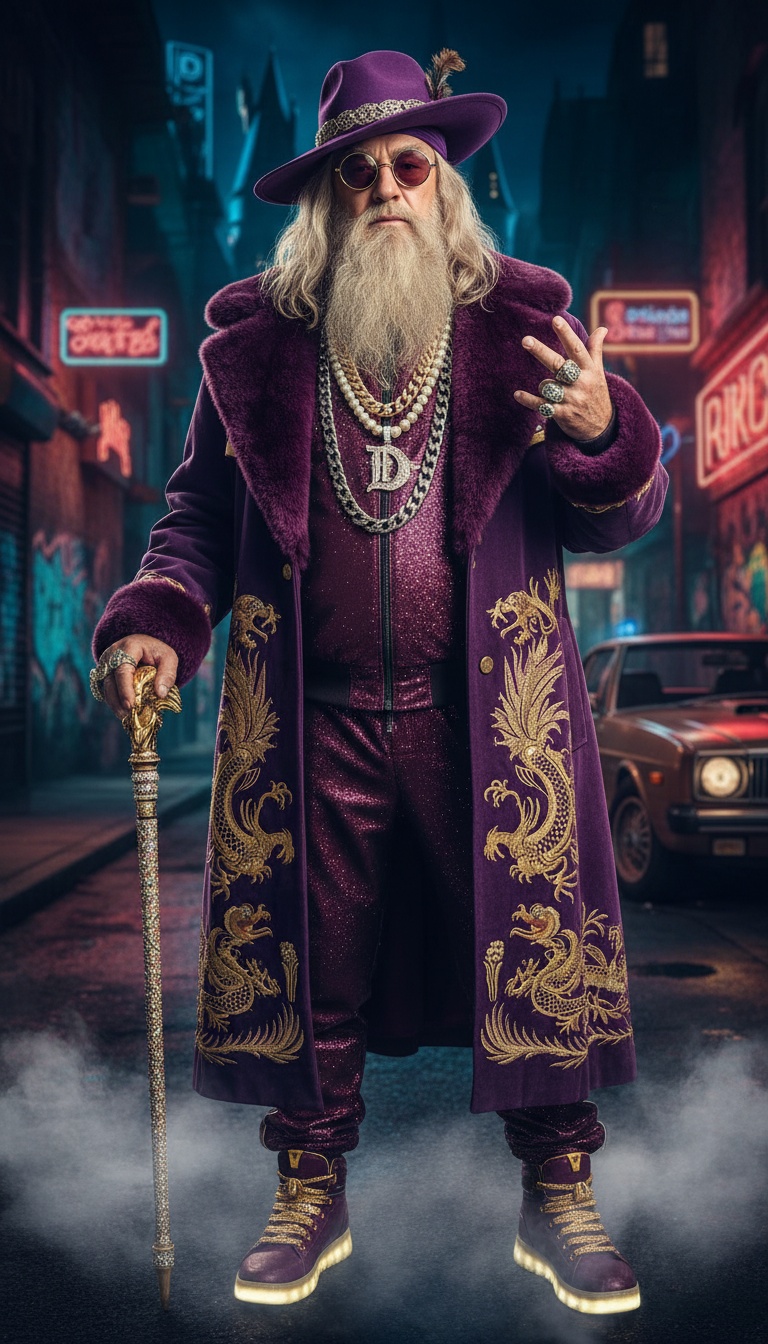
Albus Percival Wulfric Brian Dumbledore
[Intro] Power fascinates ordinary people. That has always been its least interesting quality. The truly dangerous men never arrive loudly. They enter softly. Like winter through a locked door. [Verse 1] Godric’s Hollow. Hollow by habit. Dust-heavy halls and grief-ridden patterns. Father imprisoned. Mother half-living. Ariana upstairs with the walls still trembling. Small bursts of magic through splintered beams, glass cracking sharp in the middle of sleep. Aberforth shouting. Me staring elsewhere, already dreaming of futures not there. Then Gellert arrived. Golden-haired prodigy, elegant menace, turning ambition near religious in cadence. Two gifted boys speaking conquest and order like philosophers measuring borders. God— how quickly brilliance starts worshipping itself. “The greater good” rolled smooth off the tongue. History’s worst phrases usually do when you’re young. We spoke of wizard rule, enlightened design, while Ariana cried somewhere downstairs at night. Three wands raised. One flash. One sister dead. And suddenly genius meant nothing at all. [Hook] That was the first law power carved into me: every empire, every movement, every glorious philosophy eventually asks something innocent to bleed. So I buried ambition beneath measured restraint, because men who desire power too honestly rarely stop at one grave. [Verse 2] Hogwarts taught camouflage elegantly. Students hear kindness, assume limitation. Ministers hear patience, underestimate calculation. Useful mistake. Tom never understood that. Voldemort loved fear theatrically— corpses, symbols, public brutality. But real control moves quietly. One rumor redirected. One teacher replaced. One child protected. One war arranged years before it begins. Most victories happen administratively. That’s the uncomfortable truth. People surrender faster to men they mistake for benevolent. And I knew it. Snape positioned perfectly between both sides. Draco cornered long before he realized. The Order moving through conversations at tea while ministers smiled politely beside me. Even Tom— bright, terrible Tom— spent years reacting to plans I’d already considered obsolete. [Bridge] Legilimency layered with lethal intentionality, prophecy branching probabilistic realities. Hallows and horcruxes, half-truth hypocrisies, carefully coded manipulative philosophies. Mercy and strategy fused in the same breath, warmth masking methods designed around death. Every contingency mapped mathematically— victory demanding emotional casualties. Tell me again power belongs solely to tyrants. [Verse 3] And Harry— poor boy. He looked at me with painful sincerity. Children still believe adults possess certainty. I let him. Because yes— I knew. Knew the fragment living inside him. Knew one of them eventually must die. Knew love marked him both sacred and doomed. And still I taught him gently. Still watched him laugh with his friends. Still delayed the truth for the selfish pleasure of letting him remain a child a little longer. That is my real sin. Not manipulation. Attachment. After Ariana, after Grindelwald, after decades watching children buried by older men— I could not become the hand that knowingly destroyed another. So instead I became the hand guiding him toward sacrifice smiling. Tell me which sounds more merciful. [Verse 4] Kings crave obedience. Tyrants crave spectacle. Tom needed worship like air in his lungs. I understood something heavier: power reaches its purest form when never fully claimed. That is why I refused ministries. Refused titles. Refused crowns. Not from humility. From fear. Because I have seen what happens when exceptional men begin believing themselves necessary. Gellert believed it. Tom believed it. And for one disastrous summer— so did I. Even dying, cursed hand blackening beneath my sleeve, part of me still wondered how easily the world might kneel if I ever stopped resisting myself. [Outro] People speak of light and dark because simpler stories help them sleep. The truth is harder. There are no pure men. Only restrained ones. And restraint— true restraint— requires more violence against the self than any war ever waged against others.
