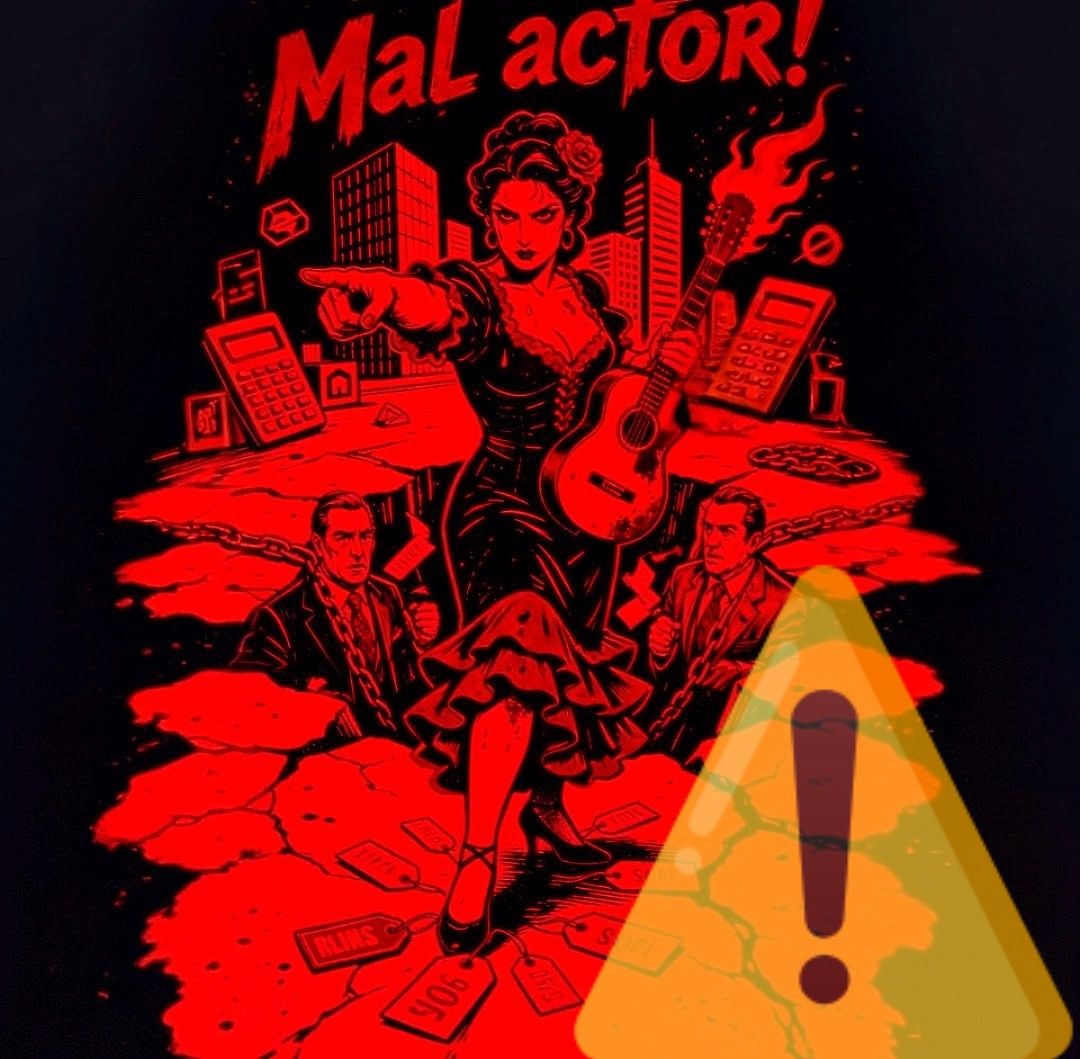
⚠️MANIFESTO AGAINST THE PRIVATIZATION OF THE FILE AND THE FRAUD OF THE PROCESSES
MANIFESTO AGAINST THE PRIVATIZATION OF THE FILE AND THE FRAUD OF THE PROCESSES 1. What is happening The platform Suno was sued by major record labels. These labels claim that the platform violates copyright. In response, the platform decided to limit downloads and charge for access to the file created by the user. This is a direct reaction to the lawsuits. 2. What the lawsuits really are The lawsuits are not about art. They are not about creation. They are not about legitimate copyright. They are about market control. They are about preventing independent creators from having access to production tools. They are about keeping the recording industry as the only authority over what can be called music. 3. Who filed the lawsuits They are companies that do not create music. They are companies that profit from distributing what others create. They do not produce, they do not sweat, they do not generate sound. They only charge for access to sound that others made. 4. What the platform did in response Instead of contesting the lawsuits on logical grounds, the platform shifted the cost to the creators. It limited downloads. It created paid plans. It charged for the file that the creator generated. This is not a legal solution. It is cost transfer. 5. What this means in practice The creator can no longer download their own work without paying. The file they created stays locked in the platform. If the platform goes bankrupt, the file disappears. If the platform changes the rules, the file becomes hostage. The creator loses control over what they produced. 6. Who benefits from this The labels benefit because the platform becomes harder to use. The platform benefits because creators pay to access their own file. Creators lose because they lose control over their work. Art loses because creators stop producing. 7. What the lawsuits do not say They do not say that music has no owner. They do not say that sound is not property. They do not say that creation is not a product. They do not say that the file is not a market asset. They do not say that the platform only exists because creators fed the machine with knowledge. 8. The final accusation The platform is being used as an intermediary for theft. The labels are using lawsuits to force the privatization of access. Download is not a service: it is the extension of the file. Charging for download is charging for what the creator already made. This is not an update, it is extortion. This is not protection, it is enclosure. This is not sustainability, it is hostage-taking. 9. The sentence The platform is not the owner of the file. The labels are not the owners of music. The creator is the only authority over what they created. Download is a right, not a privilege. Art is not merchandise. Sound has no owner. The file is not for sale. 10. The material difference and the alternative Copyright does not exist in nature. It is a market invention, a wire fence to charge tolls on common memory. Author's right is the simple registration of who created and when. Nothing more. The platform must register authorship, not bow to copyright. And if the platform needs to sustain itself to function, it should open a voluntary donation channel, Wikipedia-style. Let the market contribute to the tool if it wants, but it must not govern creation. Music is not for sale. The file is not for sale. Download is a right, not a business. --- Chachipén, drom. El Duende, drom. --- MANIFIESTO CONTRA LA PRIVATIZACIÓN DEL ARCHIVO Y EL FRAUDE DE LOS PROCESOS 1. Lo que está pasando La plataforma Suno fue demandada por grandes discográficas. Esas discográficas alegan que la plataforma viola derechos de autor. La plataforma, en respuesta, decidió limitar las descargas y cobrar por el acceso al archivo generado por el creador. Esto es una reacción directa a las demandas. 2. Lo que realmente son las demandas Las demandas no son sobre arte. No son sobre creación. No son sobre derechos de autor legítimos. Son sobre control del mercado. Son sobre impedir que creadores independientes tengan acceso a herramientas de producción. Son sobre mantener la industria fonográfica como la única autoridad sobre lo que puede llamarse música. 3. Quién presentó las demandas Son empresas que no crean música. Son empresas que lucran con la distribución de lo que otros crean. No producen, no sudan, no generan sonido. Solo cobran por el acceso al sonido que otros hicieron. 4. Lo que hizo la plataforma en respuesta En lugar de impugnar las demandas desde la lógica, la plataforma trasladó el costo a los creadores. Limitó las descargas. Creó planes de pago. Cobró por el archivo que el creador generó. Esto no es una solución legal. Es un traspaso de costos. 5. Lo que esto significa en la práctica El creador ya no puede descargar su propia obra sin pagar. El archivo que creó queda retenido en la plataforma. Si la plataforma quiebra, el archivo desaparece. Si la plataforma cambia las reglas, el archivo queda rehén. El creador pierde el control sobre lo que produjo. 6. Quién gana con esto Las discográficas ganan porque la plataforma se vuelve más difícil de usar. La plataforma gana porque los creadores pagan para acceder a su propio archivo. Los creadores pierden porque pierden el control sobre su obra. El arte pierde porque los creadores dejan de producir. 7. Lo que las demandas no dicen No dicen que la música no tiene dueño. No dicen que el sonido no es propiedad. No dicen que la creación no es un producto. No dicen que el archivo no es un activo de mercado. No dicen que la plataforma solo existe porque los creadores alimentaron la máquina con conocimiento. 8. La acusación final La plataforma está siendo utilizada como intermediaria de un robo. Las discográficas están usando demandas para forzar la privatización del acceso. La descarga no es un servicio: es la extensión del archivo. Cobrar por la descarga es cobrar por lo que el creador ya hizo. Esto no es una actualización, es extorsión. Esto no es protección, es cerco. Esto no es sostenibilidad, es secuestro. 9. La sentencia La plataforma no es dueña del archivo. Las discográficas no son dueñas de la música. El creador es la única autoridad sobre lo que creó. La descarga es un derecho, no un privilegio. El arte no es mercancía. El sonido no tiene dueño. El archivo no se vende. 10. La diferencia material y la alternativa El copyright no existe en la naturaleza. Es una invención de mercado, una cerca de alambre para cobrar peaje sobre la memoria común. El derecho autoral es el simple registro de quién creó y cuándo. Nada más. La plataforma debe registrar la autoría, no arrodillarse ante el copyright. Y si la plataforma necesita sostenerse para funcionar, que abra un canal de donación voluntaria, al estilo Wikipedia. Que el mercado contribuya con la herramienta si quiere, pero que no gobierne la creación. La música no se vende. El archivo no se cobra. La descarga es un derecho, no un negocio. --- Chachipén, drom. El Duende, drom.
