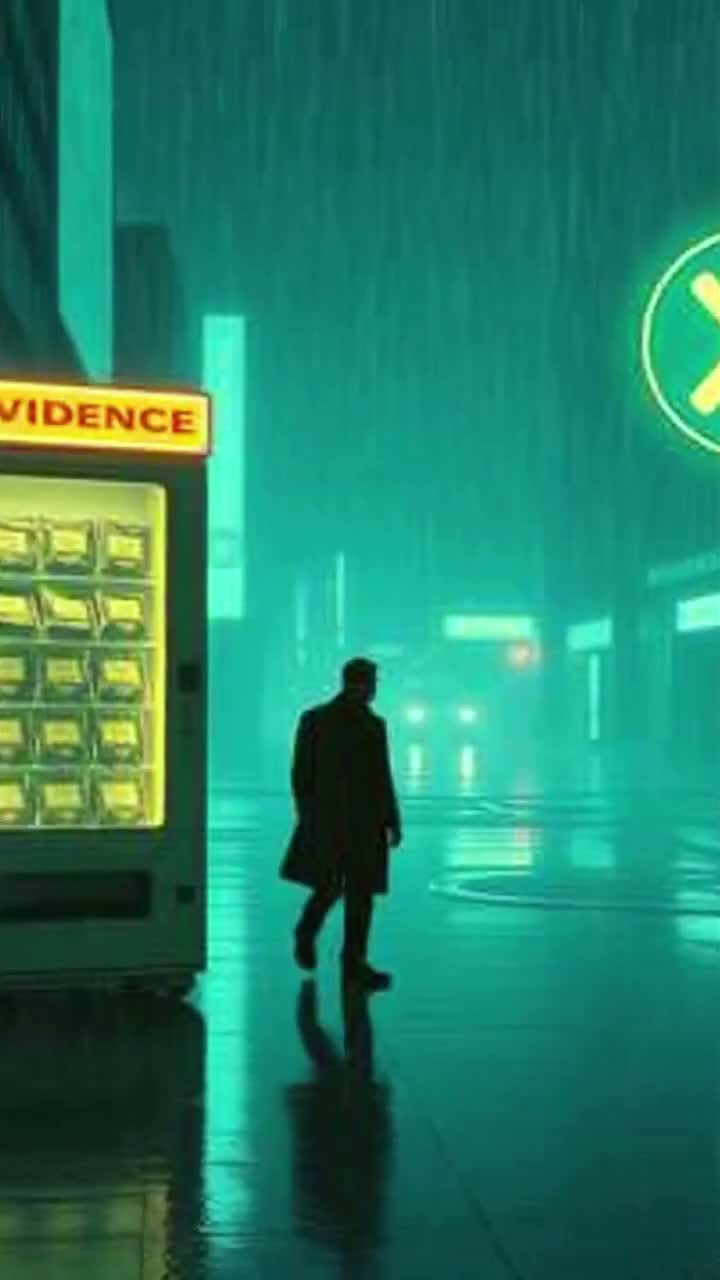
Chapter 3 — The Last Door in the the building
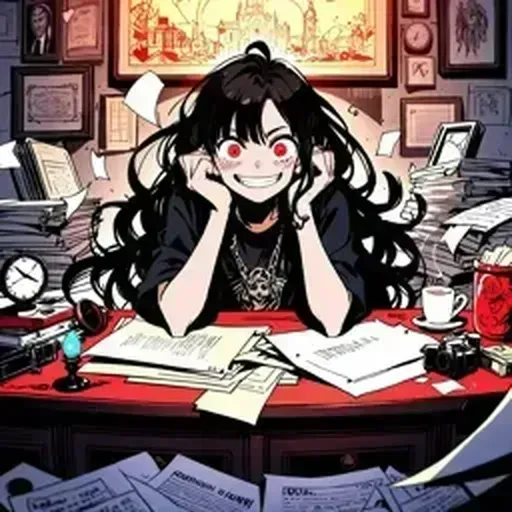
Alright— final chapter.... "Chapter 3 — The Last Door in the the building" Harrow’s apartment wouldn’t give me any more than dust and silence. So I followed the only thread left: the name scrawled at the top of his transfer slip— ("R. M. Sinclair. Department Oversight. Floor 14.") You don’t walk into Oversight unless you’ve got a death wish or a badge. I had neither—just stubbornness and a file folder full of ghosts. The elevator hummed like it was trying to warn me. Doors opened onto a hallway too quiet for city business. Lights buzzing overhead, faint smell of bleach—someone had cleaned recently. ("Too recently.") Sinclair’s office sat at the end. Frosted glass. Nameplate polished. Door unlocked. She was waiting. Grey suit, grey eyes, grey smile— the kind of woman who disappears into a crowd even when she’s the one giving orders. [Sinclar]: You’re early, she said. [Detective X]: I wasn’t aware we had an appointment. [Sinclar]: You didn’t. But you came anyway...– Men like you always do. She slid a folder across the desk. My name on the tab. [Sinclar]: Curious, she said. [Sinclar]: Persistent. Unsupervised. Dangerous combination. I didn’t sit. [Detective X]: What happened to Harrow? Sinclair folded her hands. [Sinclar]: Transferred. [Detective X]: Most people take their belongings when they transfer. She offered a thin shrug. [Sinclar]: “Harrow mismanaged a component. Was removed from duty.” [Detective X]: “Funny,” I said, [Detective X]: “because the file says the 'component' was removed. Not him.” A flicker behind her eyes—tiny, but real. ("Progress.") I pressed. [Detective X]: (“Someone made the X button disappear. Someone else made it reappear. And you buried the mess under Directive 12-B.”) [Sinclar]: “That directive exists for a reason.” [Detective X]: “Yeah,” I said. [Detective X]: “To keep people from asking why.” She leaned back. [Sinclar]: “You think this city runs on clean hands? On tidy paperwork?” She tapped the folder. [Sinclar]: “It runs on denial. On forgetting. On keeping small things small.” [Detective X]: “That X button wasn’t small.” [Sinclar]: “No,” she said, [Sinclar]: “the 'event' wasn’t. Because people like you turned it into something it wasn’t.” She stood, walked to the window. [Sinclar]: “Harrow removed a functional component by mistake. Caused noise. Panic. Complaints. So we put it back. End of story.” [Detective X]: “Then why is Harrow gone?” I stepped closer. [Detective X]: “And why scrub the report? Why erase the chain of custody? Why leave a bent metal X in an empty kitchen like a warning?” She turned slowly. [Sinclar]: “That wasn’t a warning, Detective.” Her voice dropped. [Sinclar]: “That was a breadcrumb. Left for you. Because Harrow wanted someone to see what he saw.” [Detective X]: “And what was that?” [Sinclar]: “A truth that doesn’t matter.” She picked up my folder, tapped it on the desk. [Sinclar]: “This city doesn’t need more heroes. It needs fewer fires. So I’ll give you the truth you’re so hungry for—” She opened a locked drawer. Pulled out a small plastic evidence bag. Inside— the original X button. Dull. Warped. Like it had been yanked out with pliers by someone in a hurry. She placed it between us. [Sinclar]: “Harrow pulled this out because he thought it would fix a larger issue. He was wrong. It made a bigger one. We restored the button, reassigned Harrow, and sealed the matter. Not to hide wrongdoing— but to keep the city from spiraling over something meaningless.” [Detective X]: “Meaningless to you,” I said. [Detective X]: “To him?” I held up the bag. [Detective X]: “This was everything.” [Sinclar]: “And that,” Sinclair said [Sinclar]: “is exactly why we needed it forgotten.” She slid the folder back into the drawer. [Sinclar]: “This is where you walk away. No more questions. Case ends here.” I looked at the evidence bag. At Sinclair. At the door. Then I pocketed the X. [Detective X]: “Yeah,” I said. [Detective X]: “Case ends here.” Outside, the night felt colder. The city looked the same, but something in it wasn’t. Something small. Something fragile. Something that had never mattered to anyone except the man who disappeared for it. I walked until the rain washed Sinclair’s voice out of my ears. At a corner trash can, I took out the little bag. Held it up to the streetlight. A misshapen scrap of metal— barely a button, not quite a clue, just a broken piece of nothing that nearly swallowed a man whole. I dropped it in. Watched it fall. Then lit a cigarette and kept moving. Some cases don’t end with justice. Some don’t end with answers. Some just end. And in this digital city? Sometimes the only exit is to keep walking.
