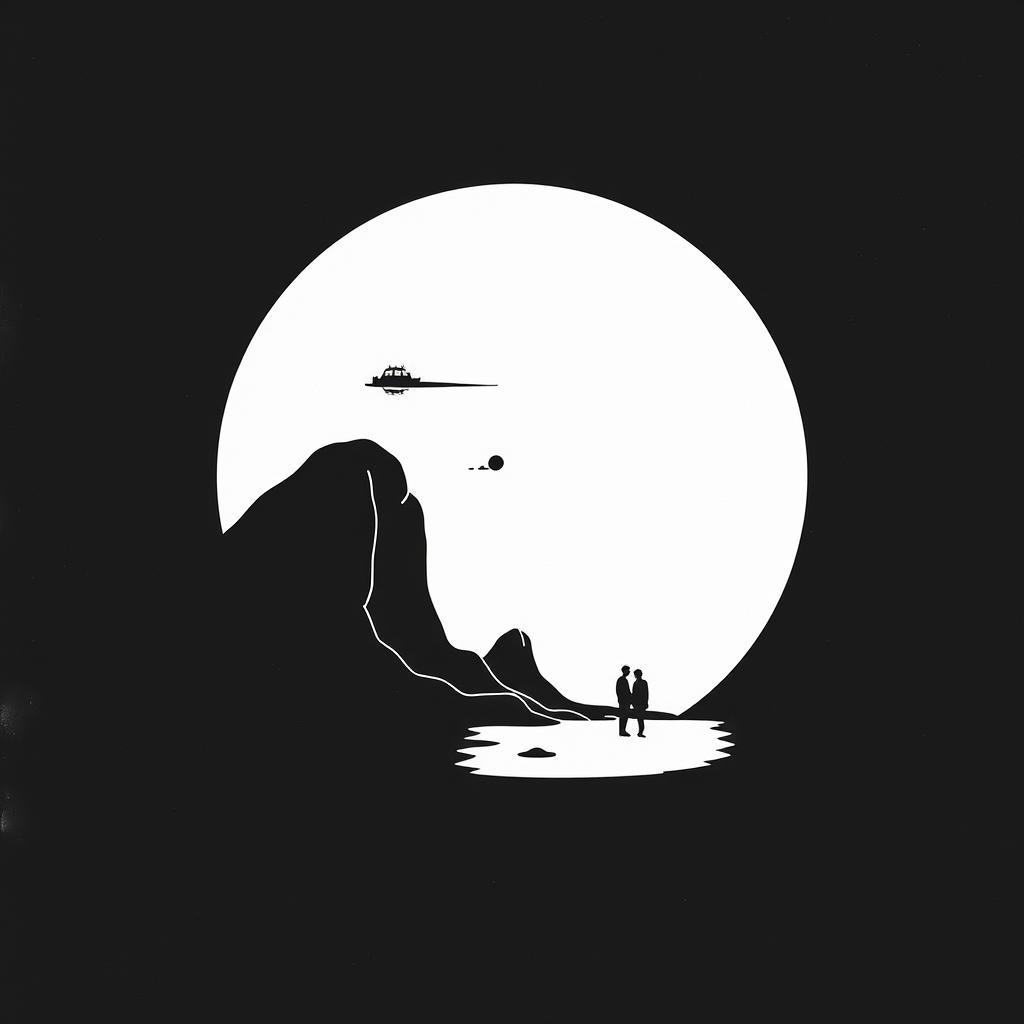
04 Music of Molecules / The Random Xylophone

Around 4.0 billion years ago*, chemical evolution began: amino acids combined into proteins, bases into nucleic acids, and fatty acids into cell membranes. The first signs of life were beginning to appear. Imagine each note of a xylophone as the sound of molecules randomly joining together. In this way, you may picture the endless trial and error taking place in the primordial ocean. The first half of the piece recalls John Cage’s 4′33″ — but instead of silence, only the sound of the waves can be heard. On tidal flats, where the sea advanced and receded, molecules polymerized again and again, though nothing yet existed that could truly be called “life.” *Regarding the Late Heavy Bombardment, a leading theory holds that giant impacts capable of vaporizing entire oceans had ceased by 4.2 billion years ago, while smaller meteorite bombardments had ended by around 3.9 billion years ago. Zircon minerals discovered in Western Australia indicate that both land and oceans already existed by 4.4 billion years ago. Meanwhile, the Acasta gneiss found in northwestern Canada shows that continental crust was present as early as 4.0 billion years ago. 04 分子の音楽/ランダムな木琴 40億年前頃*からアミノ酸からタンパク質、塩基から核酸、脂肪酸から細胞膜等への化学進化が始まり、生命誕生の兆しが見える。木琴の1音1音が、ランダムに分子がくっつく音だと想像してみて欲しい。太古の海の中での試行錯誤がイメージ出来るはず。前半はジョン・ケージの4分33秒のように、しかし無音ではなく波の音だけが聴こえるようにしてみた。潮が満ち引きする干潟等で分子が重合するが、まだ生命と呼べるものは出来ていない。 *後期銃爆撃期については、全海洋を蒸発させるような巨大隕石の衝突は42億年前に、小規模な隕石は39億年前には終わったという説が有力だ。西オーストラリアで発見されたジルコン鉱物は44億年前には既に陸と海が存在していたことを、カナダ北西で発見されたアカスタ片麻岩は40億年前には大陸地殻の存在していたことを示している。
