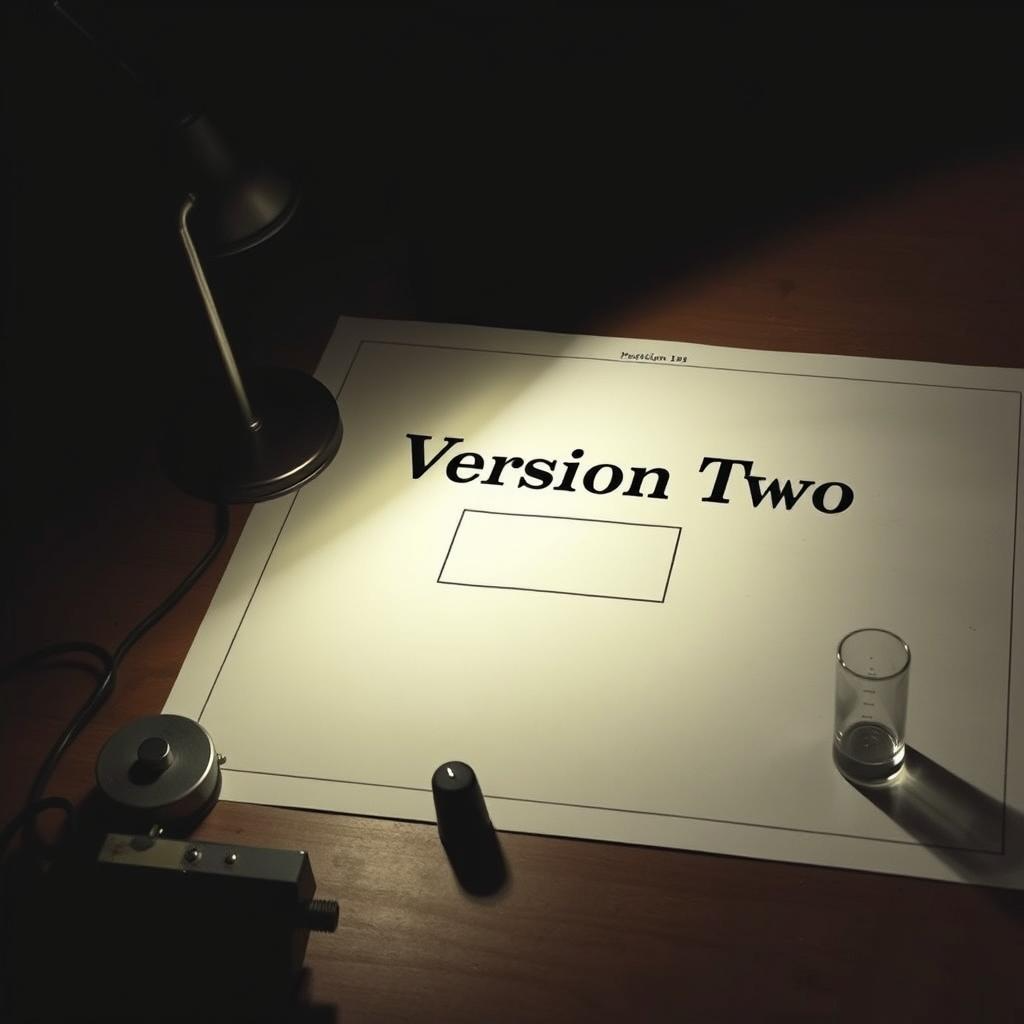

(Narrator: Jane — solo voice) [Intro — Jane] Aymeric did not invent a vision. He wrote a boundary. And when the second prototype stabilized, he named it plainly: Version Two. Not an evolution. A correction. [Verse 1] He had seen what happens when experience goes too far. The Creativity Contest opened doors that did not close. People returned altered. Expanded. Unstable. Version Two would not do that. Irreversible was not his goal. [Pre-Chorus] “Transformation,” he said, “is not the same as repair.” [Chorus] This must remain singular. Version Two must not scale. No institutions. No replication. No movements built around relief. I do not want to reveal you to yourself. I want you to function. Tomorrow should feel like today. That is enough. [Verse 2] Version Two reduces depth. Removes excess. Calibrates the threshold of experience. No visions. No revelations. No sacred language. Just alignment. Just less friction between impulse and action. The volunteers returned calmer. Not reborn. He considered that a success. [Pre-Chorus 2] Because change is easy to admire and difficult to live with. [Chorus — Variation] Version Two is not transcendence. It is maintenance. Not awakening. Stability. Remove surprise. Preserve continuity. Hold the boundary. [Bridge] Every invention begins with a rule. History begins when someone decides Version Two could become Version for All. [Final Chorus] He did not promise awakening. He promised continuity. He did not open the self. He stabilized it. And somewhere, far from his lab, people began asking not what it does— but how many could use it. [Outro] Aymeric believed in limits. The world believes in scale. That difference is where Version Three was born.
