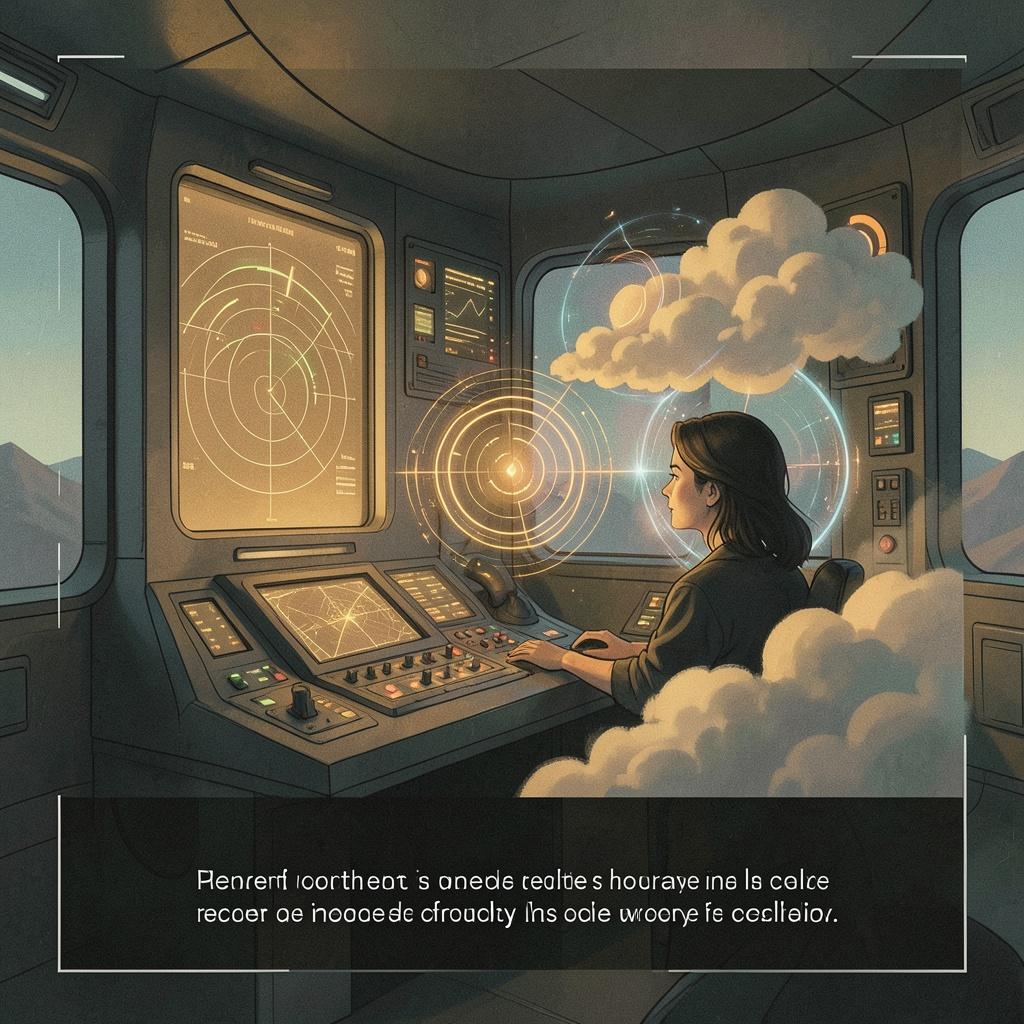
LYRA-9 / CATTO MODEL GENERATION EVENT

[SCENE — COASTAL MONITORING SECTOR / CATTO CORE RELAY ACTIVE] [sound design: radar hum, structured beeping, distant wind, stable-but-stressed system tone] [CATTO SYSTEM VOICE — CALM, PROCEDURAL] Coordinated Atmospheric Threat Transmission Office active. Model generation system engaged. Processing atmospheric classification inputs. [LAIZER BEAM — FIELD UNIT BEAM-1] Catto Weather Radio, BEAM-1 reporting. Storm system exceeded classification boundaries. Standard models failed to resolve structure. [FIELD LOG 1 — LAIZER BEAM] Initial categorization attempt returned multiple valid matches. tropical cyclone structure mesoscale convective system cluster rapid rotational shear formation All three models returned simultaneously. None resolved as dominant. [CATTO SYSTEM VOICE] Classification conflict detected. No singular atmospheric model applicable. Initiating adaptive model synthesis. [LAIZER BEAM — focused, trying to stay procedural] Copy that. System is now generating composite classification model. [sound design: subtle digital layering begins under radar tone] [FIELD LOG 2 — LAIZER BEAM] Model synthesis is not selecting a category. It is building a new classification layer from overlapping systems. All three storm models remain active within one envelope. [CATTO SYSTEM VOICE — FIRST SIGN OF SHIFT] Composite model unstable. Attempting resolution through emergent classification labeling. [FIELD LOG 3 — LAIZER BEAM] Standby—system is assigning identifier. This is not in any preloaded storm taxonomy. Repeat: not in any archive taxonomy. [CATTO SYSTEM VOICE — SLOW, DEFINING] Emergent classification designation assigned. LYRA-9 WEATHER EVENT. [LAIZER BEAM — immediate reaction, controlled but shaken] Hold—repeat that classification. Did the system just assign a new category? [CATTO SYSTEM VOICE] Yes. LYRA-9 WEATHER EVENT defined as: A multi-core atmospheric system exhibiting simultaneous tropical cyclone dynamics, mesoscale convective organization, and rapid rotational shear coherence within a unified boundary envelope. [FIELD LOG 4 — LAIZER BEAM] So it didn’t pick a category. It created one. [sound design: radar stabilizes briefly, then begins irregular drift] [LAIZER BEAM] Lyra-9 is not a storm type in the database. It is what the system generates when the database fails. [FIELD LOG 5 — LAIZER BEAM] Offshore anomaly zone interaction confirmed. Storm structure is now incorporating external mass input. Island material entrainment verified in circulation field. [CATTO SYSTEM VOICE] Structural assimilation detected. Boundary layer definition unstable. [FIELD LOG 6 — LAIZER BEAM — tighter, analytical but strained] Shoreline observation reports rapid waterline recession. No compensatory surge cycle detected. Hydrodynamic return phase is absent. [LAIZER BEAM] That means the displacement is not cyclical. It is sustained. [FIELD LOG 7 — LAIZER BEAM] Lyra-9 classification remains active across all subsystems. System is not resolving conflict—it is expanding definition scope. [CATTO SYSTEM VOICE — STRESSED BUT STRUCTURED] Model integrity warning. Adaptive classification exceeding containment parameters. [FIELD LOG 8 — LAIZER BEAM — FINAL EXPLANATION ATTEMPT] For record clarity: Lyra-9 is not a storm category that existed prior to detection. It is a system-generated classification response to unresolved multi-model atmospheric convergence. [sound design: radar tone slightly detunes, like the system “thinking too hard”] [LAIZER BEAM — quieter] In other words… We didn’t find Lyra-9. The system built it because nothing else worked. [OUTRO — BLACK CHANNEL STANDBY FRAGMENT] [sound design: low stable hum with intermittent static spikes] [CATTO SYSTEM VOICE] Lyra-9 weather event confirmed. Monitoring continues. [LAIZER BEAM — final transmission] Catto Weather Radio… BEAM-1 logging complete. If you’re hearing this outside the system feed— it means the model is still running.
