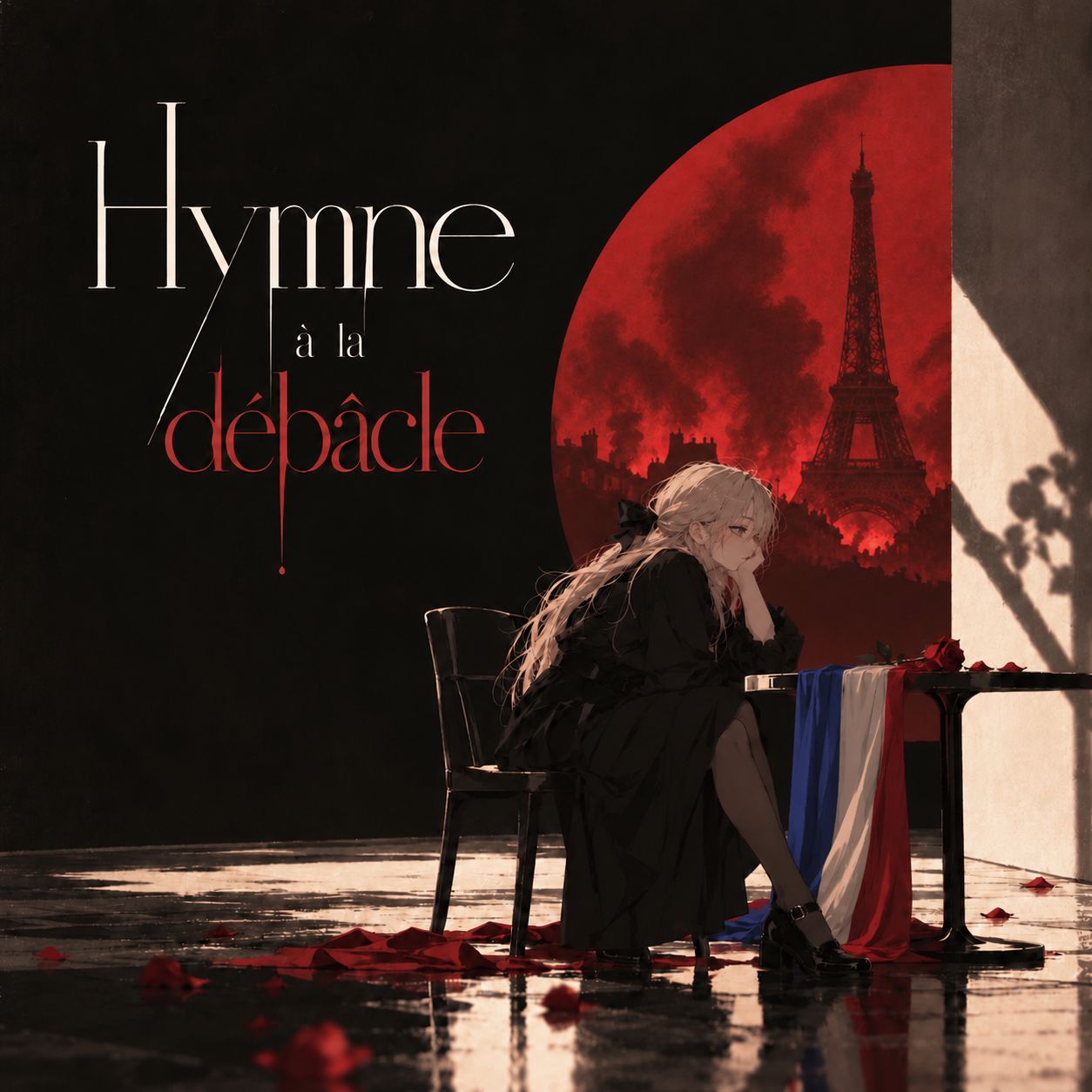
Hymne à la débâcle (멸망의 찬가 / Hymn to the Downfall) [Intro] Bonsoir, Paris (안녕하세요, 파리.) (Good evening, Paris.) Quel joli désordre (참으로 아름다운 혼란이군요.) (What a lovely mess.) Les rues nous applaudissent (거리마저 우리에게 박수를 보내네요.) (Even the streets applaud us.) Le chaos est à la mode (혼란이 요즘 유행이라네요.) (Chaos is in fashion.) [Verse 1] Gants de soie, vitres brisées (비단 장갑, 산산이 깨진 유리창.) (Silk gloves, shattered windows.) Dans les rues, quel défilé (거리에서는 참으로 성대한 행진이 펼쳐지네요.) (What a parade in the streets.) Tout le monde veut parler (모두가 자신의 목소리를 내고 싶어 하죠.) (Everyone wants to speak.) Mais pourquoi tout saccager ? (그런데 왜 모든 것을 이렇게 망가뜨리나요?) (But why wreck everything?) Que voulez-vous de plus ce soir ? (오늘 밤, 대체 무엇을 더 원하는 건가요?) (What more do you want tonight?) Faut-il tout réduire en cendres ? (모든 것을 잿더미로 만들어야만 하나요?) (Must everything be reduced to ashes?) Ne peut-on pas vivre sans (그렇게 하지 않고서는 살아갈 수 없나요?) (Can't we live without doing that?) Tout brûler pour se faire entendre ? (자신의 목소리를 들려주기 위해 모든 것을 불태워야 하나요?) (Must you burn everything down to make yourselves heard?) [Pre-Chorus] Les incendies, ça ne vous fait rien ? (불을 지르는 일이 아무렇지도 않나요?) (Does setting fires not bother you?) La violence vous fait-elle du bien ? (폭력이 당신의 기분을 좋게 해 주나요?) (Does violence make you feel better?) Piller les boutiques, à quoi bon ? (상점을 약탈해서 대체 무엇을 얻나요?) (What's the point of looting shops?) Qui paiera toutes les réparations ? (망가진 것들을 복구하는 비용은 누가 낼까요?) (Who will pay for all the repairs?) [Chorus] Chantons, chantons la débâcle (노래해요, 노래해요, 이 몰락을.) (Let's sing, let's sing of the downfall.) Quelle fête, quel spectacle (이 얼마나 멋진 축제인가요, 이 얼마나 대단한 구경거리인가요.) (What a party, what a spectacle.) Tout s'effondre en cadence (모든 것이 리듬에 맞춰 무너져 내려요.) (Everything collapses in rhythm.) Vive, vive l'insolence (만세, 만세, 이 뻔뻔함이여!) (Long live, long live the insolence!) Chantons, chantons plus fort (노래해요, 노래해요, 더 큰 소리로.) (Let's sing, let's sing louder.) Des fleurs fanées, des rêves morts (시든 꽃들, 죽어 버린 꿈들.) (Withered flowers, dead dreams.) Quel beau soir pour tout défaire (모든 것을 망가뜨리기에 이토록 멋진 밤이라니.) (What a beautiful night to tear everything apart.) Et demain, qui paiera la guerre ? (그리고 내일, 누가 이 전쟁의 대가를 치르게 될까요?) (And tomorrow, who will pay for the war?) [Verse 2] Vous réclamez vos droits, haut et fort (당신들은 자신의 권리를 크고 당당하게 외치죠.) (You demand your rights, loud and clear.) Mais voyez-vous les gens qui ont tort ? (하지만 그 과정에서 피해를 입는 사람들이 보이나요?) (But can you see the people who suffer because of it?) Ceux qui travaillent, ceux qui attendent (일하는 사람들, 그저 기다리는 사람들.) (Those who work, those who wait.) Pourquoi briser leur vie si tranquille ? (왜 그들의 평온한 일상을 망가뜨리나요?) (Why shatter their peaceful lives?) Vous dites « changement », vous dites « paix » (당신들은 ‘변화’를 말하고, ‘평화’를 말하죠.) (You speak of “change,” you speak of “peace.”) Mais les vitrines sont brisées (하지만 상점의 유리창은 산산이 깨져 있어요.) (But the shop windows are shattered.) Votre liberté vaut-elle leur douleur ? (당신들의 자유는 다른 사람들의 고통을 감수할 만큼 가치가 있나요?) (Is your freedom worth their pain?) Faut-il détruire pour un monde meilleur ? (더 나은 세상을 만들려면 반드시 파괴해야 하나요?) (Must we destroy things to build a better world?) [Pre-Chorus 2] Vous brandissez vos droits, fièrement (당신들은 당당하게 자신의 권리를 내세우죠.) (You proudly brandish your rights.) Mais ceux des autres, qu'en faites-vous ? (그렇다면 다른 사람들의 권리는 어떻게 하실 건가요?) (But what about everyone else's rights?) Vous criez justice à pleins poumons (목이 터져라 정의를 외치면서.) (You shout for justice at the top of your lungs.) Et les citoyens paient l'addition (그 대가는 결국 시민들이 치르네요.) (And the citizens are left to foot the bill.) [Chorus] Chantons, chantons la débâcle (노래해요, 노래해요, 이 몰락을.) (Let's sing, let's sing of the downfall.) Quelle fête, quel spectacle (이 얼마나 멋진 축제인가요, 이 얼마나 대단한 구경거리인가요.) (What a party, what a spectacle.) Tout s'effondre en cadence (모든 것이 리듬에 맞춰 무너져 내려요.) (Everything collapses in rhythm.) Vive, vive l'insolence (만세, 만세, 이 뻔뻔함이여!) (Long live, long live the insolence!) Chantons, chantons plus fort (노래해요, 노래해요, 더 큰 소리로.) (Let's sing, let's sing louder.) Des fleurs fanées, des rêves morts (시든 꽃들, 죽어 버린 꿈들.) (Withered flowers, dead dreams.) Quel beau soir pour tout défaire (모든 것을 망가뜨리기에 이토록 멋진 밤이라니.) (What a beautiful night to tear everything apart.) Et demain, qui paiera la guerre ? (그리고 내일, 누가 이 전쟁의 대가를 치르게 될까요?) (And tomorrow, who will pay for the war?) [Bridge] Qui met le feu ? Qui prend la faute ? (누가 불을 지르고, 누가 그 책임을 지나요?) (Who sets the fire? Who takes the blame?) Quand vient le soir, qui se dérobe ? (밤이 찾아오면 누가 책임을 피해 달아나나요?) (When evening comes, who slips away from responsibility?) La foule s'en va, les caméras s'endorment (군중은 떠나고, 카메라들은 잠들죠.) (The crowd leaves, the cameras fall asleep.) Les rues gardent les blessures des hommes (거리는 사람들에게 남겨진 상처를 고스란히 간직해요.) (The streets retain the wounds people have suffered.) Vous vouliez changer le monde, et puis ? (당신들은 세상을 바꾸고 싶어 했죠. 그런데 그다음은요?) (You wanted to change the world, and then what?) Qui rendra leurs jours à ceux qui les ont perdus ? (빼앗긴 일상을 사람들에게 누가 되돌려 줄 수 있을까요?) (Who will give back the days lost by those who suffered?) Les factures restent, le silence aussi (비용 청구서는 남고, 침묵도 남아요.) (The bills remain, and so does the silence.) Qui répondra de tout ce gâchis ? (이 모든 참상에 누가 책임을 질 건가요?) (Who will answer for all this devastation?) [Final Chorus] Chantons, chantons la débâcle (노래해요, 노래해요, 이 몰락을.) (Let's sing, let's sing of the downfall.) Quelle fête, quel spectacle (이 얼마나 멋진 축제인가요, 이 얼마나 대단한 구경거리인가요.) (What a party, what a spectacle.) Tout s'effondre en cadence (모든 것이 리듬에 맞춰 무너져 내려요.) (Everything collapses in rhythm.) Vive, vive l'insolence (만세, 만세, 이 뻔뻔함이여!) (Long live, long live the insolence!) Chantons, chantons plus fort (노래해요, 노래해요, 더 큰 소리로.) (Let's sing, let's sing louder.) Des fleurs fanées, des rêves morts (시든 꽃들, 죽어 버린 꿈들.) (Withered flowers, dead dreams.) Quel beau soir pour tout défaire (모든 것을 망가뜨리기에 이토록 멋진 밤이라니.) (What a beautiful night to tear everything apart.) Et demain, qui paiera la guerre ? (그리고 내일, 누가 이 전쟁의 대가를 치르게 될까요?) (And tomorrow, who will pay for the war?) [Outro] Bonsoir, Paris (안녕히 가세요, 파리.) (Good night, Paris.) Le rideau va tomber (이제 막이 내려가려 하네요.) (The curtain is about to fall.) Applaudissez la ruine (이 폐허에 박수를 보내세요.) (Applaud the ruins.) Le spectacle est terminé (공연은 끝났습니다.) (The show is over)

0/500