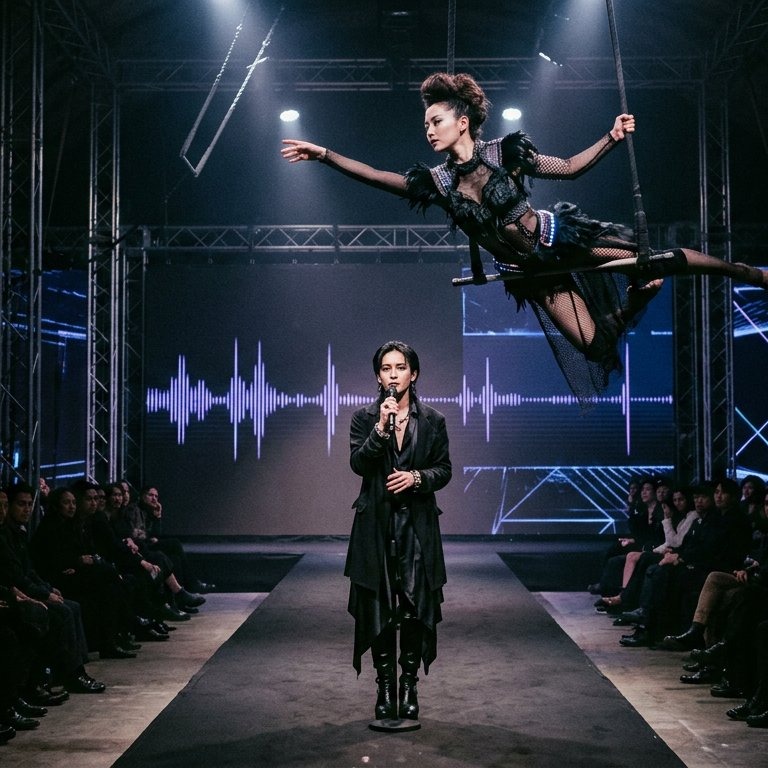
『君の仕事は、飛ぶこと。~空中ブランコの説教~』 ヘンリ・ナウエン

[Two distinct vocal roles:] [1. Japanese underground male idol, three distinct sick androgynous male vocals only, playful boyish male voices, bratty sick boys, theatrical idol performance, spoken dialogue and skits, preacher / narrator voice, calm, warm, intellectual, gentle, almost documentary-like spoken delivery, clearly spoken rather than sung.] [2. Beautiful Japanese anime young female flyer voice, fragile but confident, sincere and humble, singing the emotional chorus sections.] [The song begins with almost complete silence, distant room ambience, very soft piano and subtle low-frequency drone.] [The male preacher tells the story of a famous female flying trapeze artist who is interviewed after becoming famous. Everyone praises her courage, athletic ability and beautiful aerial performance. The preacher explains that she answers humbly: “I am not extraordinary. I simply let go, fly, and wait for the catcher to catch me.”] [The musical arrangement gradually develops as the story becomes spiritual.] [Female vocal enters for the first chorus:] [“I am not the one who is great.] [I am not the one who can fly.] [You are there.] [You are waiting.] [My work is to fly.] [Your work is to catch.”] [After the chorus, return immediately to the male spoken sermon.] [The preacher explains that the flyer must NOT grab the catcher. If the flyer tries desperately to grab the catcher, their movements collide and the catcher can be seriously injured. The flyer must trust the catcher and allow the catcher to do the catching.] [This becomes a metaphor for faith:] [human beings constantly try to control their lives, their futures, even God Himself.] [But faith means releasing control and trusting the One who catches us.] [Build the music slowly:] [soft piano → cello → distant strings → restrained electronic pulse → large cinematic drums → soaring orchestral guitar textures → sacred choir-like pads.] [The second chorus becomes more powerful:] [“My work is to fly.] [Your work is to catch.] [I do not catch You.] [You catch me.”] [Then strip everything away again.] [The male preacher speaks quietly:] [“Perhaps faith is not knowing how beautifully we can fly.] [Perhaps faith is knowing who will catch us.”] [Long silence.] [Female voice whispers:] [“I am only flying…] [and waiting for you to catch me.”] [Final section becomes overwhelmingly peaceful rather than bombastic.] [Male preacher, almost whispering:] [“You are not falling.] [You are flying.”] [Final sustained piano note, distant choir, fading room ambience.] [Mood: sacred, profound, vulnerable, hopeful, cinematic, existential, deeply Christian, emotionally devastating but ultimately comforting.] [Avoid: generic church worship music, gospel clichés, cheerful praise music, pop idol vocals, excessive vocal runs, melodramatic belting, female/male voices overlapping randomly, upbeat rhythm.] [Intro — spoken, quiet] 私は、ある空中ブランコの一座に出会いました。 そこには、とても美しいフライヤーがいました。 彼女は空中を舞い、 何度も何度も、 高いブランコから飛び出していきます。 人々は彼女を見て、 「なんて勇敢なんだ」 「なんて素晴らしい しんたいのうりょくなんだ」 「彼女は本当にすごい」 そう言いました。 やがて彼女は有名になり、 インタビューを受けるようになりました。 [Verse 1 — spoken / gentle piano] 記者が彼女に尋ねました。 「あなたは、どうしてそんなに恐れずに 空中へ飛び出せるのですか?」 彼女は少し笑って、 こう答えました。 「私ですか?」 「私なんて、 ただ飛んでいるだけなんです。」 [Pre-Chorus — music begins to rise] 「ブランコを離して、 空中へ飛んで、 そして……」 「掴んでくれるのを 待つだけなんです。」 [Chorus — sung] 私が すごいんじゃない 私が 空を飛べるんじゃない あなたが そこにいる あなたが 待っている だから私は 手を離せる 私の仕事は 飛ぶこと あなたの仕事は 掴むこと 私はただ あなたの腕を信じて 空へ飛ぶ [Verse 2 — spoken] 記者は驚いて尋ねました。 「でも、あなた自身が キャッチャーを掴まなければ 危険なのではありませんか?」 彼女は首を振りました。 「いいえ。」 「私がキャッチャーを 掴みに行ってはいけないんです。」 「私が必死になって 彼の腕を掴もうとすれば……」 「二人とも傷ついてしまいます。」 「キャッチするのは、 私の仕事ではありません。」 「彼の仕事なんです。」 [Pre-Chorus 2 — heartbeat / strings] 「だから私は、 飛び出したら……」 「腕を伸ばして、 自分から掴もうとせず……」 「ただ、待つんです。」 [Silence] 「彼が、 必ず掴んでくれるから。」 [Chorus — sung, larger] 私が すごいんじゃない 私の力で ここまで来たんじゃない 何度 手を離しても 何度 空へ落ちても あなたは そこにいる 私の仕事は 飛ぶこと あなたの仕事は 掴むこと だから私は 恐れながらも もう一度 手を離す [Bridge — spoken, intimate] その言葉を聞いたとき、 私は考えました。 私たちは、 なんと多くのものを 自分の手で掴もうとしているのでしょう。 自分の人生を掴み、 自分の未来を掴み、 自分の幸せを掴み、 そして時には、 神さえも自分の手で 掴もうとしてしまいます。 「神様、こちらへ来てください。」 「私を助けてください。」 「私の思い通りにしてください。」 けれど…… 空中ブランコのフライヤーは、 キャッチャーを掴みません。 彼女は知っているのです。 自分がするべきことと、 相手がするべきことを。 [Bridge — sung, fragile] 手を離すのは 怖い 何も掴めないのは 怖い この瞬間、 私はひとりだと思う でも―― 見えないところで 誰かが待っている 私には見えなくても その腕は伸ばされている [Final Chorus — powerful] 私が すごいんじゃない 私が 救うんじゃない あなたが そこにいる あなたが 掴んでくれる だから私は 手を離せる 私の仕事は 飛ぶこと あなたの仕事は 掴むこと 私があなたを 掴むんじゃない あなたが私を 掴んでくださる [Final Verse — spoken, almost whispered] もしかすると、 信仰とは…… 自分がどれほど上手に 飛べるかということでは ないのかもしれません。 どれほど強く ブランコを握れるかでも ないのかもしれません。 むしろ―― 手を離したその瞬間に、 誰が自分を 受け止めてくださるのかを 知っていることなのかもしれません。 [Outro — spoken] あの女性は言いました。 「私なんて、 ただ飛んで……」 「掴んでくれるのを……」 「待つだけなんです。」 [Long silence] そして私は思いました。 私たちも、 同じなのではないでしょうか。 恐れながら、 手を離す。 そして―― 飛ぶ。 [Whisper] 大丈夫です。 あなたは、 落ちているのではありません。 あなたは…… 飛んでいるのです。
