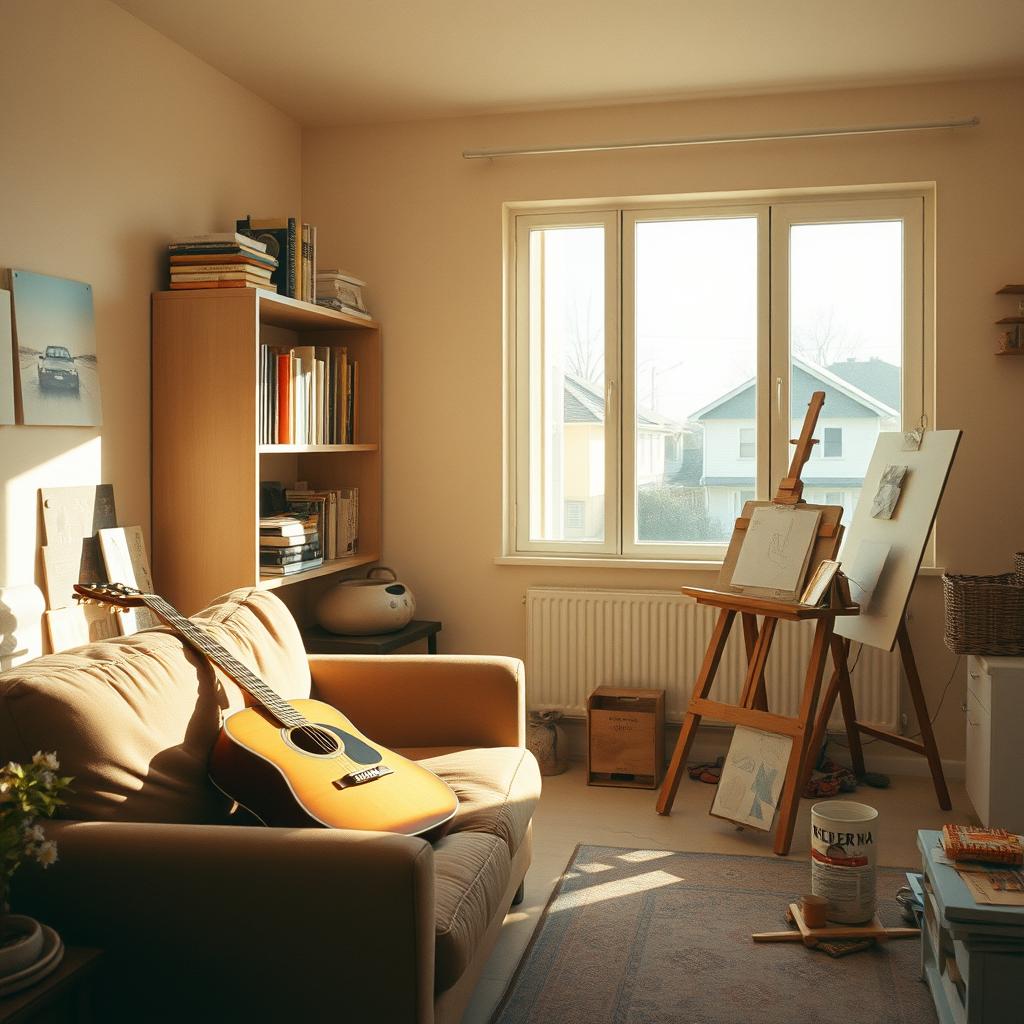

I forgot the punch clock. Titles, licenses, the old agenda— all filed away, put to rest. The children took off like planes on long-haul flights, and at last my life became truly mine. A modest pension arrives each month, small savings sit quietly in the bank. No urgent needs press in, no dark clouds loom ahead. No bosses call. No deadlines chase. Now the coffee maker hums softly, waiting, and I pour myself a cup. My Ikigai stirs gently when I draw back the curtains and hear the neighborhood wake— a low, muffled hum. The world no longer races; it ambles at my own unhurried pace. I breathe deep and understand: living fully, cherishing myself— that's the real work now. I lift the old guitar from its dusty corner, wipe away years of neglect, tune the strings again. Hesitant fingers remember old tunes; each chord wakens something quiet and alive. No applause needed, no spotlight. I play for my shadow, for the dog, for the sofa’s patient arms. Yet in the vibrating wood, my whole body leans in, listening. Papers and notebooks cover the table— words like pieces in a gentle puzzle. I rhyme doubts with clumsy laughter, questions with sighs; in every line, a shy song breathes. Sometimes poetry turns to paint: brushes, watercolors, improvisation. I stain the tablecloth, my shirt, the counter— each smudge a quiet rebellion. Little canvases from the corner shop, colors I dreamed of as a child. Faces, landscapes, imagined skies, and one tree standing just like me— rooted, open, simply here. In a quiet corner, impossible models: tiny cities that almost breathe, bridges eternal, little trains on silver tracks, streets where childhood still wanders. With calm clumsiness I learn the wood— steady saw, careful strokes. A shelf takes shape, a frame, a miniature boat dreaming of the sea. I join the clay workshop, the local choir. Wrong notes? Laughter becomes the reward. For pure joy I study what once felt distant: ancient philosophy, medieval tales. I mangle a new language, offer quiet meditation to others. My room: a private library— no deadlines, only curiosity’s soft pull. Pages invite silent journeys; each writer lends fresh eyes. In queues, on trams, I practice patience— watching gestures, catching snippets. People are walking stories, each face a quiet question. Mornings: walks with no destination. Neighborhood blooms in fresh light— park, pigeons, easy chatter with other retirees, a child splashing joy from the fountain. Sometimes a train, a new city. Step off on a whim— plaza, ruins, tavern. Honest food always waits. My old phone camera: companion to wondering eyes— windows, graffiti, strange clouds, an old woman’s distant gaze toward what’s next. Home late with sweet exhaustion— a truly lived day. In the living room, small stories sift; the sofa listens. Grandchildren bring joyful chaos and something deeper. Their laughter revives my stillness. Toys scatter, endless questions, caresses that brighten solitary hours. We play on the rug—knees grumble— invent monsters from blocks, laugh. I tell them the moon hides around the corner; wide enchanted eyes. When they leave, quiet returns, drawings still bright on the sofa. I gather toys slowly, grateful— today my tired heart warmed a little more. Near the end, if they ask, “What was best?” I smile, too weary for long answers. Yet this—though you may doubt—is my reply: these creative days of retirement, my humble Ikigai. A calm pension, a heart set free. Time filled with tenderness and whimsy, creating without rush, in gentle solitude. This Ikigai: the simple art of being alive— guitar notes, books, strokes of living color. Retirement is no ending; it’s quiet celebration of all I’ve become in the making. The soul of Ikigai lives among family and friends— laughter afternoons, walks, coffee’s warmth. All my art: the trace I leave— a few memories, happy clutter, this worn skin. And when Death stands before me, stern, asking gravely, “And you—what of you?” Half-deaf from the years, I cup my hand to my ear, mischief in my smile, and say, “What? … What’s it to you?” While she, startled, tries once more to speak, I die laughing—pure, bright laughter— and leave you all my peace.
