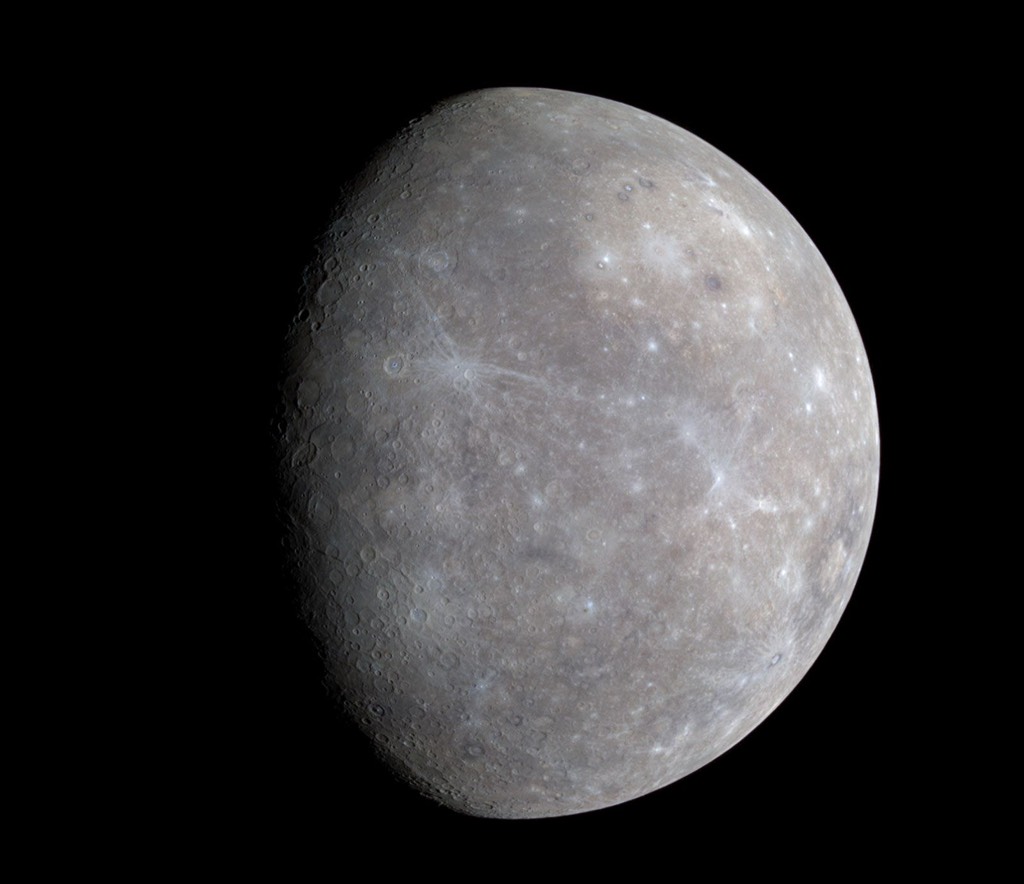
Mercury Mvt.4 Dance of the Whizzing Orbit

[Movement 1: The Scorched Plains - Begin with a scorching, intense overture that mimics the harsh sunlight on Mercury's surface. Use fast, aggressive strings and brass to evoke the heat and barren landscapes. The tempo should be quick to symbolize Mercury's swift orbit around the sun.] [Movement 2: Craters and Cliffs - Shift to a more contemplative mood with this movement, reflecting the planet's heavily cratered surface and dramatic cliffs. Employ deep, resonant cellos and basses for the craters, while the violins mimic the sharp, jagged cliffs. Introduce moments of silence or soft percussive elements to represent the vast, untouched areas.] [Movement 3: Twilight of the Long Night - Mercury's day-night cycle is unique; one day lasts about 176 Earth days. This movement should capture the long night with a slow, mystical piece. Use ethereal sounds from woodwinds or a solo violin to depict the quiet, mysterious darkness, occasionally punctuated by the distant echo of solar winds.] [Movement 4: Dance of the Whizzing Orbit - Conclude with a lively, almost chaotic finale representing Mercury’s dance around the sun. The rhythm should be erratic, with sudden changes in tempo to mimic the planet's elliptical orbit. Integrate all sections of the orchestra in a complex interplay, symbolizing the gravitational dance between Mercury and the sun.]
