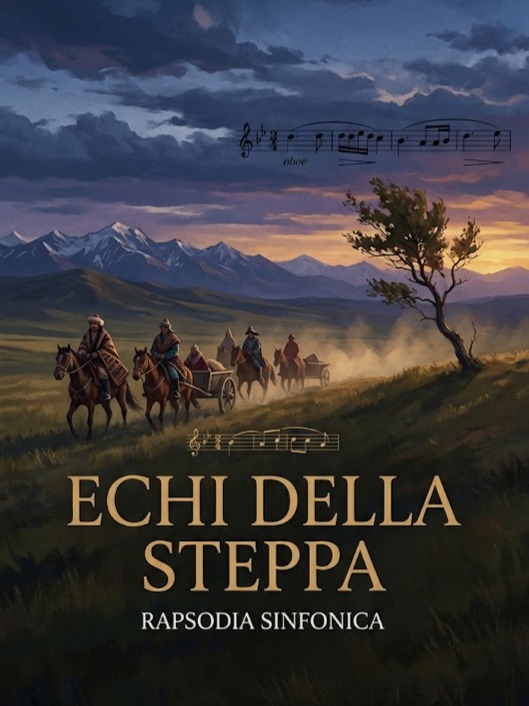
Echi della steppa

[Slow, atmospheric introduction (Lento, ♩ = 60): lyrical, modal melody in solo oboe and clarinet, ornamented and slightly oriental in flavor, floating over sustained divided strings (muted violins, violas, cellos) and soft horn harmonic pads. Sparse harp accents. Very wide orchestral space, restrained dynamics (pp–p), rubato phrasing, melancholic and mysterious] [Sudden transition into Allegro vivace (♩ = 120, 2/4): energetic folk-inspired dance rhythm. Driving string ostinatos (violins and cellos in rhythmic unison), accented off-beat patterns, sharp articulation. Woodwinds (flutes, piccolo, oboes, clarinets) add agile ornamental figures. Brass (horns, trumpets, trombones) enter with heroic fanfares and rhythmic punches. Timpani provides strong pulse with classical orchestral tuning only. Use traditional orchestral percussion only: timpani, bass drum, cymbals, triangle, tambourine (NO drum kits, NO cinematic hybrid percussion)] [Harmonic language: modal (Dorian / Phrygian / harmonic minor inflections), frequent chromatic color shifts, sudden dynamic contrasts (pp → ff)] [Middle section (cantabile, broad and expressive): expansive melodic theme in violins, doubled by cellos in lower octave. Warm horn counter-melodies. Harp arpeggios create flowing texture. Subtle woodwind responses. Lyrical, noble, slightly nostalgic character, like a folk song elevated to symphonic scale] [Return of the Allegro dance: more intense orchestration, thicker brass writing, intensified string ostinatos, layered percussion (triangle shimmer, cymbal rolls, timpani reinforcement). Increasing tempo energy feel (slight accelerando)] [Final coda: galloping rhythmic drive, full orchestra, brass fanfares dominate, strings in rapid repeated patterns, culminating in a triumphant orchestral climax (fortissimo), ending with a decisive orchestral cadence]
