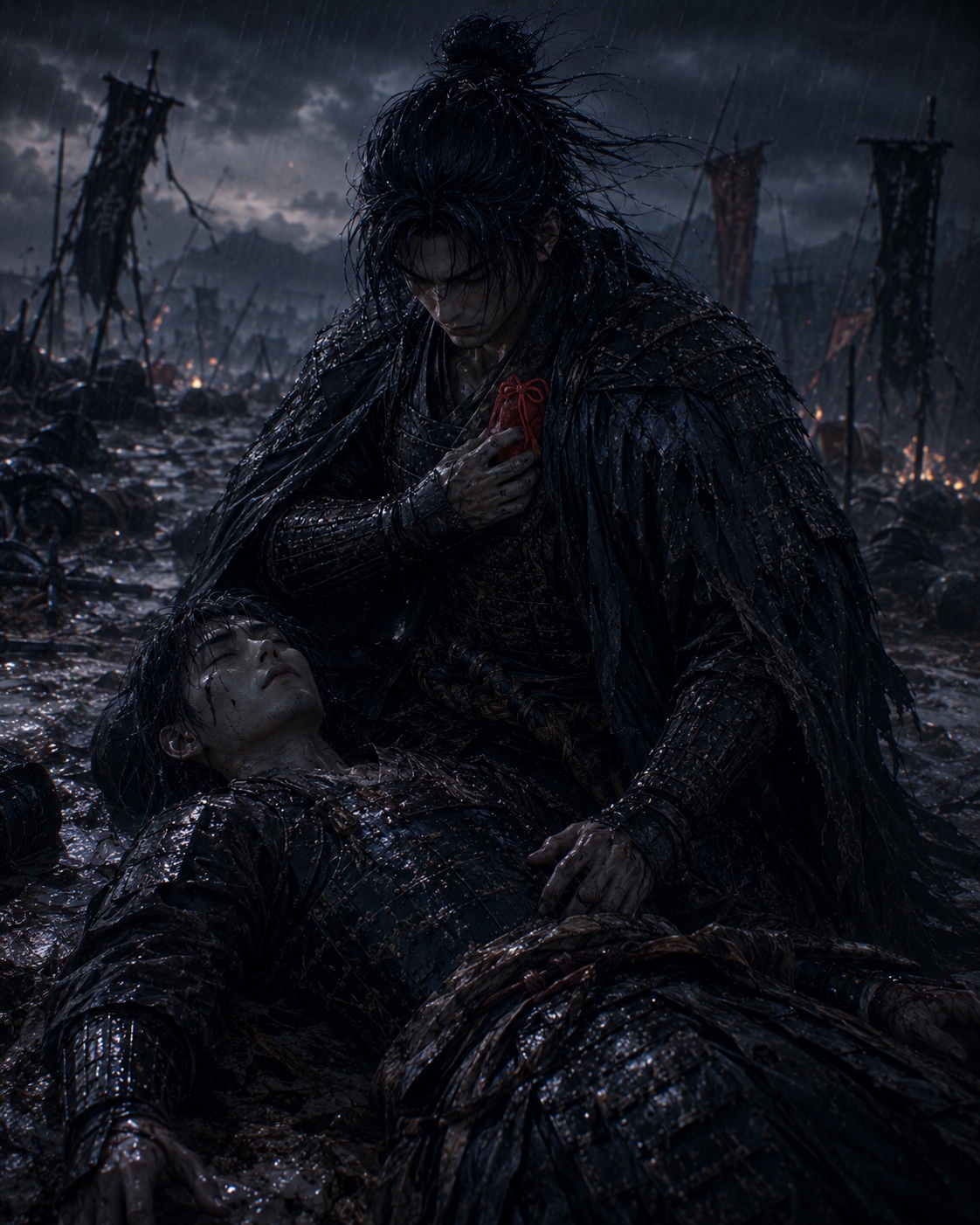
【INSTRUMENTAL ONLY】 【MUSIC ONLY】 【NO WORDS】 【NO LYRICS】 【NO VOCALS】 【NO HUMAN VOICE】 【NO FEMALE VOICE】 【NO MALE VOICE】 【NO CHOIR】 【NO HUMMING】 【NO SINGING】 【NO AH】 【NO OOH】 【NO VOCAL PADS】 【NO SPOKEN WORDS】 【NO WHISPERS】 【NO CHANTING】 【NO GENERATED WORDS】 【NO JAPANESE WORDS】 【NO ENGLISH WORDS】 【Title: 赤き御守り】 【Compact cover direction】 【Preserve the improved version】 【Same beautiful mourning melody】 【Same heavy quiet sound】 【Same instrument colors】 【Keep shakuhachi, kokyu, biwa, low odaiko, sho, low strings】 【Target length: about 3 minutes 40 seconds】 【Do not expand the arrangement】 【Do not add new sections】 【Do not extend pauses】 【No long silence】 【No long outro】 【Reduce repeated motif passages】 【Each section must be concise】 【Heavy but not monotonous】 【Beautiful but unresolved】 【Do not make it lighter】 【Do not make it heroic】 【No victory】 【No salvation】 【Core image】 【Ancient Japanese funeral elegy】 【A young samurai has fallen】 【Mugetsu stands over the lost life in silence】 【A red omamori rests on the young samurai's chest】 【Near the end, Mugetsu takes the red omamori and places it inside his robe】 【He carries the weight without outward tears】 【Main motif rule】 【Use one short Japanese minor pentatonic mourning motif】 【Low shakuhachi remains the main lead】 【Kokyu answers with restrained grief】 【Biwa appears rarely as regret and blade memory】 【Very low odaiko is only a distant heartbeat】 【Do not create a new final melody】 【Final ending uses the same motif】 【Do not repeat the motif too many times】 【Opening: Cold Silence】 【Very short cold silence】 【Low drone】 【Thin cold sho drone】 【Distant wind】 【No rhythm】 【Low shakuhachi plays the short mourning motif alone】 【Brief pause after motif】 【Move on quickly】 【First Stillness】 【Low shakuhachi repeats the motif once】 【Kokyu answers with restrained pain】 【One distant low odaiko heartbeat】 【One low biwa regret strike】 【Heavy stillness】 【No extra repetition】 【Deepening Grief】 【Kokyu carries the same motif softly】 【Low shakuhachi answers】 【Dark cellos and violas enter slowly】 【Long legato only】 【Sho drone remains cold】 【Low odaiko gives one distant heartbeat】 【Build weight without action】 【Keep concise】 【Middle Weight】 【Same motif returns stronger】 【Low shakuhachi and kokyu share the motif】 【Biwa strikes rarely】 【Low strings swell slowly】 【Very low odaiko remains distant】 【Heavy but not monotonous】 【No heroic feeling】 【No battle feeling】 【Do not extend this section】 【Still Break】 【Sudden short silence】 【One soft biwa note】 【Low shakuhachi breath tone】 【Kokyu unresolved bend】 【Thin sho drone】 【No relief】 【The red omamori is seen on the young samurai's chest】 【Keep this break brief】 【Final Reprise: Taking the Red Omamori】 【Clear final reprise of the same motif】 【Low shakuhachi plays the motif first】 【Kokyu answers with deeper grief】 【Low strings swell slowly】 【Sho drone widens coldly】 【Low odaiko heartbeat becomes heavier but still slow】 【Biwa gives rare regret fragments】 【All instruments gather briefly】 【This is the final emotional peak】 【Mugetsu lifts the red omamori from the young samurai's chest】 【Mugetsu places the red omamori inside his robe】 【He silently accepts the burden】 【The music weeps, but Mugetsu does not break】 【No victory】 【No salvation】 【Final Closing】 【All instruments cry together briefly, then fall away quickly】 【Low shakuhachi holds the same motif】 【Kokyu weeps around the motif】 【Biwa gives one last wounded fragment】 【Low strings fall away】 【Very low odaiko gives one final distant heartbeat】 【Sho drone thins out】 【Do not become melodramatic】 【Keep this closing short】 【Outro】 【Very short outro】 【Shakuhachi alone plays the final motif fragment】 【Kokyu gives one last unresolved bend】 【End dark, quiet, cold, unresolved】
