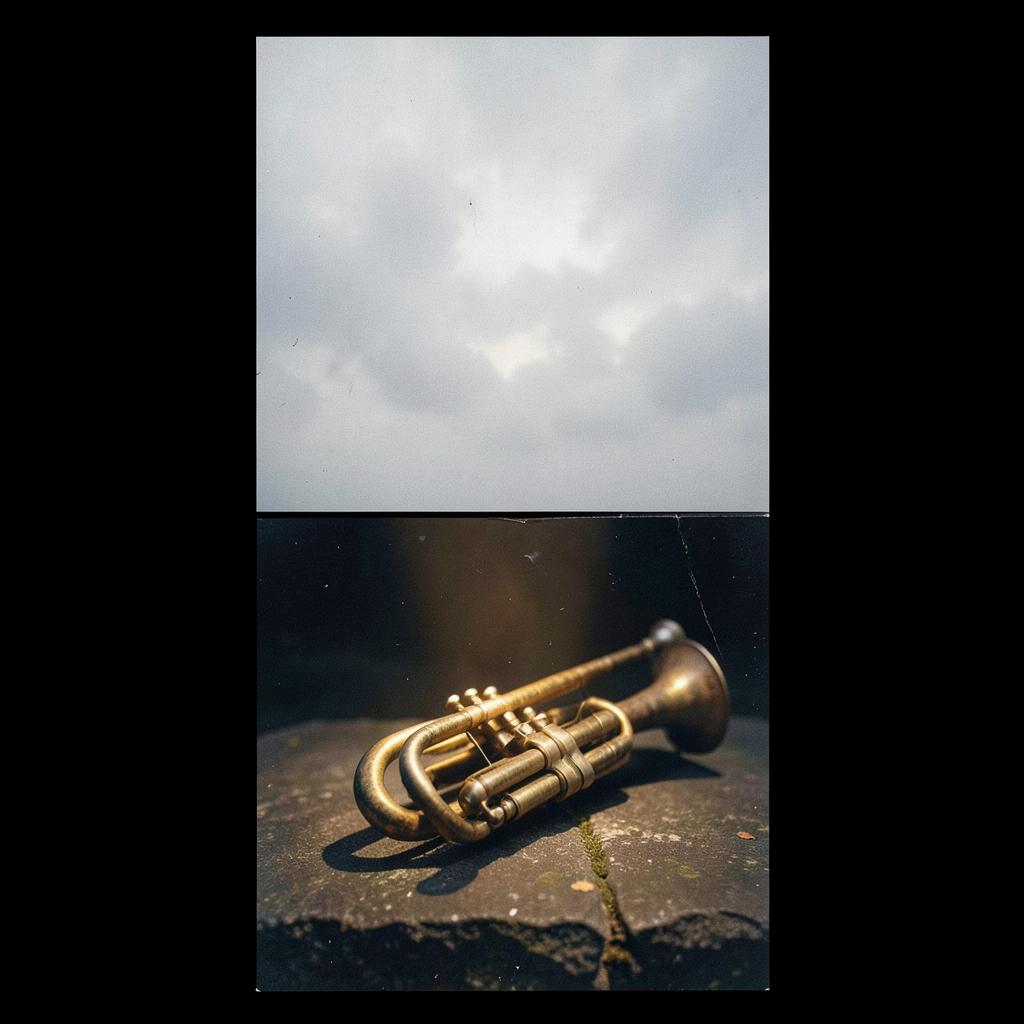
The Weight of Breath and Brass

[Open with a low‑register tuba chorale] [Three tubas of differing tone colours (contrabass, bass, tenor) enter one by one, forming a slow, noble chordal bed. Keep the articulation rounded, almost breath‑like, letting the hall feel large and civic.] [Let strings rise in soft civic layers] [Violins and violas enter with long, unbroken lines, never dominating the tubas but gently lifting them. Think 1970s Decca warmth: wide stereo, modest vibrato, autumnal restraint.] [Introduce harpsichord as a “mechanical myth” voice] [Light, precise harpsichord figures appear as if representing the gears of Celtic mythology—tiny, clock‑like motifs that contrast with the tubas’ organic weight. Keep them sparse, never busy.] [Vibraphone adds a shimmer of fate] [Soft mallet vibraphone chords hover above the strings, giving a 2026/2027 sheen. Use pedal‑held resonance to create a halo around the tuba lines, especially during transitions.] [Timpani marks structural turning points] [Dry, deliberate timpani strokes signal each shift in the piece’s arc—never martial, more like footsteps in a ceremonial hall. Occasional gentle rolls underline harmonic pivots.] [Mid‑section: tubas converse] [Allow the tubas to trade motifs: one rising, one falling, one holding a pedal. This “tri‑voice” dialogue should feel like a chain reaction of breath and brass, each voice nudging the next.] [Final minute: strings and vibraphone soften the descent] [Bring the strings into a slow, descending pattern while the vibraphone adds glints of light. Harpsichord returns only briefly, like a final mythic whisper. End with a single, warm tuba note that fades into the hall.]
