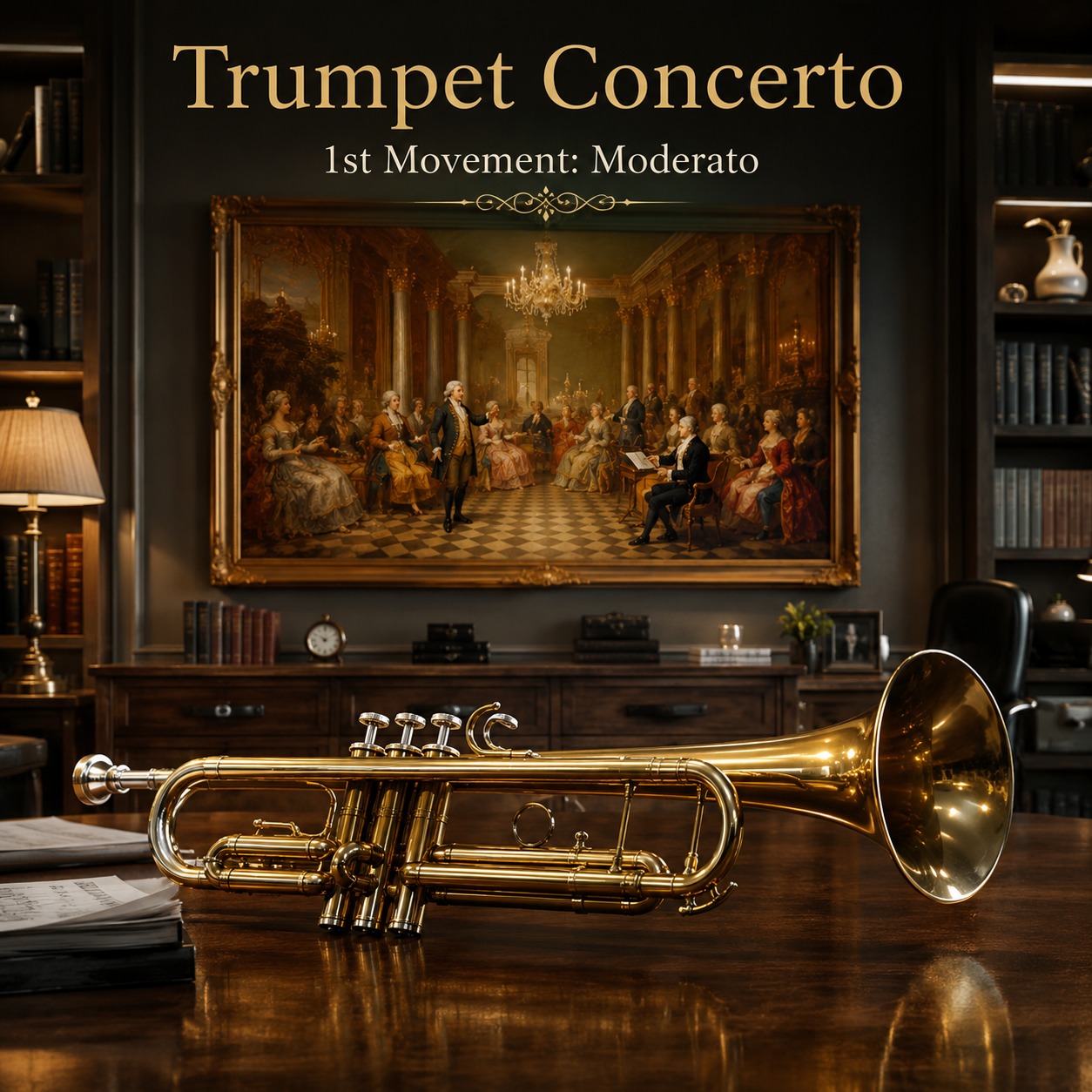

トランペット協奏曲 Trumpet Concerto 献呈:369様 いつかトランペット協奏曲を作ってみたい。 そう思いながらも、これまでなかなかその機会を得ることができなかった。 私が最も好きなトランペット協奏曲は、古典派を代表するハイドンの作品である。一方で、同じくトランペット協奏曲の重要な作品としてテレマンも外すことはできない。そして時代を大きく下れば、現代のレパートリーとして広く親しまれているアルチュニアンの協奏曲がある。本作では、私が最も親しんできたハイドンのような聴きやすさを土台としながら、そこにどこかロシアを思わせる響きを取り入れた。 私はトランペット奏者ではないが、かつてオーケストラや吹奏楽団に所属していた頃、金管楽器について多くのことを学んだ。中でも最も好きな楽器はホルンだが、トランペットやトロンボーンにも強く惹かれてきた。 大学時代から独学でリアルな作曲を始め、当時から金管楽器を積極的に鳴らす作品を数多く書いてきた。しかし、不思議なことにトランペット協奏曲を手掛けることはなく、独奏金管楽器のために書いた大きな作品は、ホルンソナタとホルン協奏曲にとどまっていた。 それから数十年。音楽を形にし、さまざまな響きや表現を実現することが以前より身近になった今、改めて「トランペット」という楽器に正面から向き合うことにした。 私にとって、トランペット協奏曲というジャンルの基礎は、ハイドンやテレマンの作品から学んだと言っても過言ではない。特にハイドンの協奏曲は、音楽大学の入試課題として取り上げられることも多く、トランペットという楽器の基礎と魅力を知るうえで格好の作品でもある。 これらの作品を長年にわたり何度も聴き、その響きを自分の中に蓄積してきた。そして今回、ようやく自分なりのトランペット協奏曲の構想が形となった。 古典的な協奏曲が持つ明快さと親しみやすさ。その中を自由に駆け巡る独奏トランペット。そして時折顔を見せる、ロシア音楽を思わせる響き。本作は、これまで私が聴き、学び、そして書いてきた音楽の経験を通して、改めてトランペットという楽器の魅力に向き合った作品である。 【楽章構成】 第1楽章:Moderato 第2楽章:Andante 第3楽章:Allegro 【楽器編成】 独奏トランペット フルート、オーボエ、クラリネット、ホルン、トランペット、トロンボーン、ティンパニ、スネアドラム、シンバル、バスドラム、鈴、ピアノ、弦5部 ーーーーーーーーーーーーーーーーーーーーーー 第1楽章:Moderato 明るく華やかでありながら、やや編成を拡大したバロック音楽を思わせる響きを目指した楽章である。 冒頭から独奏トランペットが高らかに登場し、その明るく伸びやかな音色を存分に響かせる。技巧面では過度な難度を求めるのではなく、多少の難しさを感じる程度に抑えながら、トリルや細かなタンギングなど、トランペットの基本的な奏法を随所に取り入れた。 華やかな技巧そのものを前面に押し出すというよりも、トランペットという楽器が本来持っている輝かしさや機動性、そして伸びやかな歌い回しを自然に引き出すことを意識している。 楽章の終盤では音楽がコーダへと向かい、最後は独奏トランペットによる高音域のロングトーンが響き渡り、明快かつ堂々と第1楽章を締めくくる。 ーーーーーーーーーーーーーーーーーーーーーー Trumpet Concerto Dedicated to 369 I had long wanted to write a trumpet concerto. Yet despite having that idea in mind for many years, I never quite found the opportunity to bring it to life. Of all the trumpet concertos I have encountered, Haydn’s remains my favorite and stands as one of the defining works of the Classical repertoire. Telemann’s concerto is equally difficult to overlook, while from a much later period, Arutiunian’s concerto has established itself as another cornerstone of the modern trumpet repertoire. In this work, I sought to build upon the accessibility and clarity that I have always admired in Haydn, while introducing a distinctive sonority that occasionally evokes the character of Russian music. I am not a trumpet player myself, but during my years performing in orchestras and wind ensembles, I had many opportunities to learn about brass instruments. The horn has always been my favorite, though I have also been strongly drawn to the trumpet and trombone. I began composing independently during my university years, writing music in a more traditional, hands-on manner, and brass instruments featured prominently in many of my works from that period. Curiously, however, I never attempted a trumpet concerto. My major works for solo brass were limited to a horn sonata and a horn concerto. Several decades have passed since then. Today, when it has become far easier to bring musical ideas to life and realize a wide variety of sounds and expressions, I decided to return to the trumpet and engage with the instrument in earnest. It would not be an exaggeration to say that much of my understanding of the trumpet concerto as a genre was shaped by the works of Haydn and Telemann. Haydn’s concerto in particular is well known for frequently appearing in entrance examinations and auditions at music colleges and conservatories. It is also an ideal work through which to learn the fundamentals of trumpet playing and discover the instrument’s distinctive qualities. Having listened to these works countless times over many years, their sounds and ideas gradually became part of my own musical vocabulary. At last, the concept for a trumpet concerto of my own began to take shape. The clarity and accessibility of the classical concerto tradition; a solo trumpet moving freely through the orchestral landscape; and, from time to time, sonorities reminiscent of Russian music. This concerto brings together the music I have listened to, studied, performed, and written over the years, and represents my renewed exploration of the unique character and possibilities of the trumpet. MOVEMENTS 1st Movement: Moderato 2nd Movement: Andante 3rd Movement: Allegro INSTRUMENTATION Solo Trumpet Flute, Oboe, Clarinet, Horn, Trumpet, Trombone, Timpani, Snare Drum, Cymbals, Bass Drum, Sleigh Bells, Piano, and Strings -------------------------------------------------- 1st Movement: Moderato The first movement aims for a bright and brilliant sound reminiscent of Baroque music, but conceived on a somewhat larger orchestral scale. The solo trumpet enters boldly from the very beginning, allowing its bright, open, and resonant tone to ring out freely. In terms of technique, I deliberately avoided excessive virtuosity, keeping the demands at a moderately challenging level. Trills, rapid articulation, and other passages throughout the movement draw upon the fundamental techniques of trumpet playing. Rather than placing virtuosity itself at the forefront, I wanted to bring out the qualities naturally associated with the trumpet: its brilliance, agility, and ability to sing with a broad and expressive tone. Toward the end of the movement, the music drives into the coda. The solo trumpet sustains a long note in its upper register, bringing the first movement to a clear and triumphant conclusion.
