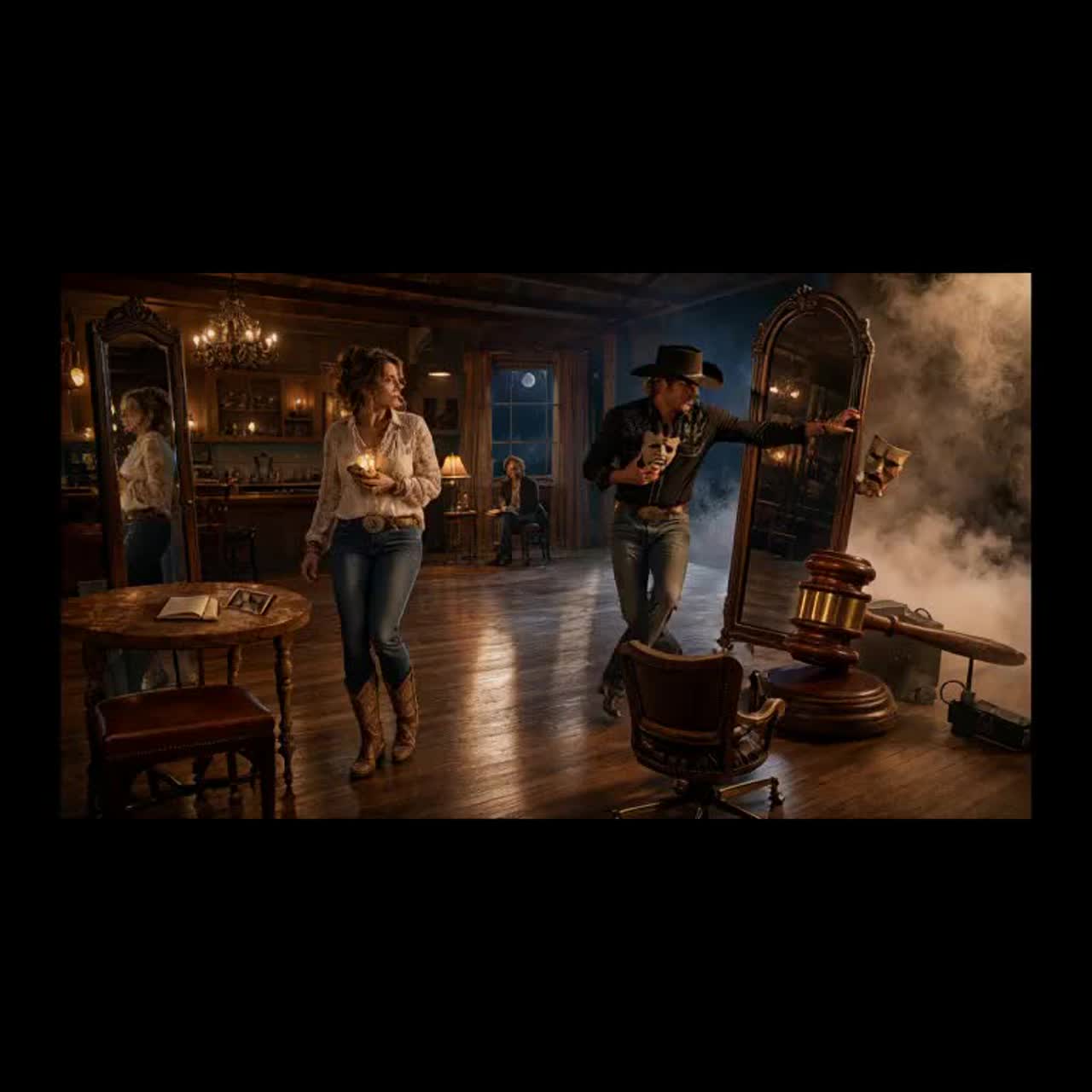

I brought one question to the kitchen table. You brought a fog machine, a gavel and a fable. I asked, “What happened?” You said, “Look what you’ve become.” Well, that escalated quickly and answered exactly none. [VERSE 1 — GASLIGHTING] Gaslighting is a pattern, not one confused recall. It bends or denies what happened till you doubt you saw it at all. “You’re too sensitive.” “You imagined it.” “That never happened that way.” The target starts distrusting what they noticed yesterday. It’s more than disagreement, more than memory missing a beat. Watch for repeated distortion that puts self-trust in retreat. If I enter with one concern and leave defending my sanity, we may not be solving a problem— we may be rearranging reality. Gaslighting moves the mirror till you’re questioning your eyes. DARVO changes who’s on trial the moment you ask why. Deny. Attack. Reverse the roles Victim and Offender trade names. Now the person naming harm is somehow carrying the blame. D-A-R-V-O accountability slips out the back. When the subject becomes your character, bring the conversation to the facts. [VERSE 2 — THE DARVO TWO-STEP] First comes Deny: “I didn’t do it. You misunderstood the scene.” Then comes Attack: “How dare you ask?" "You’re cruel, unstable, mean.” Then Reverse Victim and Offender: “Your question injured me!" "After everything I’ve suffered, you’re the abusive one, you see.” The original concern disappears beneath a courtroom made of smoke. You’re busy proving you’re not evil, while accountability goes broke. Objection the subject has been changed. Sustained. Gaslighting moves the mirror till you’re questioning your eyes. DARVO changes who’s on trial the moment you ask why. Deny. Attack. Reverse the roles Victim and Offender trade names. It isn’t conflict resolution when confusion wins the game. [VERSE 3 — WHY IT HARMS] Over time it erodes self-trust, stirs shame and isolation. You may over-explain each sentence and rehearse every conversation. You scan the room for danger, bring receipts for how you feel, and need another person’s permission to believe your life is real. That is why the pattern matters: it can protect control and power. When accountability cannot enter, the same harm gets another hour. [BRIDGE — WHAT HEALTHY REPAIR SOUNDS LIKE] Healthy conflict can say: “Here is what I remember.” “Let’s check what we both know.” “I can see that my behavior hurt you.” “I own my part.” “What needs to change?” “How can repair begin to show?” Healthy people may feel defensive, but they can come back to the thread. They don’t need to break your compass to protect the story in their head. An apology names the action, cares about impact and makes repair. It does not wear a victim costume and demand that you comfort it there. [THERAPY-ADJACENT BREAK] Ask: Is this a repeated pattern? Is there room for my reality? Can we stay with the original concern? Can they show curiosity? Do I leave with greater clarity or ashamed, confused and small? Am I allowed to set a boundary without punishment at all? If it is safe, keep notes. Save messages. Check reality with someone steady. A therapist can help you notice what the nervous system knows already. A boundary is not a courtroom verdict: “I won’t continue while I’m being blamed." "We can return when facts stay facts" "and neither person is being shamed.” If there is coercion, threat or danger, do not confront just to prove you’re right. Choose support and careful safety you do not owe the fog a fight. Gaslighting moves the mirror, but you can learn to trust your eyes. DARVO changes who’s on trial now you recognize the disguise. Deny. Attack. Reverse the roles Victim and Offender trade names. You can bring it back to impact, to the pattern and the facts. If every road to accountability becomes a personal attack, step out of the two-step. You don’t have to dance on cue. Someone else’s need to dodge the truth does not make the truth untrue. So…this is all your fault? Nice try. Bring back the original question.
