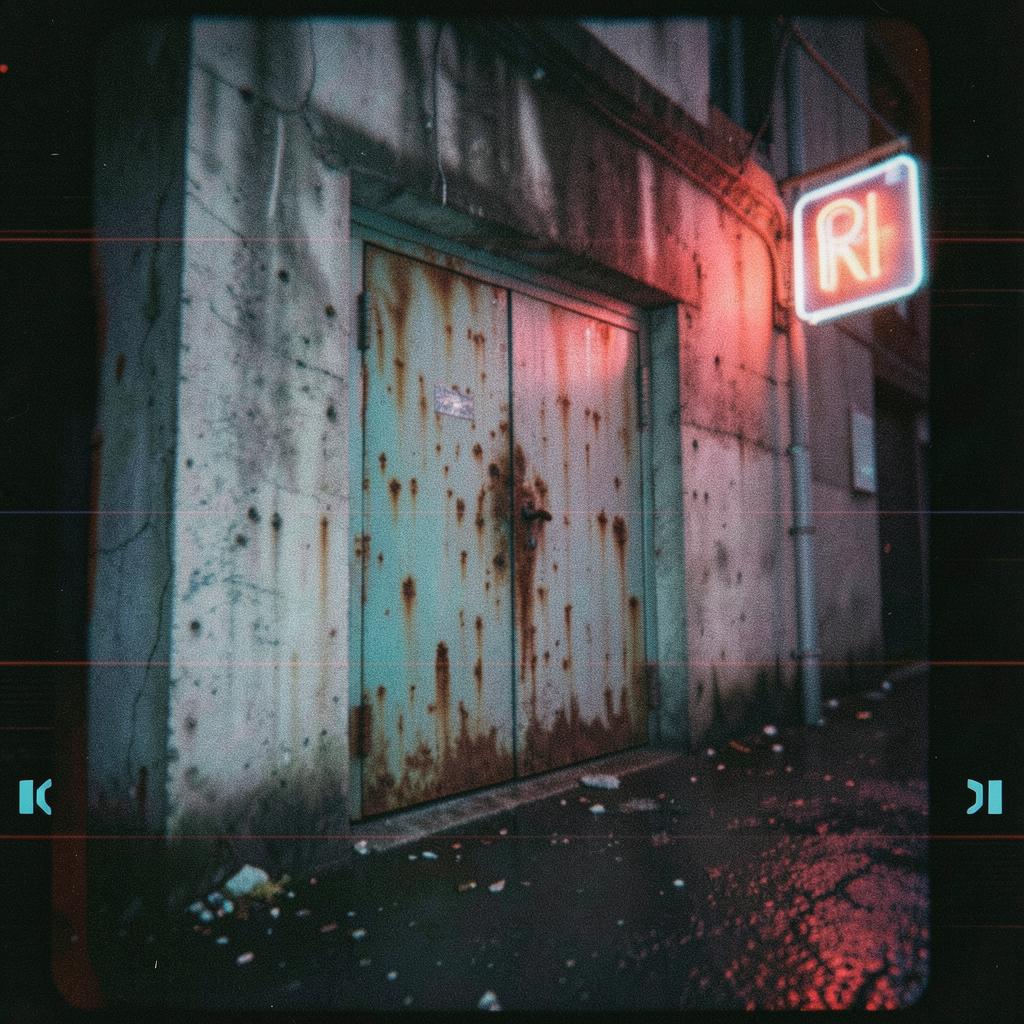

instrumental 🎛️ [Dystopian Cyberpunk: 10-Track Final Mastering Specifications] 1. Dynamics & Loudness Control Target LUFS: Maintain -14 \sim -13\text{ LUFS}. Avoid excessive brickwall limiting to secure a wide dynamic headroom that emphasizes the dramatic contrast between absolute silence and explosive synthesizers/orchestral tuttis. True Peak Ceiling: Locked at -1.0\text{ dBTP}. Completely prevents inter-sample clipping during analog modulation to ensure sound integrity. Bus Compressor: Slow attack (40\text{ms} \sim 50\text{ms}) and fast release. Tightly controlled so that the cold mechanical impact and the massive lingering sustain of the bass are never choked. 2. Frequency-Specific Texture Tuning (Frequency Zoning) Dark Low End (Sub-Bass & Lows): Apply a heavy weight to the 40\text{Hz} \sim 80\text{Hz} range with strict mono summing, realizing the massive, overpowering seismic vibration of a Blade Runner-esque metropolis. Mid-Range Grit (Distortion): Subtly introduce lo-fi saturation in the 1\text{kHz} \sim 3\text{kHz} zone to recreate the rusted metallic texture of a ruined city and the gritty grain of analog synths. Glassy Highs (Air Band & Highs): Apply a crisp high-shelf boost above 10\text{kHz} to capture the cold, sharp metallic noise and the sparking glow of neon signs under the rain. 3. Analog Saturation & Dystopian Space Tape & Tube Saturation: Imbue heavy analog drive across the master chain to melt away sterile digital sources, expressing a lost-warmth dystopian state. Industrial Reverb & Delay: Maximize the isolated spatial atmosphere using long reverb tails and stereo ping-pong delays, evoking the feeling of being trapped inside a massive, cold concrete ruin (slum/wasteland). 1. Pulse Bass & Low-End Modulation Pulse Rhythm: Apply LFO pulse modulation linked with a sidechain in the 40\text{Hz} \sim 90\text{Hz} range, giving it a heartbeat-like, thumping pulse that breathes continuously like a running machine. Target LUFS: Maintain -14 \sim -13\text{ LUFS}. Secure sufficient headroom to prevent the repetitive low-end pulse impact from being crushed by the limiter. True Peak & Compressor: Lock True Peak at -1.0\text{ dBTP}. Use a slow attack (40\text{ms} \sim 50\text{ms}) bus compressor so that the heavy pulse impact and sustain remain alive and breathing. 2. Frequency-Specific Texture Tuning (Frequency Zoning) Dark Sub Pulse (Sub-Bass): Strictly apply mono summing to maintain the massive, overpowering low-frequency seismic vibrations reminiscent of Blade Runner's metropolis. Mid-Range Grit (Distortion): Add lo-fi saturation in the 1\text{kHz} \sim 3\text{kHz} range, causing the pulse sound and the texture of metallic ruins to harshly collide. Glassy Highs (Air Band): Add cold metallic noise and the sparking feel of neon lights above 10\text{kHz} to chill the entire space. 3. Analog Saturation & Dystopian Space Tape Saturation: Inject heavy analog drive across the master chain to intensify the dystopian mood. Industrial Reverb: Complete a grand, three-dimensional spatial depth as if the pulsing, throbbing tails are trapped inside a massive, cold concrete ruin. 🎛️ [Pure Cyberpunk Mastering Specifications] Target LUFS: Maintain -14 \sim -13\text{ LUFS} to preserve wide dynamic range and create sharp contrast between silent atmospheric moments and crushing synth drops. True Peak Ceiling: Locked at -1.0\text{ dBTP} to eliminate inter-sample clipping during digital-to-analog conversion. Pulsing LFO Sub-Bass: Apply LFO modulation in the 40\text{Hz} \sim 90\text{Hz} range to create a continuous, heavy thumping heartbeat movement throughout the tracks. Mid-Range Saturation: Add lo-fi tape/tube saturation in the 1\text{kHz} \sim 3\text{kHz} band to introduce rusted metal textures and gritty analog synth character. Air Band Sparkle: High-shelf boost above 10\text{kHz} for cold, sharp metallic noise and the sparking aesthetic of neon lighting.
