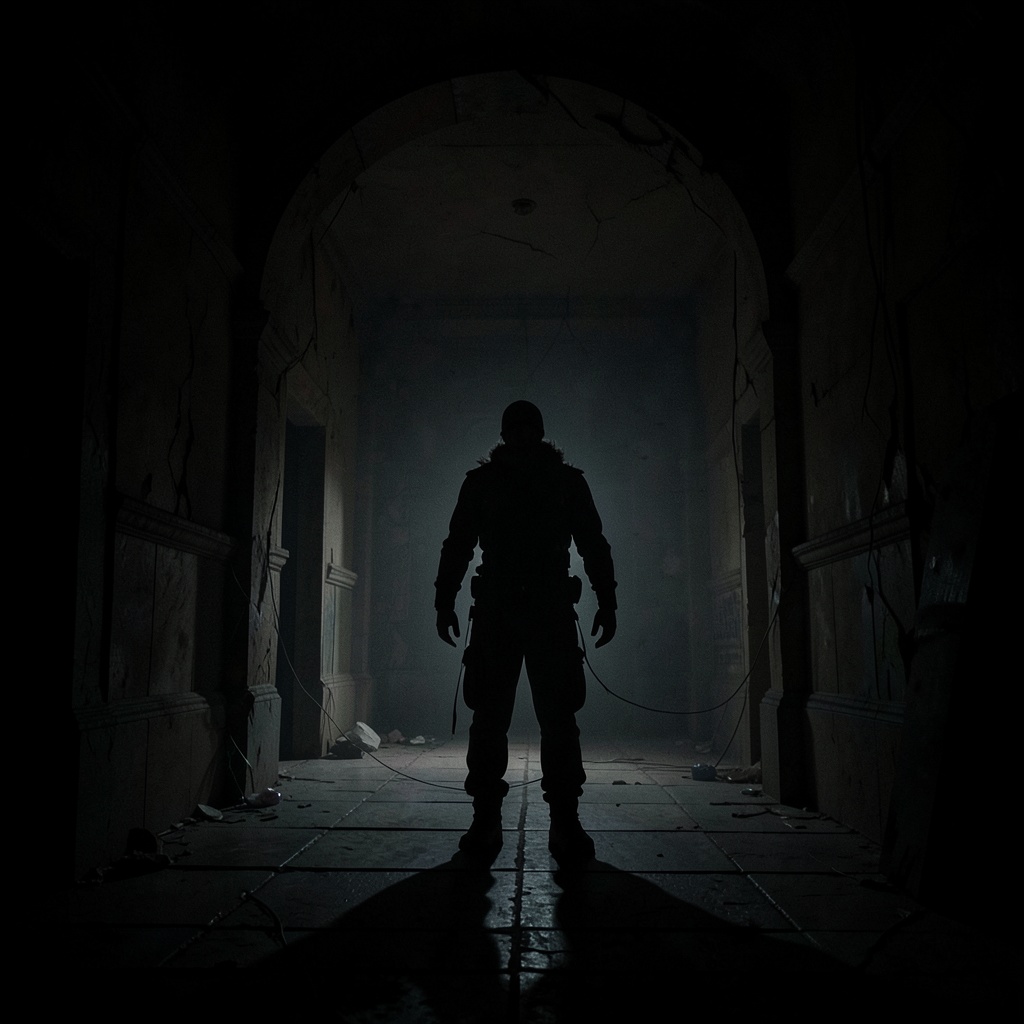

The Despair apparition howls, trying to sustain the onslaught, but it cannot maintain its power in the face of true compassion. The Wanderer’s willingness to hurt with others, to neither turn away nor be destroyed, becomes an invincible lifeline. It is the paradox of compassion: by opening to the pain, the Wanderer finds the strength to bear it. The song reaches a final, soft conclusion and silence falls again. The sea of anguish has receded, and in its place a gentle rain of light falls across the chamber, each droplet the soft glow of a healed moment. Kneeling but composed, the Wanderer looks up at the Despair phantom with infinite gentleness. “Thank you for reminding me of why I chose this path,” they say. “The pain is great, yes. But greater still is the love that rises to meet it. I do not bear this alone—every soul I’ve touched now carries a piece of that love, and we share the burden.” The phantom shrinks back, its ghastly faces dissolving one by one into mist. With a sigh that echoes of both relief and frustration, the second apparition disperses. The Shadow himself, still standing at the edge of the chamber, narrows his eyes. Perhaps he hoped these first trials would break the Wanderer’s spirit. Seeing them passed, his expression grows more intense, but also a hint of something like respect glints in his gaze. Now the third apparition comes forward. This one is nebulous, shimmering as if made of fog and shattered glass. It encircles the Wanderer slowly, and with each pass, the Wanderer’s surroundings seem to change. The chamber blurs; suddenly the Wanderer finds themselves in a small, familiar room filled with the scent of home. It’s a memory—their childhood cottage. A gentle voice calls their name from another room. The Wanderer’s heart leaps; that voice… it belongs to someone dearly loved and lost. Without thinking, they run toward it, down the hall—only for the scene to flicker and shift to another memory, a teenage year, where a different voice beckons—a first friend turned foe, luring them into a betrayal that scarred them. The Wanderer flinches, that old wound aching anew. The scene shifts again, now to the Wanderer as a young adult, standing before a gravestone under a weeping sky—someone they failed to save. Regret slices through them. Memory after memory assaults the Wanderer: joys turned to ashes, trusts broken, losses that cut deep. “I am Memory,” the apparition whispers, voice a chorus of echoes. “The past that chains you. Look at what you’ve lost, what you’ve failed. These wounds define you. How can you heal the cosmos when your own history is a litany of pain? The past cannot be undone; it is etched in time. Carry it forever, or be crushed by its weight.” The Wanderer reels, the rapid shifts disorienting. Each memory feels as fresh as the day it happened, reopening scars they thought healed. Grief, shame, anger—they swirl like a storm. For a moment, the Wanderer is lost in the torrent, whispering, “I can’t escape this… it’s who I am.” But then, amid the chaos, a realization dawns. These memories are not the whole story; they are fragments, like the mirrors in the labyrinth. On the Fractal Path, the Wanderer learned that time is not linear but layered, and every moment holds potential for reinterpretation. They stop chasing the illusions and stand still, closing their eyes. “These are my stories,” they say aloud, “but I am more than them. I honor what was, but I choose what it means now.”
