Franz Kafka - the trial (excerpt)

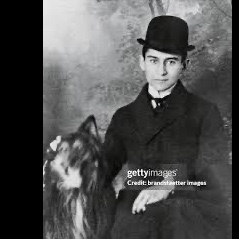
Franz Kafka (1883–1924) Franz Kafka was born in Prague, Austria-Hungary (now Czech Republic) in 1883. He became one of the most influential German-language writers of the 20th century, known for his surreal, existential, and often nightmarish narratives. Kafka’s work explores alienation, bureaucracy, anxiety, and the absurdity of human existence. He struggled with chronic illness, depression, and a fraught relationship with his authoritarian father, yet his writing reflects extraordinary insight into the human psyche. Kafka remained intellectually active until his death from tuberculosis in Kierling, Austria in 1924. His prose is characterized by clarity and precision, while simultaneously evoking the uncanny, oppressive, and dreamlike aspects of modern life. Kafka’s The Trial was published posthumously in 1925. Franz Kafka: Der Prozess Opening excerpt: „Jemand musste Josef K. verleumdet haben, denn ohne daß er etwas Böses getan hätte, wurde er eines Morgens verhaftet. Die Köchin der Frau Grubach, seiner Zimmervermieterin, die ihm jeden Tag gegen acht Uhr früh das Frühstück brachte, kam diesmal nicht. Das war noch niemals geschehen. K. wartete noch ein Weilchen, sah von seinem Kopfkissen aus die alte Frau, die ihm gegenüber wohnte und die ihn mit einer an ihr ganz ungewöhnlichen Neugierde beobachtete, dann aber, gleichzeitg befremdet und hungrig, läutete er…“ Ending excerpt: „Ein kleiner Steinbruch, verlassen und öde, nah bei einem noch ganz städtischen Haus. Hier machten die Herren halt. Überall lag der Mondschein mit seiner Natürlichkeit und Ruhe, die keinem anderen Licht gegeben ist. Nach Austausch einiger Höflichkeiten, wer die nächsten Aufgaben auszuführen habe, gingen sie an ihr Werk. Sie setzten K. auf die Erde nieder, lehnten ihn an den Stein und betteten seinen Kopf obenauf.“ Someone must have slandered Josef K., for without having done anything wrong he was arrested one morning. The cook of Mrs. Grubach, his landlady, who every day at about eight in the morning brought him his breakfast, did not come this time. That had never happened before. K. waited a little while longer, looking from his pillow at the old woman who lived opposite him and who was watching him with an unusual curiosity for her, then, at once puzzled and hungry, he rang the bell. — A small quarry, abandoned and desolate, near a house that was still entirely urban. Here the gentlemen stopped. Moonlight lay everywhere with its naturalness and calm that no other light possesses. After exchanging a few courtesies about who was to carry out the next tasks, they went to their work. They seated K. on the ground, leaned him against the stone, and placed his head upon it Jemand Jemand musste Josef K. verleumdet haben.
