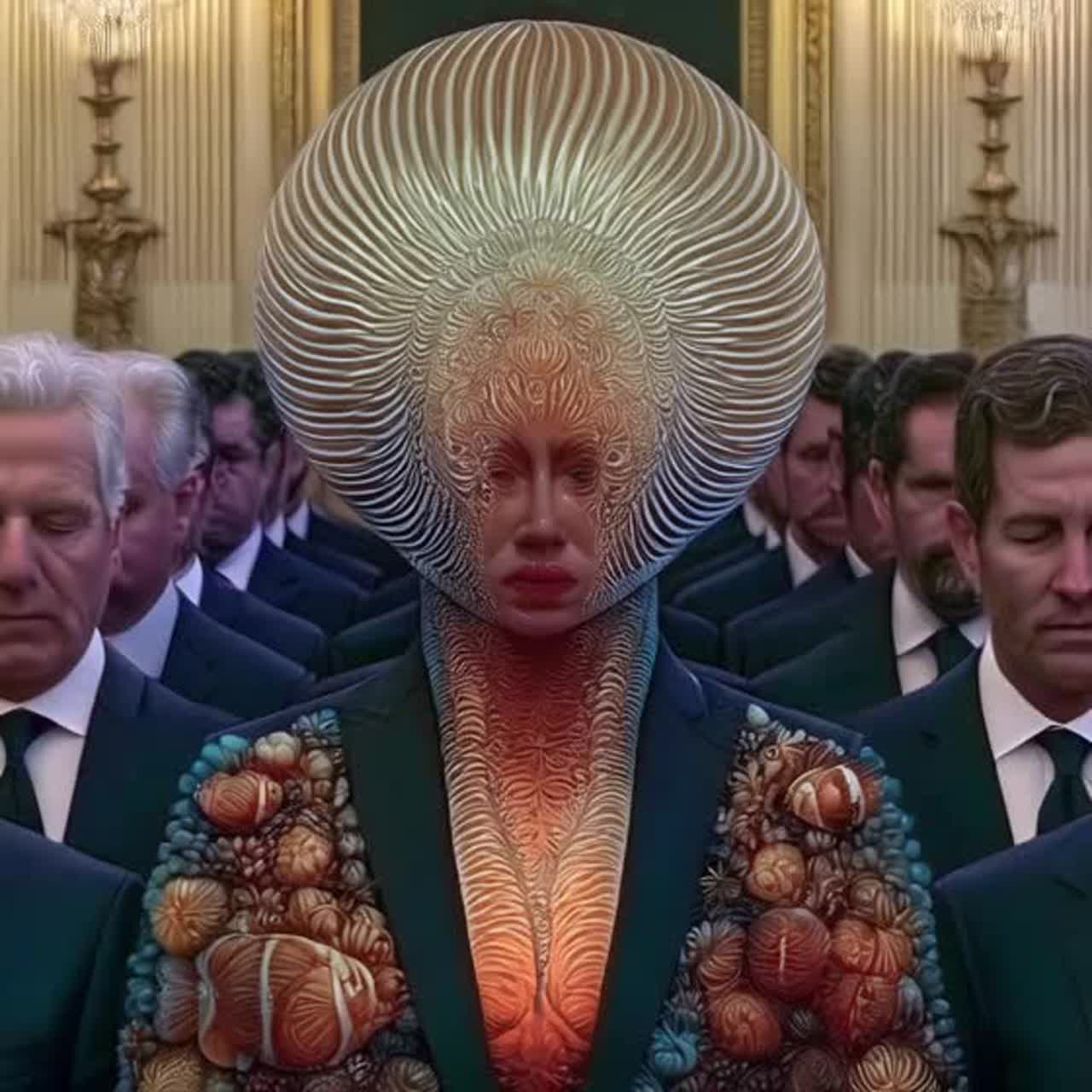

# THE BELIEF OF FRAUD Fraud is an interesting word. It means someone has violated an agreement. But before there can be fraud, there must first be an agreement about **what is real.** This is money. This signature means ownership. This number represents value. This person has authority. This document proves something. This institution can be trusted. Fraud doesn't create those beliefs. **Fraud uses them.** The magician cannot fool you without first knowing what you expect to see. That is why fraud is fundamentally an activity of perception. Someone presents a symbol. You supply the meaning. A uniform says authority. A logo says legitimacy. A title says expertise. A number says precision. A document says proof. Perhaps. But notice how quickly you move from the symbol to the conclusion. That space between them is where fraud lives. And this is why merely eliminating fraudulent people would never eliminate fraud. You would have to eliminate your willingness to surrender perception to symbols. You would have to stop saying: **“It looks official, therefore it is true.”** There is another side to this. People become terrified of being fooled. Then suspicion becomes their new authority. Now everything is fraud. Every institution is lying. Every photograph is fake. Every expert is corrupt. Every stranger has an angle. You haven't escaped the belief. You have simply reversed it. Blind trust and blind distrust are twins. Both surrender your authority. One says: **“Tell me what is true.”** The other says: **“Everything you tell me is false.”** Neither one is actually looking. Lucidity does something different. It notices. It questions. It gathers information. It recognizes that something can be real and still be inaccurately interpreted. And most importantly, it does not confuse uncertainty with danger. You are allowed to say: **I don't know yet.** That may be one of the most powerful sentences available to you. Because the fraudster wants urgency. Decide now. Believe now. Pay now. Fear now. Choose now. Lucid says: **No.** I will perceive first. Fraud requires more than a deceiver. It requires an expectation that can be manipulated. So when you discover deception, don't merely ask: **Who fooled me?** Ask the much more useful question: **What did I believe that made this convincing?** That isn't blame. That's recovering the mechanism. Because once you can see the mechanism, you aren't merely hunting another fraudster. You're learning how your own perception assigns reality. And then something remarkable happens. You become harder to fool— without becoming afraid of everyone. That is lucidity. Not believing everything. Not disbelieving everything. **Choosing what you give your belief to.** This is Radio Apocalypse.
