🏰Baba Vida’s Towers (read & listen)

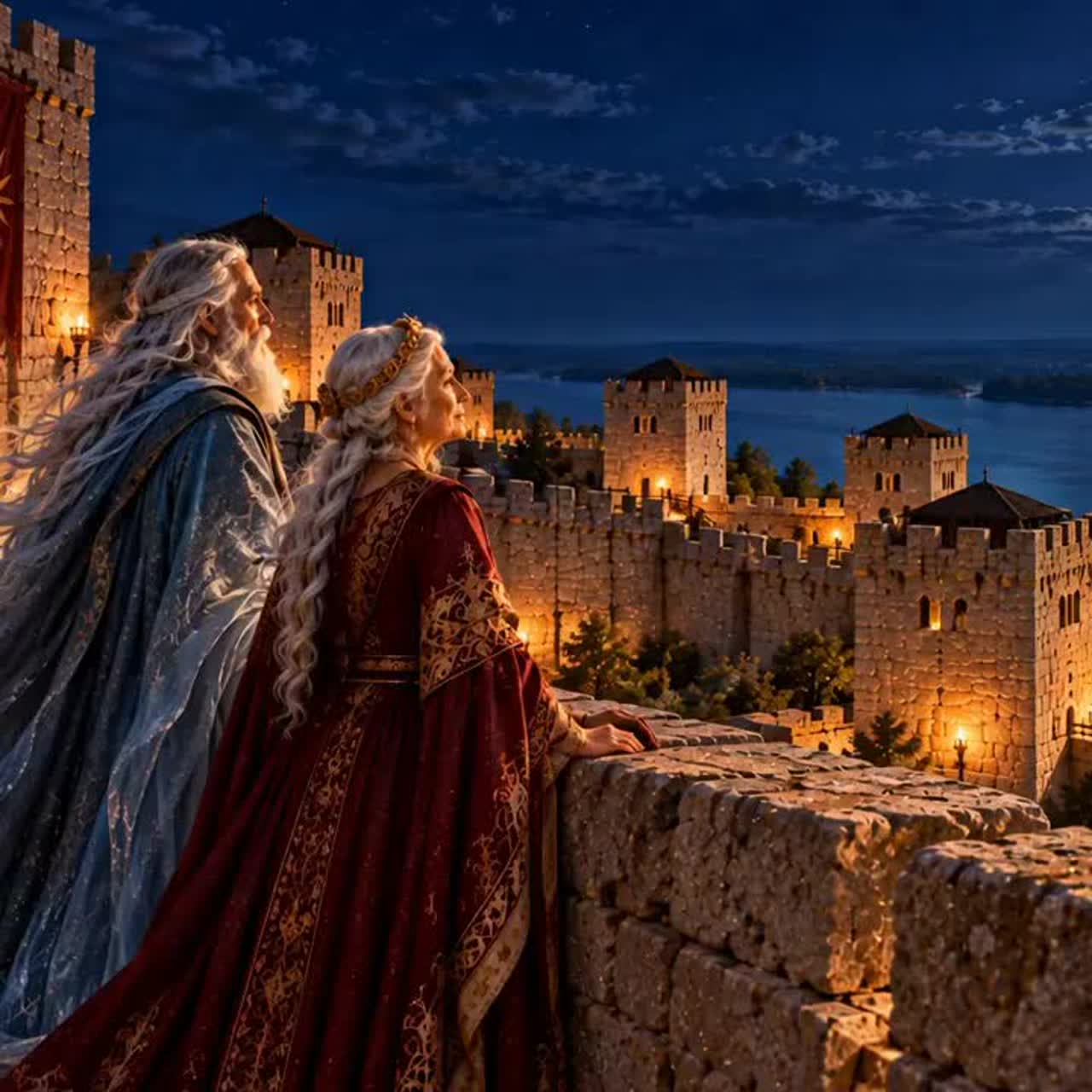
You can find the Bulgarian and Russian translations of this new musical tale, along with its video and many other tales, on my new website: www.solaria-gallery.com/tales/ 🏰🏰🏰🏰🏰🏰🏰🏰🏰 I. The Three Gifts Long ago, on the banks of the Danube, there lived a wealthy boyar with three daughters — Vida, Kula, and Gamza. Kula dreamed of a great love, Gamza loved music and beautiful things, while the eldest, Vida, loved watching the river and dreaming of distant lands. Before his death, their father left Kula a golden ring, Gamza a silver cup, and Vida an ordinary river stone. “Why have you given me only a stone, Father?” “Because you see something where others see nothing.” Years passed. Kula married a prince who squandered her wealth on wars. Gamza chose a wealthy merchant, but his greed destroyed everything they possessed. Only Vida remained unmarried. She governed her father's lands, cared for her people, and went down to the banks of the Danube every evening with the river stone in her hand. II. The Old Man from the River One moonlit night, Vida once again gazed out over the river. “Oh, Father! What am I supposed to do with this stone?” “And what would you like to do with it?” came a voice from the water. Before her appeared an old man with a silver beard and a cloak woven from river mist. “You are... the Danube?” “Once they called me Ister, then Danuvius. I remember kings, vanished cities, and times when not a single human dwelling stood upon these shores.” The old man pointed to the stone. “Your father left you a beginning. On this riverbank, you will build a fortress with nine towers. But whether it survives long after you are gone depends on what you place in its foundations.” And he vanished among the moonlit reflections. III. The Nine Towers The next morning, Vida summoned the finest craftsmen and ordered them to build a fortress with nine towers. But every morning, they found their work destroyed. For nine days, they labored in vain. On the tenth night, Vida went down to the river. “Why are you destroying my fortress?” The old man appeared once more. “Your stones are strong, but there is nothing within them worth protecting. Place a gift in the foundations of each tower. Not gold or precious jewels, but something a person gives willingly, even though it is dearer to them than anything else.” IV. The Eight Hearts The next day, Vida gathered her people and told them what the river had demanded. The first to step forward was an old stonemason. He offered the wooden cradle of his child, who had died in infancy. “Let this be the beginning of a fortress that will protect other people's children.” They placed the cradle in the foundations of the first tower, and that night it began to shine. A young woman offered the only letter from her beloved, who had gone away to war. She wished for the fortress to become a place where everyone could return. The second tower began to shine. An old wanderer offered the key to his ruined home. “May these gates open to those who have lost their homes.” The third tower began to shine. An elderly teacher brought the only book he had spent his entire life copying by hand. Before giving it away, he had taught many children to read and write. The fourth tower began to shine. An elderly woman offered an embroidered cloth whose patterns had been passed down from mother to daughter for generations. “May this fortress remember all those who lived before us.” The fifth tower began to shine. An old soldier laid down his sword and promised never again to raise it against an innocent person. The sixth tower began to shine. After him came a farmer carrying his last remaining seeds following a terrible drought. But Vida suggested planting them in the fortress garden and placing the empty pouch in the foundations instead. The seventh tower began to shine. Last came a blind woodcarver. He offered a wooden bird he had made for his beloved, who had died before she could receive it. “Birds have no fortresses, but they know where they can return.” And the eighth tower began to shine. But the ninth remained unfinished. V. The Sisters' Return One autumn evening, Kula and Gamza arrived at the fortress. Both had lost their wealth and happiness. All they had left were their father's gifts. When they heard about the eight towers, they offered the golden ring and the silver cup. “The river does not want gold or silver,” Vida said. “It wants something we give with love.” “Then let us give it what we have left,” Kula suggested. “And what do we have left?” “Each other.” The three sisters embraced and went down to the Danube together. The old man was waiting for them. “And what will you give?” he asked Vida. She took out the river stone. “The most precious thing I possess.” “No, Vida. That is the most precious thing you keep. I am asking what you are willing to give.” Vida did not know what to say. “Then the time for the ninth tower has not yet come.” VI. The Night of the Open Gates A few days later, a red glow appeared above the northern horizon. After midnight, refugees from a village that had been burned to the ground arrived at the fortress — wounded people, mothers with children, and exhausted elderly men and women. Armed horsemen were galloping in pursuit. The commander insisted that the gates remain closed. The fortress was still unfinished, supplies were limited, and the pursuers could break in after the refugees. Kula suggested taking in at least the women and children, while Gamza insisted that they save everyone. Then the old wanderer who had offered the key to his ruined home stepped forward. “Do you remember, my lady? May these gates open to those who have lost their homes.” Vida looked at the terrified people. “Open the gates!” Kula organized the defense, Gamza led the wounded into the inner courtyard, and the old soldier took his place among the defenders. Vida ordered the drawbridge to be raised only after the very last refugee had crossed. And then the earth began to tremble. The stones of the unfinished ninth tower began to rise of their own accord. An enormous tower grew above the fortress gate, and a dazzling light poured from its summit. The attackers reined in their horses. Amid the radiance, the old man from the river appeared. “Now you understand. Your people built the eight towers. You built the ninth when you opened your gates to strangers.” The attackers turned their horses around and retreated. And Vida understood that the fortress had never been intended for her and her people alone. VII. Baba Vida's Towers Years passed. Kula tended the fortress gardens, while Gamza welcomed artists and musicians into one of its towers. Their father's gifts became treasures shared by all. The refugees built new homes, and Vida ruled until her hair turned white. Her people came to call her Baba Vida — Grandmother Vida. When she died, the nine towers shone all night. Centuries later, a mysterious white bird still appeared above the fortress — the woodcarver's bird, awakened by the river to remind everyone of the meaning of home. And on quiet, moonlit nights, people believed that the ancient Danube still spoke with Baba Vida. And that she was still watching over her town.
