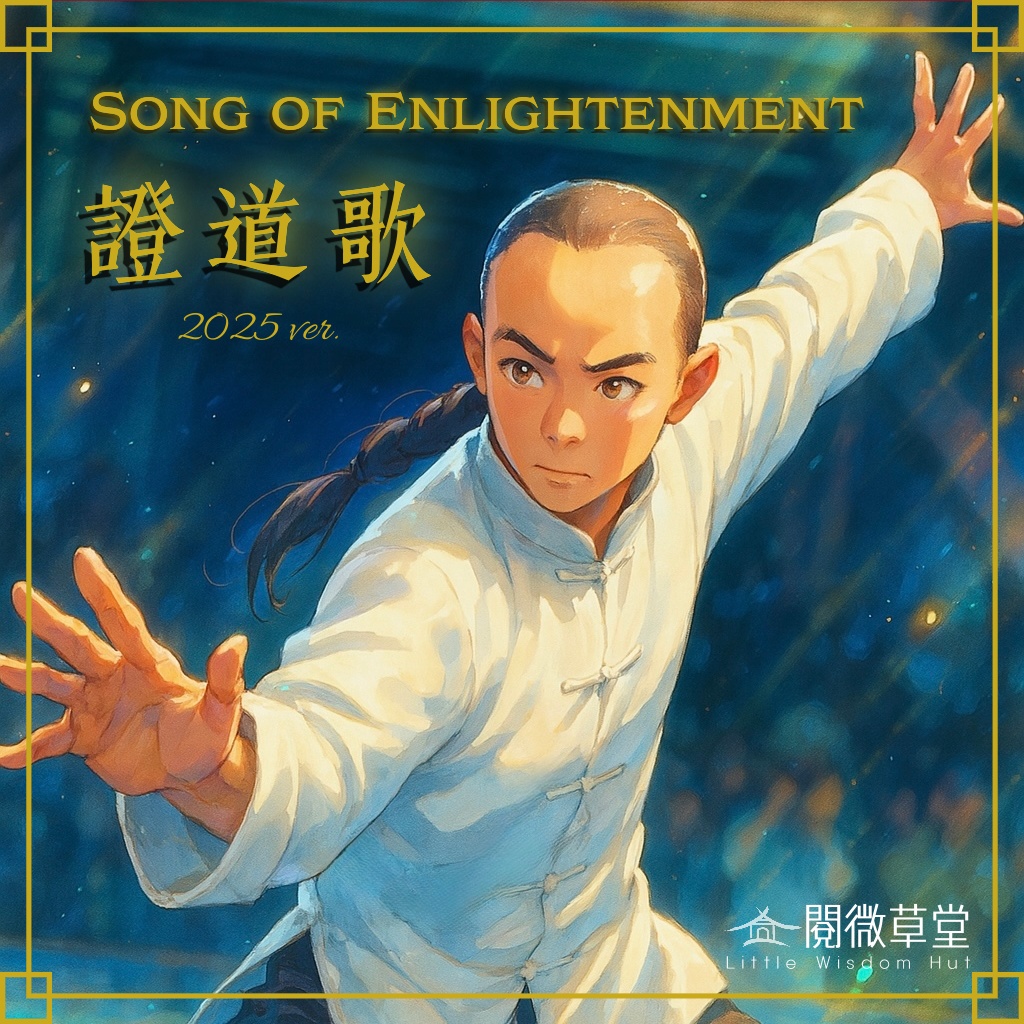
證道歌 2025 ver. (Song of Enlightenment)
《Song of Enlightenment》By Great Master Yongjia [Intro: Instrumental] (君不見:) (Have you not seen) [Verse 1] 絕學無為閑道人,不除妄想不求真; those people of the way who have nothing to learn and nothing to do? They neither discard wandering thoughts nor seek the truth? 無明實性即佛性,幻化空身即法身; The true nature of fundamental ignorance is buddha-nature; This illusory empty body is the Dharma-body. 法身覺了無一物,本源自性天真佛。 After realizing the Dharma-body, there is not a single thing; Your original, intrinsic nature is the authentic innocent buddha. 五陰浮雲空去來,三毒水泡虛出沒。 The five skandhas are the illusory comings and goings of floating clouds; The three poisons are the transient appearing and disappearing of bubbles on ocean’s surface. 證實相、無人法,剎那滅卻阿鼻業; When true reality is actualized, there are no personhood or dharmas. The karma of avīci hell is destroyed in a kṣaṇa. 若將妄語誑眾生,自招拔舌塵沙劫。 If I were to lie to deceive sentient beings, May my tongue be ripped out for kalpas—uncountable as dust and sand. 頓覺了、如來禪,六度萬行體中圓; With sudden awakening to the dhyāna of the Tathāgata, The six pāramitās and myriad practices are perfected in their essence. 夢裏明明有六趣,覺後空空無大千。 In dreams there are clearly six destinies of sentient beings [in saṃsāra]; Upon awakening, the great chiliocosm is completely empty. [Pre-Chorus] 無罪福、無損益,寂滅性中莫問覓; There are no transgressions or merit, no loss or gain. Do not seek for anything in the nature of quiescent extinction; 比來塵鏡未曾磨,今日分明須剖析。 The dusty mirror has never been polished; Today it must be clearly explored and discerned. 誰無念?誰無生?若實無生無不生; Who has no thoughts? Who experiences the unborn? If the unborn is real, there is nothing not born. 喚取機關木人問,求佛施功早晚成? Ask the mechanical wooden puppet When it will attain Buddhahood by cultivating merit. [Chorus] 放四大、莫把捉,寂滅性中隨飲啄; Put down the four elements, do not cling to them; Feel free to eat and drink amidst their nature of quiescent extinction. 諸行無常一切空,即是如來大圓覺。 All phenomena are impermanent, and thereby empty. This is the complete enlightenment of the Tathāgata. 決定說、表真僧,有人不肯任情徵; These discerning marks are the authentic [purpose] of sangha; Those who disagrees are swayed by emotions. 直截根源佛所印,摘葉尋枝我不能。 Penetrate directly to the root, the seal of all the buddhas; There is no point in searching for branches or plucking leaves. [Verse 2] 摩尼珠、人不識,如來藏裏親收得; The wish-fulfilling jewel is unknown to people; It exists in the tathāgatagarbha. 六般神用空不空,一顆圓光色非色。 The miraculous functions of the six senses are both empty and non-empty, The one perfect light is both form and formless. 淨五眼、得五力,唯證乃知難可測; Purify the five eyes9 to achieve the five powers. Only after realization are you able to comprehend their profundity. 鏡裏看形見不難,水中捉月爭拈得。 To see an image in a mirror is not difficult. But how can the moon in the water be grasped? 常獨行、常獨步,達者同遊涅槃路; We have always been acting alone, walking in solitude. Together, the awakened ones travel the nirvāṇa road. This tune is ancient, its spirit is pure and style is poised. 調古神清風自高,貌顇骨剛人不顧。 Though your countenance may be drawn, your bones are hardened—no one takes notice of you. 窮釋子、口稱貧,實是身貧道不貧; The penniless Buddhist monks say they are destitute; Though they have nothing, they are not poor in the way. 貧則身常披縷褐,道則心藏無價珍。 Poverty shows in the ragged robes they always wear. The priceless treasures of the way are stored in their minds. [Bridge] 無價珍、用無盡,利物應機終不悋; This priceless treasure has inexhaustible functions; Bringing benefits and responding to conditions without being parsimonious. 三身四智體中圓,八解六通心地印。 The three bodies and four wisdoms are already perfected in their essence; The eight liberations and six supranormal powers are the mind-ground’s seal. 上士一決一切了,中下多聞多不信; For the superior, one breakthrough accomplishes all; For the middling and inferior, the more they hear, the less they believe. 但自懷中解垢衣,誰能向外誇精進? You only need to discard the dirty garments within; No need to flaunt your diligence to others. [Interlude] [Verse 3] 從他謗、任他非,把火燒天徒自疲; When criticized by others, let them wrong you; They will tire themselves trying to burn the sky with a torch. 我聞恰似飲甘露,銷融頓入不思議。 When I hear abuse, it is like drinking ambrosia; Let [criticisms] dissolve, and suddenly you enter the inconceivable. 觀惡言、是功德,此即成吾善知識; If you regard criticism as merit, The critics will become reliable friends. 不因訕謗起冤親,何表無生慈忍力? Do not hate those who slander you; How else can you manifest the unborn power of compassionate forbearance? 宗亦通、說亦通,定慧圓明不滯空; Thoroughly penetrating both realization and the teachings, Samādhi and prajñā become perfectly clear without stagnating in emptiness. 非但我今獨達了,恒沙諸佛體皆同。 Not only do I accomplish this now; The essence of uncountable buddhas is just the same. 師子吼、無畏說,百獸聞之皆腦裂; The lion’s roar is the fearlessly teaching; The skulls of all the beasts will crush when they hear this roar. 香象奔波失卻威,天龍寂聽生欣悅。 Losing its composure, the fragrant elephant gallops; With quiet joy, the heavenly dragon listens. [Pre-Chorus] 遊江海、涉山川,尋師訪道為參禪; I have roamed the rivers and oceans and have crossed over mountain and streams. I sought out teachers and asked about the way to investigate Chan. 自從認得曹谿路,了知生死不相關。 But since I came to recognize the way of Caoxi [i.e., the sixth ancestral master Huineng], I realize that I am no longer tethered to birth and death. 行亦禪、坐亦禪,語默動靜體安然; Walking is Chan; sitting is Chan; Speaking or silent, motion or stillness—this essence is always at peace. 縱遇鋒刀常坦坦,假饒毒藥也閑閑。 Composed when facing the threat of a knife; At ease when given poison. [Final Chorus] 我師得見然燈佛,多劫曾為忍辱仙; My teacher only met Dīpaṃkara Buddha After training in forbearance for many kalpas. 幾迴生、幾迴死,生死悠悠無定止。 Continuing rounds of birth and death, Saṃsāra prolonged without interruption. 自從頓悟了無生,於諸榮辱何憂喜? Since sudden awakening of the unborn, I no longer have concerns for honor or shame. 入深山、住蘭若,岑崟幽邃長松下; Living in a cottage deep in the mountains, On a lonely peak under a thick pine tree. [Outro] 優游靜坐野僧家,闃寂安居實蕭灑。 I would meditate contentedly, taking this wilderness as my home. Quiet and still is this place free from restraints. 覺即了、不施功,一切有為法不同; There is no need for further effort after awakening, Which is different with all conditioned phenomena. 住相布施生天福,猶如仰箭射虛空。 Giving alms with attachment leads to the merit of a heavenly birth. But doing so is like shooting an arrow at the sky. 勢力盡、箭還墜,招得來生不如意; Once its thrust dissipates, the arrow inevitably falls, Which brings the disappointment of a next life. 爭似無為實相門,一超直入如來地。 How can [merit making] compare to [entering] the gate of true reality, where one directly arrives at the ground of the Tathāgata?
