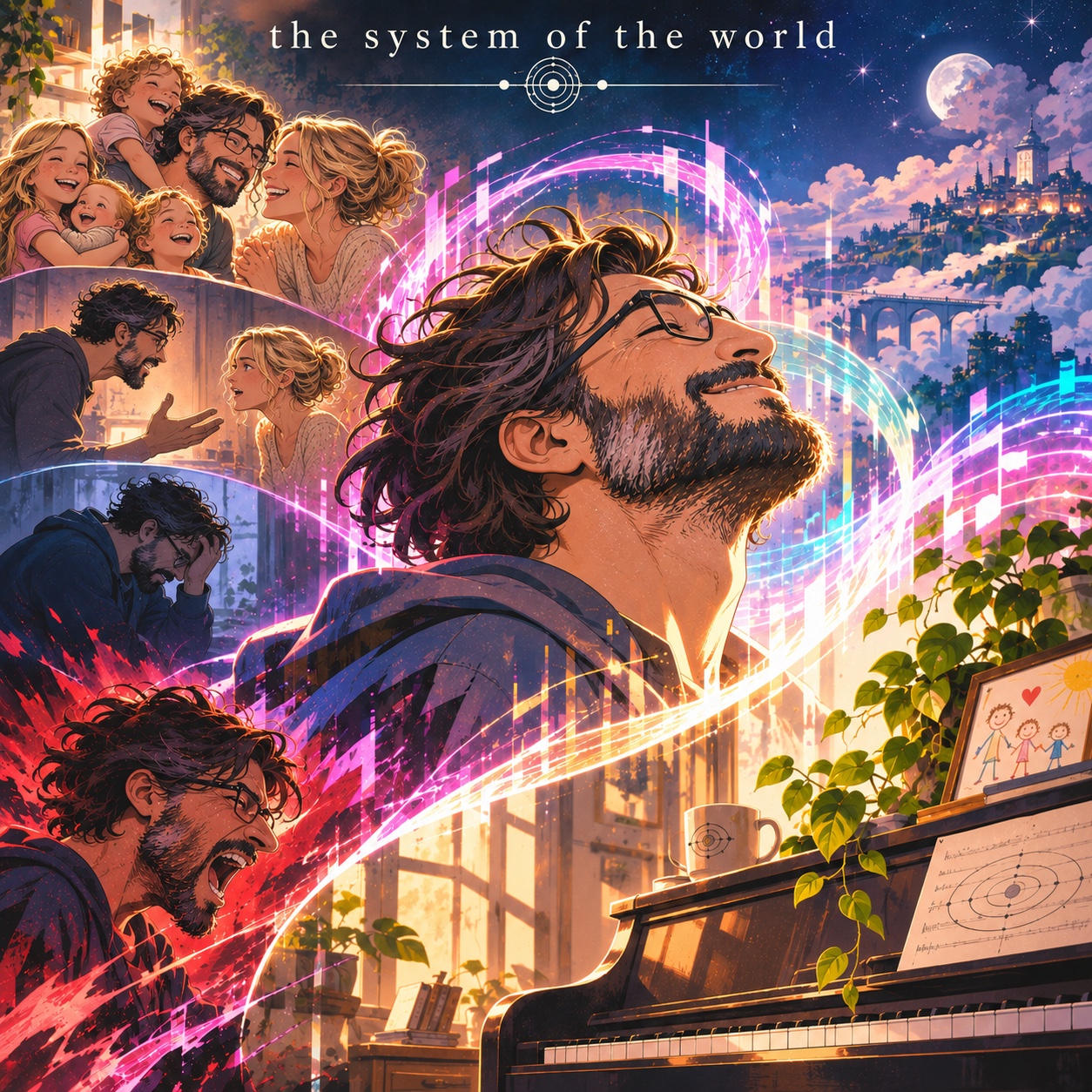
[Instrumental. 68 BPM. 4/4. C minor with fleeting memories of C major. A quiet, heartbreaking reprise of the established cheerful leitmotif.] [Use the existing recording as the melodic reference. Preserve the recognizable opening rhythm and melodic identity. This is the same character, not a new composition.] [Opening — solo felt piano, close-miked and almost painfully intimate. Begin with the familiar melody, but hesitate between phrases. Leave the silences intact.] [Bar 1 — Cm(add9): G4 eighth, Bb4 eighth, C5 quarter, eighth rest, Eb5 eighth, D5 quarter.] [Bar 2 — Abmaj7: C5 dotted quarter, Ab4 eighth, G4 half.] [Repeat the opening phrase with slightly more space between notes. A solo cello enters underneath, holding long, restrained notes.] [Bar 3 — C major/E: play G4, B4, C5, E5, D5 in the original rhythm. For a brief moment the happy theme returns exactly as it once was. Don’t swell or emphasize it. Let the listener recognize it.] [Bar 4 — Fm(add9): C5 dotted quarter, Ab4 eighth, G4 half. The harmony falls back into minor.] [Bar 5 — Cm(add9): C5 whole note, very soft, left hanging.] [Middle — sparse variations of the theme on piano and solo clarinet. A cello plays a slow descending counterline. Occasional major-key notes recall the original version but never settle into its cheerful harmony.] [The music should convey the aftermath of an argument between two people who still love each other. Exhaustion, regret, uncertainty. Not anger or accusation.] [Late passage — the piano attempts the original major-key opening again. G-B-C. This time it stops before reaching E. A long silence follows.] [Ending — return to the minor-key phrase, very quietly. No final triumphant resolution. Finish on a suspended C minor add9 chord, leaving space for the story to continue.] [Production — extremely sparse, human and intimate. Audible piano pedal and room sound. No drums, no electronic beats, no dramatic strings, no cinematic crescendos. Let the recognizable melody and altered harmony carry the emotion.]
