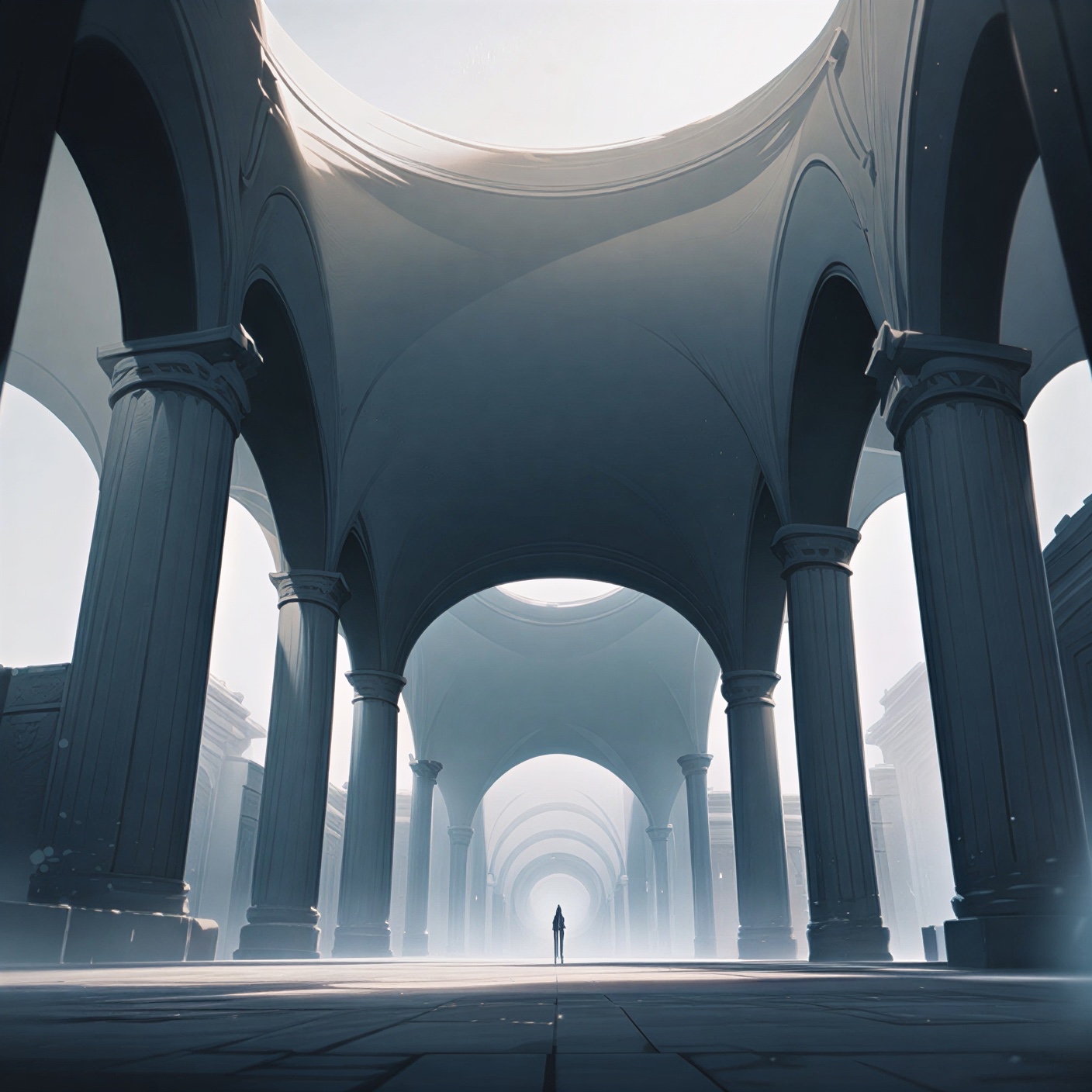
Lethe Temple

He does not know where he came from. He remembers only the act of walking. His footsteps echo within silence, like a rhythm forgotten by time—falling again and again, only to be swallowed. The temple has no door. Or rather, by the time the idea of a door occurs to him, he is already inside. The air is excessively still. Sound has not vanished—it has merely been delayed, as if it will only be heard in some distant future. A faint sound emerges from afar. Not a melody, but something closer to the afterimage of memory before it takes form. A low, gentle resonance—like deep water that does not flow, yet has already altered everything. He tries to recall his name. The word surfaces in his mind, yet carries no weight. Like a note stripped of its fundamental, leaving only overtones drifting through space. So he continues walking. At the end of the hall, there is neither light nor darkness. Only an indescribable diminishing of being. The world has not disappeared; it is simply abandoning the possibility of being understood. The sound returns. So faint it is nearly unrecognizable, yet more certain than any language. It tells him nothing—only renders the act of remembering itself unnecessary. He stops. And suddenly, he understands— It is not that he has entered the temple, but that something is slowly leaving him. His name. His past. Time itself. Layer by layer, they dissipate like fading reverberations, without end, without echo. At last, he recalls that he once tried to remember something. But the thought is too distant—so distant it feels as though it never existed at all. So he no longer thinks. And the temple remains—silent as ever.
