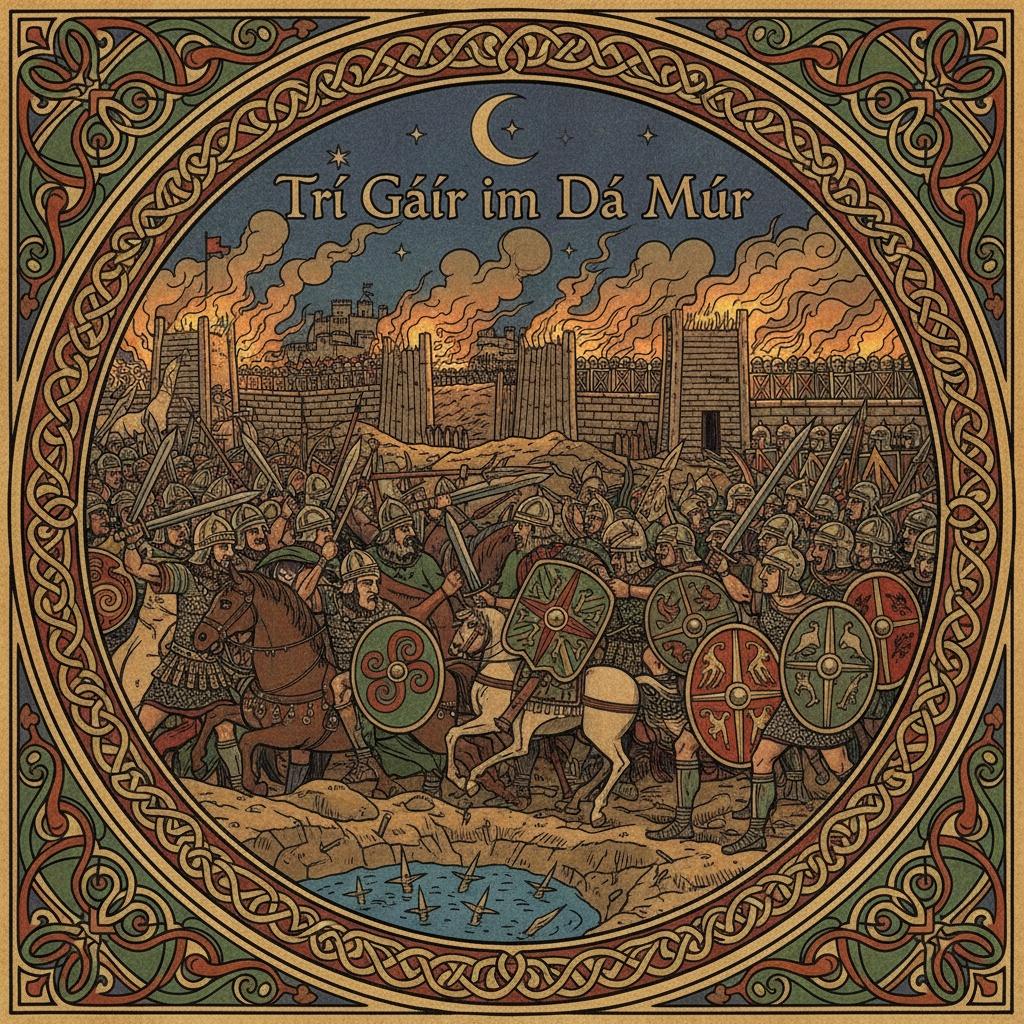
9. Trí Gáir im Dá Múr (Ancient Celtic)
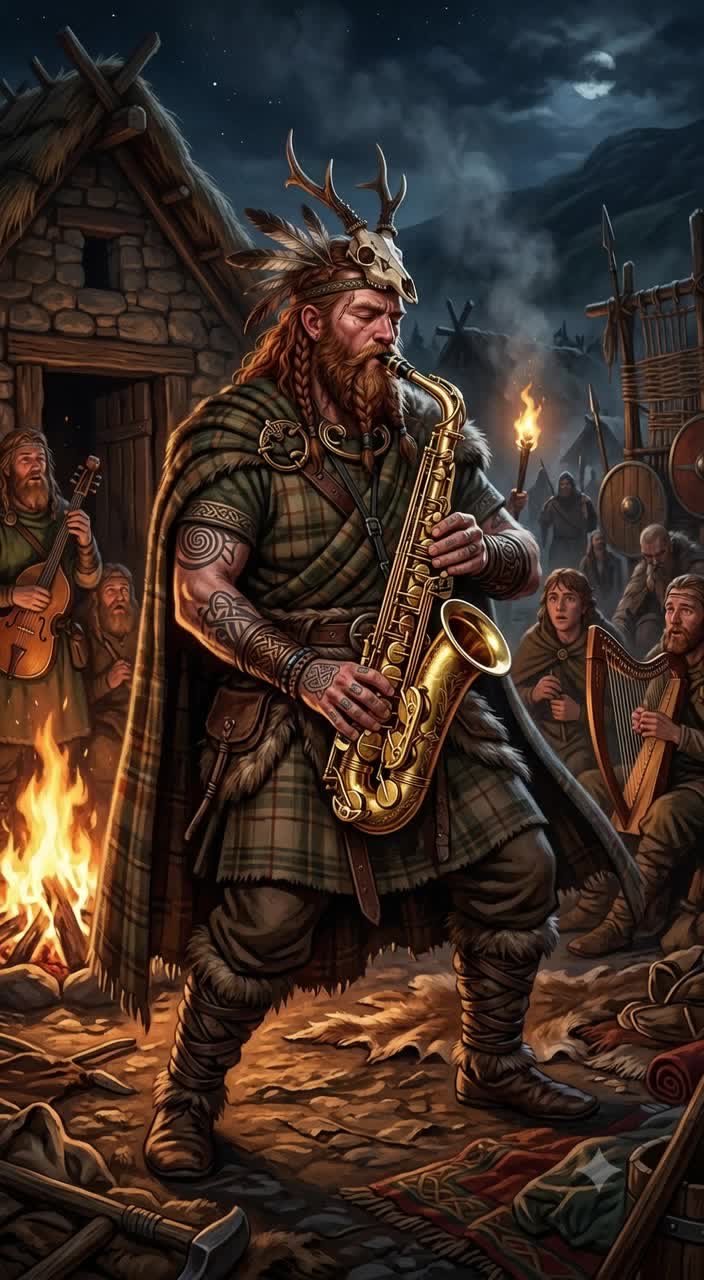
[Intro — the distant horn is answered from the fortress] Óen corn i gcéin. Freagraid corn ón dún. Tar cnocaib tic in slóg. Crithid dá múr. [Verse 1] For chnoc fri Alesia éirgit brata na Gall. Commius is trí taísig tócbait in slóg mór. Do-chí lucht in dúin in mag lán do ech. Gáir ó bhéal co béal. Filleth neart ina cridiu. [Pre-Chorus] Fosclaid dorus Alesia. Línait cré i n-óen chlais. Téit marcshlóg don mag, saigtiu etarru. Róim idir dá aghaidh, sciath fri dún, sciath fri Gáil. Ó nóin co fuine gréin crithid in fáinne. [Chorus 1] Trí gáir im dá múr, ón mag is ón dún. Éirgid in chéit gáir— freagraid iarn Róim. Éirgit eich Germánach. Brissid in marcshlóg. Trí gáir im dá múr. Óen do-rochair. [Verse 2] Lá cen cath. Oích cen ré. Déntar cliatha is dréimm, crann fri crann. I medón na hoíche téit in slóg cen son. Tócbait gáir mór. Freagraid corn ón dún. Téit Vercingetorix amach co chliathaib is gae. Dá thonn fri dá múr. Dá thene fri Róim. [Pre-Chorus 2 — the pulse fragments beneath the darkness] Línait clais le cré. Tarrngait crann ón múr. Cloch is saiget tríd in oích. Gae ón túr. Acht fiacla fon talam, blátha iarna fon fhér. Tuitid fir cen solus. Ní briste in múr. [Chorus 2] Trí gáir im dá múr, ón mag is ón dún. Éirgid in dara gáir fo oích cen ré. Acht tic in maidin. Téit in slóg mór síar. Fir Alesia ro-mall. Dá gháir do-rochratar. [Bridge — close voice over a single harp figure] Tar éis dá briseadh labrait na taísig: “Cá fil múr Róim lag? Cá fil dorus don chath?” Labraid fir na tíre: “For cnoc fon tuaiscert. Claon atá in talam. Tana atá in líne.” Éirgid Vercassivellaunus co fir togha na Gall. Téit i céitfhaire na hoíche. Ceilid iar cnoc. [Instrumental Break — tenor sax circles the two walls while the fiddle climbs northward] [Verse 3] Re medón lae éirgid in tres gáir. Vercassivellaunus ón chnoc, eich na Gall for mag. Vercingetorix ón dún co chliathaib is crannaib. Gáir for cach múr. Cath for cach leth. Teilgit cré for chlaisaib. Téit sciath fri sciath. Claon atá campa Róim. Tuirsech atá a fir. [Pre-Chorus 3 — the full pulse returns, heavy and relentless] Cuirid Caesar Labienus co sé catha do chabhair. Cuirid Brutus, cuirid Fabius fri lucht in dúin. Acht cromaid múr in tuaiscirt. Tuitid crann is cloch. Cruinnigid Labienus a shlóg. Tócbait claideb lom. Ansin at-chí cach fer brat rúad ar Caesar. Gáir Róim ón múr. Gáir Róim ón mag. [Final Chorus — all voices collide, then fall away] Trí gáir im dá múr, ón mag is ón dún. In tres gáir is mó— in tres gáir do-rochair. Ticid eich óna ndruim. Téitid claideb Róim. Sedullus do-rochair. Gabtar Vercassivellaunus. Trí gáir im dá múr. Brata na Gall for talam. Teitid in slóg mór. Ruaigid eich tríd in oích. Do-chí Alesia a cairde oc teithed. Tócbai Vercingetorix lám. Téit a shlóg ón múr. In chéit gáir do-rochair. In dara gáir do-rochair. In tres gáir do-rochair. Ní freagraid corn. [Outro — the last Gallic horn loses its breath] Dá múr im Alesia. Óen dún cen biad. Brata for talam. Maidin cen cath. Tócbai fer a chlaideb. Féchaid síos ón dún. Ní freagraid corn. Tic in lá deired. ———————— English Translation ———————— THREE CRIES AROUND TWO WALLS [Intro — the distant horn is answered from the fortress] One horn in the distance. A horn answers from the fortress. Beyond the hills, the host is coming. The two walls begin to tremble. [Verse 1] Upon a hill facing Alesia, the standards of Gaul arise. Commius and three commanders raise the great relief host. The people inside the fortress see the plain filled with horsemen. A cry passes from mouth to mouth. Strength returns to their hearts. [Pre-Chorus] The gate of Alesia opens. Earth is thrown into the nearest trench. The cavalry rides onto the plain, archers moving among them. Rome stands between two enemies, shield toward the fortress, shield toward Gaul. From noon until the setting sun, the ring of walls trembles. [Chorus 1] Three cries around two walls, from the plain and from the fortress. The first cry rises— Roman iron answers. The Germanic horsemen charge. The Gallic cavalry breaks. Three cries around two walls. One has fallen. [Verse 2] One day without battle. One night without a moon. Hurdles and ladders are fashioned, timber joined to timber. At the middle of the night, the host advances without sound. They raise a mighty cry. A horn answers from the fortress. Vercingetorix comes out with hurdles and spears. Two waves against two walls. Two fires against Rome. [Pre-Chorus 2 — the pulse fragments beneath the darkness] They fill the trenches with earth. They pull timber from the rampart. Stones and arrows cross the night. Heavy spears fly from the towers. But wooden teeth wait beneath the ground, iron flowers beneath the grass. Men fall without seeing their wounds. The wall is not broken. [Chorus 2] Three cries around two walls, from the plain and from the fortress. The second cry rises beneath a moonless night. But morning approaches. The great relief host withdraws. The men of Alesia arrive too late. Two cries have fallen. [Bridge — close voice over a single harp figure] After two defeats, the commanders speak: “Where is the Roman wall weakest? Where is the gateway to battle?” The men who know the land answer: “Upon the northern hill. The ground slopes against them. Their line is thin.” Vercassivellaunus rises with the chosen warriors of Gaul. He marches during the first watch and hides behind the ridge. [Instrumental Break — tenor sax circles the two walls while the fiddle climbs northward] [Verse 3] Near midday, the third cry rises. Vercassivellaunus descends from the hill, while the Gallic horsemen fill the plain. Vercingetorix comes from the fortress with hurdles and timber. A roar surrounds every wall. Battle erupts on every side. Earth is thrown into the trenches. Shield presses against shield. The Roman camp stands upon sloping ground. Its defenders are exhausted. [Pre-Chorus 3 — the full pulse returns, heavy and relentless] Caesar sends Labienus with six cohorts to support it. He sends Brutus and Fabius against the men leaving the fortress. But the northern rampart bends. Timber and stone begin to fall. Labienus gathers his forces. They draw their naked swords. Then every warrior sees the red cloak upon Caesar. A Roman cry rises from the rampart. A Roman cry answers from the plain. [Final Chorus — all voices collide, then fall away] Three cries around two walls, from the plain and from the fortress. The third cry is the greatest— the third cry falls. The cavalry appears behind them. The Roman swords advance. Sedullus is slain. Vercassivellaunus is captured. Three cries around two walls. The standards of Gaul lie upon the ground. The great relief host flees. Horsemen pursue them through the night. Alesia watches its allies fleeing. Vercingetorix raises his hand. His warriors withdraw from the rampart. The first cry has fallen. The second cry has fallen. The third cry has fallen. No horn answers. [Outro — the last Gallic horn loses its breath] Two walls around Alesia. One fortress without food. Standards upon the ground. A morning without battle. A man lifts his sword. He looks down from the fortress. No horn answers. The final day is coming.
